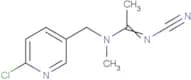
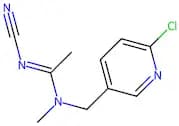
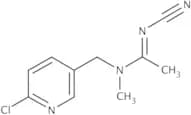
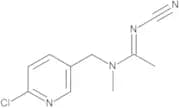
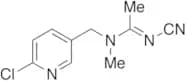
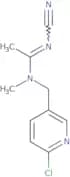
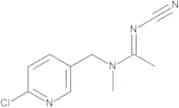
:internalReference - acetamiprid | 135410-20-7
Désolé, aucun produit avec la référence :internalReference n'a été trouvé, cependant nous vous invitons à consulter les produits similaires suivants:
Acetamiprid
CAS :Acetamiprid: nAChR agonist, global neonicotinoid insecticide linked to neuromuscular/reproductive issues.Formule :C10H11ClN4Degré de pureté :99.66%Couleur et forme :White PowderMasse moléculaire :222.67Acetamiprid
CAS :Formule :C10H11ClN4Degré de pureté :≥ 95.0%Couleur et forme :White to off-white powderMasse moléculaire :222.67Acetamiprid
CAS :Produit contrôlé<p>Applications A novel neonicotinid insecticide against Holotrichia consanguinea in sugarcane. Reports show that when exposed to neonicotinid pesticides honeybees have problems returnibg home after foraging and bumblebee colonies grow poorly and produce fewer queens. Used in Pesticide detection. Useful in cannabis testing kits as a component of pesticide mixes (P698240).<br> Not a dangerous good if item is equal to or less than 1g/ml and there is less than 100g/ml in the package<br>References Srivastava, A., et al.: Indian Sugar, 32, 673 (1983), Fleming, R., et al.: J. Econ. Entomol., 78, 1179 (1985), Rao, Ch.V., et al.: Pestology, 35, 47 (2011), Chem. and Eng. News 90: 10 (2012)<br></p>Formule :C10H11ClN4Couleur et forme :Colourless To WhiteMasse moléculaire :222.67Acetamiprid
CAS :<p>Acetamiprid is an insecticide that belongs to the chemical group of neonicotinoids. It is a neurotoxin that inhibits the acetylcholinesterase enzyme, which leads to increased acetylcholine levels and subsequent nerve stimulation. Acetamiprid is used in agriculture as well as in wastewater treatment plants to control pests such as mosquitoes, black flies, and gnats. Acetamiprid has been shown to have high resistance against insects such as cockroaches and ants. This insecticide has been shown to have adverse effects on mammals including humans, but not on birds or fish. Acetamiprid has been shown to be toxic when ingested by rats at doses of 5 mg/kg body weight (bw) per day for 28 days. Acetamiprid also has biochemical properties that are similar to those of other insecticides with the same mode of action, leading it to be classified as a probable human carcinogen by the World Health</p>Formule :C10H11ClN4Degré de pureté :Min. 95%Couleur et forme :PowderMasse moléculaire :222.67 g/molAcetamiprid 10 µg/mL in Ethyl acetate
CAS :Formule :C10H11ClN4Couleur et forme :Single SolutionMasse moléculaire :222.67