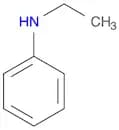
AC-11804 - n-ethylaniline-98 | 103-69-5
Désolé, aucun produit avec la référence AC-11804 n'a été trouvé, cependant nous vous invitons à consulter les produits similaires suivants:
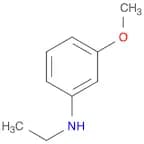
N-ethyl-3-methoxyaniline
CAS :Formule :C9H13NODegré de pureté :95%Couleur et forme :LiquidMasse moléculaire :151.2056N-Ethyl-o-toluidine
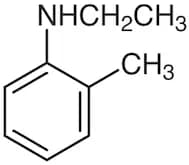
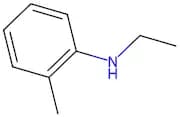
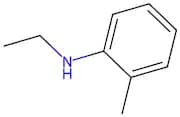
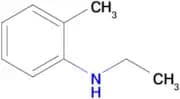
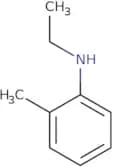
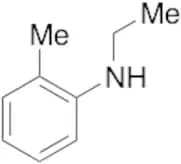
CAS :Formule :C9H13NDegré de pureté :>98.0%(GC)(T)Couleur et forme :Light orange to Yellow to Green clear liquidMasse moléculaire :135.21Benzenamine, N-ethyl-2-methyl-
CAS :Formule :C9H13NDegré de pureté :98%Couleur et forme :LiquidMasse moléculaire :135.2062N-Ethyl-o-toluidine
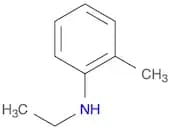
CAS :<p>N-Ethyl-o-toluidine is a drug with genotoxicity and anticancer potential, exhibiting >70% growth inhibition against yeast strains</p>Formule :C9H13NDegré de pureté :99.76%Couleur et forme :SolidMasse moléculaire :135.21N-Ethyl-o-toluidine(N-Ethyl-2-methyl-benzenamine)
CAS :Produit contrôléFormule :C9H13NCouleur et forme :ColourlessMasse moléculaire :135.21N-Ethyl-o-toluidine(N-Ethyl-2-methyl-benzenamine)
CAS :N-Ethyl-o-toluidine is a chemical compound that is used as an agrochemical. It can be synthesized by the reaction of crotonic acid with amines and hydrogen chloride. N-Ethyl-o-toluidine has been shown to have various properties, such as being able to react with nitric oxide and form a nitro group. This reaction is also coupled with its uptake in plants. The ketone group in the molecule reacts with diisopropylamine to form an amide and crotonic acid. N-Ethyl-o-toluidine can be synthesized by reacting diisopropylamine with amines and hydrogen chloride, which leads to the formation of crotonic acid and a dipole. The dipole can then react with nitric oxide to form a nitro group.Formule :C9H13NDegré de pureté :Min. 95%Masse moléculaire :135.21 g/mol