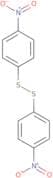
CAS 100-32-3
:Bis(4-nitrofenil) disolfuro
- 1,1'-Disulfanediylbis(4-Nitrobenzene)
- 1,1′-Dithiobis(4-Nitrobenzene)
- 1,2-Bis(4-nitrophenyl)disulfane
- 1-Nitro-4-[(4-nitrophenyl)disulfanyl]benzene
- 4,4-Dinitro diphenyl disulfide
- Bis(4-nitrophenyl) disulfide
- Bis(p-nitrophenyl) disulfide
- Di(4-nitrophenyl) disulfide
- Di(p-nitrophenyl) disulfide
- Disulfide, bis(4-nitrophenyl)
- Disulfide, bis(p-nitrophenyl)
- NSC 4566
- NSC 677446
- p,p′-Dinitrodiphenyl disulfide
- Vedi altri sinonimi
Bis(4-nitrophenyl) Disulfide
CAS:Formula:C12H8N2O4S2Purezza:>97.0%(GC)Colore e forma:White to Yellow powder to crystalPeso molecolare:308.334,4'-Dinitrodiphenyl disulfide
CAS:Formula:C12H8N2O4S2Purezza:98%Colore e forma:SolidPeso molecolare:308.3329Bis(4-nitrophenyl) disulphide
CAS:Bis(4-nitrophenyl) disulphideFormula:C12H8N2O4S2Purezza:99%Colore e forma: pale yellow solidPeso molecolare:308.33g/mol1-Nitro-4-[(4-nitrophenyl)dithio]benzene
CAS:Formula:C12H8N2O4S2Purezza:95%Colore e forma:Solid, Yellow to tan powderPeso molecolare:308.334,4'-Dinitro diphenyl disulfide
CAS:4,4'-Dinitro diphenyl disulfide is a molecule that has been shown to induce apoptosis in cells. It has been shown to have antibacterial activity against a number of Gram-positive and Gram-negative bacteria. The mechanism of action of 4,4'-Dinitro diphenyl disulfide is not yet clear but there are several theories as to how it may work. One theory is that the molecule can react with chloride ions on the bacterial cell surface, which leads to the formation of hydrogen chloride gas. This gas interacts with nitric oxide or hydroxyl radicals, leading to the activation of the molecule's antifungal properties. Another theory is that 4,4'-Dinitro diphenyl disulfide binds to the metal surface and penetrates through pores in the cell wall, where it reacts with molecules such as nitro groups or chlorides present inside the cell. The reaction between these molecules leads to an increase in cellular hydrogen ions
Purezza:Min. 95%Ref: 3D-FD40889
Prodotto fuori produzione
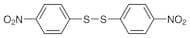

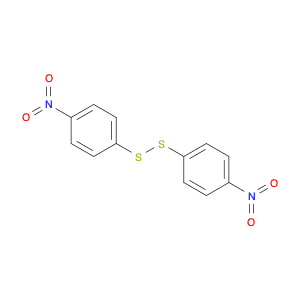

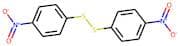

![1-Nitro-4-[(4-nitrophenyl)dithio]benzene](/_next/image/?url=https%3A%2Fstatic.cymitquimica.com%2Fproducts%2F10%2Fthumb%2FF067957.jpg&w=3840&q=75)