CAS 100-72-1
:2-(Idrossimetil)tetraidropirano
Descrizione:
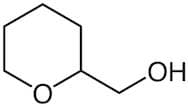
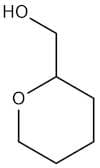
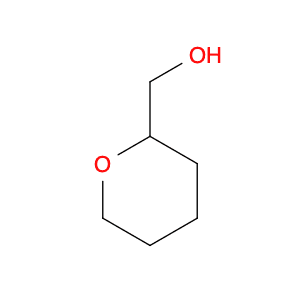
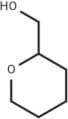
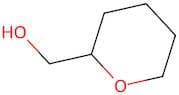
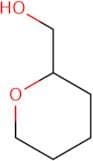
2-(Idrossimetil)tetraidropirano, con il numero CAS 100-72-1, è un composto organico ciclico caratterizzato da una struttura ad anello a sei membri contenente un atomo di ossigeno. Questo composto presenta un gruppo idrossimetilico (-CH2OH) attaccato all'anello di tetraidropirano, che contribuisce alla sua reattività e solubilità in solventi polari. Tipicamente è un liquido o solido incolore o giallo pallido, a seconda delle condizioni specifiche e della purezza. La presenza del gruppo idrossimetilico migliora il suo potenziale per legami idrogeno, rendendolo più solubile in acqua rispetto ad altri eteri ciclici non polari. Questo composto è spesso utilizzato nella sintesi organica e può fungere da intermedio nella produzione di vari farmaci e sostanze chimiche fini. La sua stabilità in condizioni standard, insieme alla sua capacità di partecipare a ulteriori reazioni chimiche, lo rende un blocco di costruzione prezioso nella chimica organica sintetica. I dati di sicurezza devono essere consultati per la manipolazione e lo stoccaggio, come per qualsiasi sostanza chimica.
Formula:C6H12O2
InChI:InChI=1S/C6H12O2/c7-5-6-3-1-2-4-8-6/h6-7H,1-5H2
InChI key:InChIKey=ROTONRWJLXYJBD-UHFFFAOYSA-N
SMILES:C(O)C1CCCCO1
Sinonimi:- (2R)-tetrahydro-2H-pyran-2-ylmethanol
- (2S)-tetrahydro-2H-pyran-2-ylmethanol
- 2-(Hydroxymethyl)tetrahydropyran
- 2-Tetrahydropyranylcarbinol
- 2H-Pyran-2-methanol, tetrahydro-
- 3,4,5,6-Tetrahydro-2H-pyran-2-methanol
- NSC 5221
- NSC 66493
- Oxan-2-ylmethanol
- Pyran-2-methanol, tetrahydro-
- Tetrahydro-2H-pyran-2-methanol
- Tetrahydropyran-2-Ylmethanol
- Tetrahydropyran-2-carbinol
- tetrahydro-2H-pyran-2-ylmethanol
- Vedi altri sinonimi
Ordinare per
Purezza (%)
0
100
|
0
|
50
|
90
|
95
|
100
9 prodotti.
Tetrahydropyran-2-methanol
CAS:Formula:C6H12O2Purezza:>96.0%(GC)Colore e forma:Colorless to Almost colorless clear liquidPeso molecolare:116.162-(Hydroxymethyl)tetrahydropyran, 94%
CAS:This Thermo Scientific Chemicals brand product was originally part of the Alfa Aesar product portfolio. Some documentation and label information may refer to the legacy brand. The original Alfa Aesar product / item code or SKU reference has not changed as a part of the brand transition to Thermo SciFormula:C6H12O2Purezza:94%Colore e forma:Clear colorless, LiquidPeso molecolare:116.16(Tetrahydro-2H-pyran-2-yl)methanol
CAS:Formula:C6H12O2Purezza:98%Colore e forma:LiquidPeso molecolare:116.15832-Hydroxymethyltetrahydropyran
CAS:2-Hydroxymethyltetrahydropyran is a volatile compound present in the seed oil of Sambucus williamsii (SW), which possesses promising antioxidant activity.Formula:C6H12O2Colore e forma:SolidPeso molecolare:116.162-(Hydroxymethyl)tetrahydro-2H-pyran
CAS:2-(Hydroxymethyl)tetrahydro-2H-pyranFormula:C6H12O2Purezza:98%Colore e forma: colourless liquidPeso molecolare:116.16g/molTetrahydro-2H-pyran-2-ylmethanol
CAS:Formula:C6H12O2Purezza:97%Colore e forma:LiquidPeso molecolare:116.16Tetrahydropyran-2-methanol
CAS:Prodotto controllatoApplications Tetrahydropyran-2-methanol (cas# 100-72-1) is a useful research chemical.
Formula:C6H12O2Colore e forma:NeatPeso molecolare:116.15Tetrahydropyran-2-methanol
CAS:Tetrahydropyran-2-methanol is a hydrogenated, hydrated, triflic acid derivative that belongs to the group of organic compounds known as ethers. The presence of a hydroxyl group on one end and a chloride group on the other end provides tetrahydropyran-2-methanol with two reactive sites for reactions with metals. It has been shown to react with metal surfaces in order to form an adduct under acidic conditions that can be used as an ion exchange resin. Tetrahydropyran-2-methanol also reacts rapidly with hydrochloric acid to form tetrahydrothiophene and methanol. This reaction time can be sped up by heating the liquid at atmospheric pressure or by adding sulfuric acid. Tetrahydropyran-2-methanol is also capable of reacting with water in order to produce hydrogen gas and alcohol.Formula:C6H12O2Purezza:Min. 98%Peso molecolare:116.16 g/mol