CAS 1078-61-1
:Acido diidrocaffeico
Descrizione:
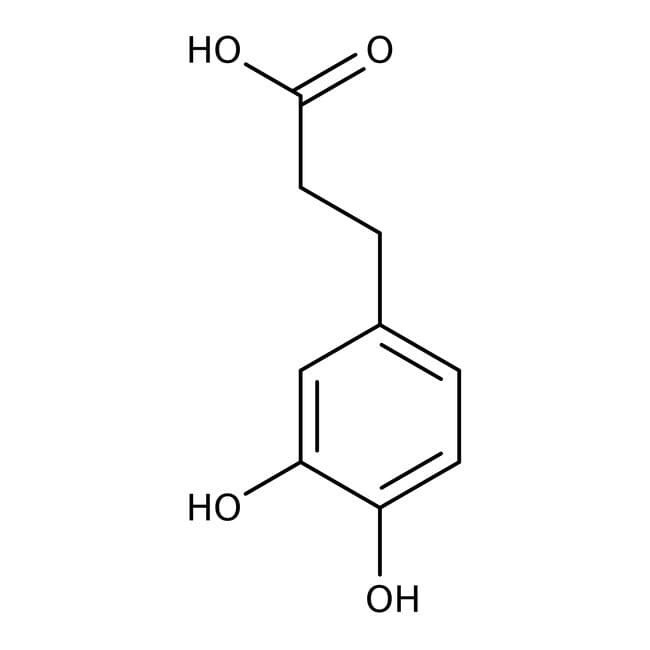
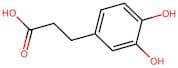
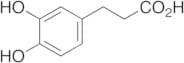
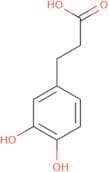
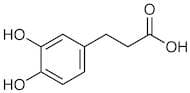
Acido diidrocaffeico, con il numero CAS 1078-61-1, è un composto fenolico che è strutturalmente correlato all'acido caffeico. È caratterizzato dai suoi due gruppi idrossilici e da un doppio legame nell'anello aromatico, che contribuiscono alle sue proprietà antiossidanti. Questo composto si trova tipicamente in varie fonti vegetali ed è noto per i suoi potenziali benefici per la salute, inclusi effetti antinfiammatori e neuroprotettivi. Acido diidrocaffeico è solubile in solventi polari, il che facilita la sua estrazione da materiali vegetali. La sua struttura chimica gli consente di partecipare a varie reazioni biochimiche, rendendolo di interesse sia nella ricerca nutrizionale che farmaceutica. Inoltre, potrebbe svolgere un ruolo nel metabolismo di altri composti fenolici e contribuire ai benefici complessivi per la salute associati a diete ricche di frutta e verdura. Man mano che la ricerca continua, viene esplorato l'intero spettro delle sue attività biologiche e delle potenziali applicazioni in salute e medicina.
Formula:C9H10O4
InChI:InChI=1S/C9H10O4/c10-7-3-1-6(5-8(7)11)2-4-9(12)13/h1,3,5,10-11H,2,4H2,(H,12,13)
InChI key:InChIKey=DZAUWHJDUNRCTF-UHFFFAOYSA-N
SMILES:C(CC(O)=O)C1=CC(O)=C(O)C=C1
Sinonimi:- 3,4-Dihydroxy-β-phenylpropionic acid
- 3,4-Dihydroxybenzenepropanoic acid
- 3,4-Dihydroxybenzenepropionic acid
- 3,4-Dihydroxydihydrocinnamic acid
- 3,4-Dihydroxyhydrocinnamic acid
- 3-(3,4-Dihydroxyphenyl)Propanoate
- 3-(3,4-Dihydroxyphenyl)Propanoic Acid
- 3-(3,4-Dihydroxyphenyl)propionic acid
- Benzenepropanoic acid, 3,4-dihydroxy-
- Dihydrocaffeic acid
- Hydrocaffeic acid
- Hydrocinnamic acid, 3,4-dihydroxy-
- NSC 407275
- NSC 624007
- Vedi altri sinonimi
Ordinare per
Purezza (%)
0
100
|
0
|
50
|
90
|
95
|
100
10 prodotti.
3-(3,4-Dihydroxyphenyl)propionic acid, 98+%
CAS:3-(3,4-Dihydroxyphenyl)propionic acid it can be used to produce 3-(3,4-dihydroxy-phenyl)-propionic acid octyl ester by heating. This Thermo Scientific Chemicals brand product was originally part of the Alfa Aesar product portfolio. Some documentation and label information may refer to the legacy braFormula:C9H10O4Purezza:98+%Colore e forma:Pale cream to cream to brown or pale pink, Crystals or powder or crystalline powderPeso molecolare:182.18Dihydrocaffeic acid
CAS:Dihydrocaffeic acid analytical standard provided with w/w absolute assay, to be used for quantitative titration.Formula:C9H10O4Purezza:(HPLC) ≥98%Colore e forma:PowderPeso molecolare:182.183-(3,4-Dihydroxyphenyl)propanoic acid
CAS:Formula:C9H10O4Purezza:98%Colore e forma:SolidPeso molecolare:182.1733Dihydrocaffeic acid
CAS:Dihydrocaffeic acid, a chlorogenic acid metabolite, has antioxidant, anti-Alzheimer's, neuroprotective, and lipid-lowering properties.Formula:C9H10O4Purezza:98.63%Colore e forma:SolidPeso molecolare:182.173-(3,4-Dihydroxyphenyl)Propionic Acid
CAS:3-(3,4-Dihydroxyphenyl)Propionic AcidPurezza:98%Peso molecolare:182.18g/mol3-(3,4-Dihydroxyphenyl)propionic acid
CAS:3-(3,4-Dihydroxyphenyl)propionic acid (3,4-DHPA) is a chlorogenic acid that is found in the leaves of the coffee plant. It has been shown to have a synergic effect with benzalkonium chloride on postprandial blood glucose levels. 3,4-DHPA also has a hypoglycemic effect and can be used as a dietary supplement for people with diabetes. 3,4-DHPA was extracted from coffee leaves using solid phase microextraction and then analyzed by gas chromatography. The rate constant for the reaction was found to be 0.917 min-1 at 25 °C and pH 7.0. The biocompatible polymer poly(L-lactic acid) was used as the stationary phase in this experiment to improve the selectivity of separation.Formula:C9H10O4Purezza:Min. 95%Colore e forma:Off-White PowderPeso molecolare:182.17 g/mol3-(3,4-Dihydroxyphenyl)propionic acid
CAS:Formula:C9H10O4Purezza:95%Colore e forma:No data available.Peso molecolare:182.1753,4-Dihydroxyhydrocinnamic Acid
CAS:Formula:C9H10O4Purezza:>98.0%(GC)(T)Colore e forma:White to Brown powder to crystalPeso molecolare:182.18