CAS 1133210-23-7
:Ordinare per
Purezza (%)
0
100
|
0
|
50
|
90
|
95
|
100
3 prodotti.
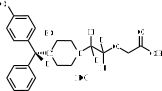
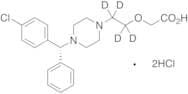
(R)-Cetirizine-d4 DiHCl (Levocetirizine-d4 DiHCl)
CAS:Formula:C21H21D4ClN2O3·2HClColore e forma:White To Off-White SolidPeso molecolare:392.92 2*36.46(R)-Cetirizine-d4 Dihydrochloride
CAS:Prodotto controllatoApplications Labelled (R)-Cetirizine (C281100). A nonsedating type histamine H1-receptor antagonist. A major metabolite of Hydroxyzine. Pharmacological activity resides primarily in the (R)-isomer. Antihystaminic.
References De Vos, C., et al.: Ann. Allergy, 59, 278 (1987), Juhlin, L., et al.: J. Allergy Clin. Immunol., 80, 599 (1987), Fadel, R., et al.: Clin. Allergy, 17, 373 (1987), Gengo, F.M., et al.: Clin. Pharmacol. Ther., 42, 265 (1987)Formula:C21H23D4Cl3N2O3Colore e forma:Off WhitePeso molecolare:465.83(R)-Cetirizine-d4 dihydrochloride
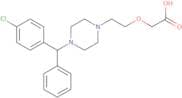
CAS:(R)-Cetirizine-d4 dihydrochloride is an analog of the antihistamine drug cetirizine that has been shown to have potential anticancer properties. It has been found to induce apoptosis in cancer cells and inhibit the activity of kinases, which are enzymes that play a critical role in cell signaling pathways. (R)-Cetirizine-d4 dihydrochloride has been tested against a variety of cancer types, including Chinese hamster ovary and human tumor cell lines. This drug also inhibits amphetamine-induced hyperactivity in mice, suggesting a potential use in treating addiction. Additionally, (R)-Cetirizine-d4 dihydrochloride is excreted primarily through urine and may be used as a kinase inhibitor for research purposes.Formula:C21H25ClN2O3Purezza:Min. 95%Peso molecolare:388.9 g/mol