CAS 116-53-0
:Acido 2-metilbutanoico
Descrizione:
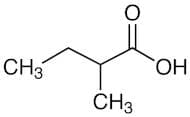
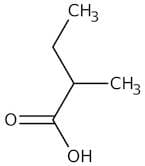
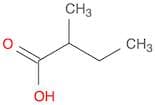
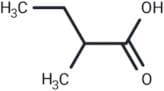
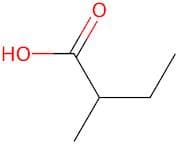
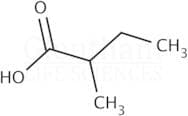
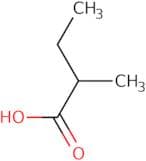
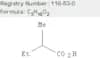
Acido 2-metilbutanoico, noto anche come acido isovalerico, è un acido carbossilico a catena ramificata caratterizzato dalla sua struttura a cinque atomi di carbonio con un gruppo metile attaccato al secondo carbonio. Ha la formula molecolare C5H10O2 e presenta un gruppo funzionale carbossilico (-COOH), che conferisce proprietà acide. Questo composto è tipicamente un liquido incolore con un odore pungente che ricorda il formaggio o i piedi sudati, spesso associato alla sua presenza in determinati processi di fermentazione. Acido 2-metilbutanoico è solubile in acqua e solventi organici, rendendolo versatile in varie applicazioni. Viene utilizzato nella sintesi di esteri per le industrie dei sapori e delle fragranze, così come nella produzione di prodotti farmaceutici e agrochimici. Inoltre, può essere trovato in alcune fonti naturali, inclusi alcuni oli essenziali e come sottoprodotto del metabolismo microbico. La sua reattività include il comportamento tipico degli acidi carbossilici, come l'esterificazione e la partecipazione a varie reazioni organiche. Sono necessarie precauzioni di sicurezza quando si maneggia questa sostanza a causa del suo forte odore e delle potenziali proprietà irritanti.
Formula:C5H10O2
InChI:InChI=1S/C5H10O2/c1-3-4(2)5(6)7/h4H,3H2,1-2H3,(H,6,7)
InChI key:InChIKey=WLAMNBDJUVNPJU-UHFFFAOYSA-N
SMILES:C(C(O)=O)(CC)C
Sinonimi:- (+/-)-2-Methyl Butyric Acid
- (.+-.)-2-Methylbutanoic acid
- (.+-.)-2-Methylbutyric Acid
- (.+-.)-Methylethylacetic acid
- (.+-.)-α-Methylbutyric acid
- 2-Ethylpropanoic acid
- 2-Methyl-n-butyric acid
- 2-Methylbuttersaure
- <span class="text-smallcaps">DL</span>-2-Methylbutanoic acid
- <span class="text-smallcaps">DL</span>-2-Methylbutyric acid
- <span class="text-smallcaps">DL</span>-α-Methylbutyric acid
- Acide 2-methylbutyrique
- Acido 2-Metilbutirico
- Active valeric acid
- Butyric acid, 2-methyl-
- Butyric acid, α-methyl-
- DL-2-Methylbutanoic acid
- DL-2-Methylbutyric acid
- DL-α-Methylbutyric acid
- Ethylmethylacetic acid
- Hydroangelic acid
- Methyl-2-Butyric Acid
- Nsc 7304
- α-Methyl-n-butyric acid
- Vedi altri sinonimi
Ordinare per
Purezza (%)
0
100
|
0
|
50
|
90
|
95
|
100
10 prodotti.
DL-2-Methylbutyric Acid
CAS:Formula:C5H10O2Purezza:>97.0%(GC)Colore e forma:Colorless to Light yellow clear liquidPeso molecolare:102.132-Methylbutyric acid, 98%
CAS:2-Methylbutyric acid, can be used as food additive for butter, cream, cheese flavor deployment. It is an important raw material and intermediate used in Organic Synthesis, Pharmaceuticals, Agrochemicals and Dyestuff. It is also used in the synthesis of 2-methylbutyric anhydride. This Thermo ScientiFormula:C5H10O2Purezza:98%Colore e forma:Liquid, Clear colorlessPeso molecolare:102.132-Methylbutanoic acid
CAS:2-Methylbutanoic acid has inhibitory activity against the Solute Carrier Family 22 and can be used in research and experiments in the life sciences field.Formula:C5H10O2Purezza:99.4%Colore e forma:SolidPeso molecolare:102.13DL-2-Methylbutyric Acid
CAS:Prodotto controllatoApplications DL-2-Methylbutyric Acid is a common chemical reagent used in the synthesis of anticancer naphthoquinione aliphatic amides. Also used in the synthesis of novel erythromycins.
Not a dangerous good if item is equal to or less than 1g/ml and there is less than 100g/ml in the package
References Kongkathip, B. et al.: Eur. J. Med. Chem., 60, 271 (2013); Pacey, M. et al.: J. Antibio. 51, 1029 (1998);Formula:C5H10O2Colore e forma:NeatPeso molecolare:102.132-Methyl butyric acid
CAS:2-Methyl butyric acid is a fatty acid that is produced by the fungus Monascus purpureus. 2-Methyl butyric acid has been shown to inhibit the activity of a number of enzymes in gland cells, including proteases, lipases, and amylases. This effect may be due to its ability to inhibit lipid peroxidation. Further research into the metabolic profiles of 2-methyl butyric acid has shown that it inhibits the activity of enzymes involved in fatty acid synthesis and metabolism, such as tiglic acid synthase and ketoacyl CoA reductase. It also shows some potential as a solid catalyst for kinetic studies.Formula:C5H10O2Purezza:Min. 95%Colore e forma:Clear LiquidPeso molecolare:102.13 g/mol