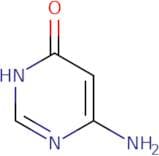
CAS 1193-22-2
:6-Amino-4(3H)-pirimidinone
- 4(1H)-Pyrimidinone, 6-amino-
- 4(3H)-Pyrimidinone, 6-amino-
- 4-Amino-6-Hydroxy Pyrimidine
- 4-Amino-6-pyrimidinol
- 4-Hydroxy-6-aminopyrimidine
- 4-Oxy-6-aminopyrimidine
- 4-Pyrimidinol, 6-amino-
- 6-Amino-1H-pyrimidin-4-one
- 6-Amino-4(3H)-pyrimidinone
- 6-Aminopyrimidin-4(3H)-one
- 6-aminopyrimidin-4(1H)-one
- 6-hydroxypyrimidin-4(3H)-one
- Vedi altri sinonimi
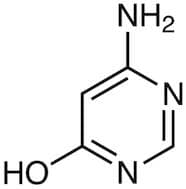
4-Amino-6-hydroxypyrimidine
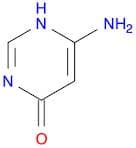
CAS:Formula:C4H5N3OPurezza:>98.0%(T)(qNMR)Colore e forma:White to Orange to Green powder to crystalPeso molecolare:111.104(3H)-Pyrimidinone, 6-amino-
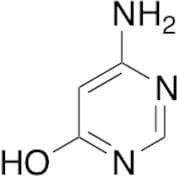
CAS:Formula:C4H5N3OPurezza:98%Colore e forma:SolidPeso molecolare:111.10204-Amino-6-hydroxypyrimidine
CAS:Prodotto controllatoApplications 4-Amino-6-hydroxypyrimidine (cas# 1193-22-2) is a compound useful in organic synthesis.
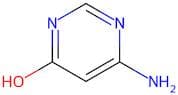
Formula:C4H5N3OColore e forma:NeatPeso molecolare:111.16-Aminopyrimidin-4-ol
CAS:6-Aminopyrimidin-4-ol is an intermediate in the synthesis of orotic acid. It is also a precursor to 6-chloropurine, which is used in the manufacture of orotic acid and 6-aminopurine. 6-Aminopyrimidin-4-ol can be prepared by benzannulation of phosphorus oxychloride with orotic acid or by hydrolysis of 6-chloropurine with thiourea. The latter method is preferred because it results in less waste.
6-Aminopyrimidin-4-ol is labile and must be stored under an inert gas at low temperature to prevent decomposition. It undergoes inactivating reactions with strong oxidizing agents, such as chlorine dioxide, peracetic acid, hydrogen peroxide, and potassium permanganate.
It also reacts with nucleophiles such as ammonia or amines to form stable tautFormula:C4H5N3OPurezza:Min. 95%Colore e forma:PowderPeso molecolare:111.1 g/mol