CAS 1194-66-7
:2,6-Dicloronitrosobenzene
Descrizione:
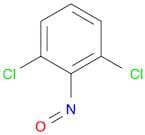
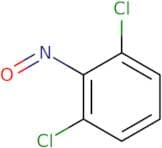
2,6-Dicloronitrosobenzene è un composto organico caratterizzato dalla presenza di due atomi di cloro e di un gruppo nitroso attaccato a un anello benzenico. La sua struttura molecolare presenta un gruppo nitroso (-NO) legato a un anello benzenico che ha sostituenti di cloro nelle posizioni 2 e 6. Questo composto è tipicamente un solido cristallino di colore giallo-arancio ed è noto per le sue potenziali applicazioni nella sintesi organica e come intermediario nella produzione di vari composti chimici. È importante notare che 2,6-Dicloronitrosobenzene può presentare proprietà tossiche e devono essere adottate le opportune misure di sicurezza durante la manipolazione. Il composto è anche sensibile alla luce e al calore, il che può portare a decomposizione. In termini di solubilità, è generalmente più solubile nei solventi organici che in acqua. Come molti composti nitroso, può comportare rischi ambientali e per la salute, richiedendo una gestione e uno smaltimento accurati in conformità con le linee guida normative.
Formula:C6H3Cl2NO
InChI:InChI=1/C6H3Cl2NO/c7-4-2-1-3-5(8)6(4)9-10/h1-3H
SMILES:c1cc(c(c(c1)Cl)N=O)Cl
Sinonimi:- 1,3-Dichloro-2-Nitrosobenzene
Ordinare per
Purezza (%)
0
100
|
0
|
50
|
90
|
95
|
100
2 prodotti.
2,6-Dichloronitrosobenzene
CAS:Formula:C6H3Cl2NOPurezza:97%Colore e forma:SolidPeso molecolare:176.00012,6-Dichloronitrosobenzene
CAS:<p>2,6-Dichloronitrosobenzene is a solvent that is used in the production of textiles and plastics. It can be found as an impurity in solvents such as azobenzene, amines, and nitrosobenzene. 2,6-Dichloronitrosobenzene has been shown to have mutagenic activities and can cause mutations at the base pairs of DNA through mechanisms including oxidative stress and adduct formation with nucleobases. The uptake of this substance by cells may cause cell death due to its high reactivity with cellular components such as proteins and lipids. 2,6-Dichloronitrosobenzene also has a strong pyrylium ionization potential that causes it to form free radicals. 2,6-Dichloronitrosobenzene has been shown to induce cancer in animal models through the activation of carcinogenicity pathways such as p</p>Formula:C6H3Cl2NOPurezza:Min. 95%Peso molecolare:176 g/mol