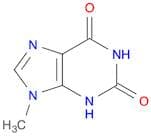
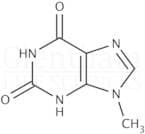
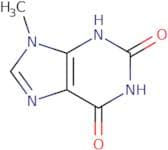
CAS 1198-33-0
:3,9-Diidro-9-metil-1H-purina-2,6-dione
Descrizione:
3,9-Diidro-9-metil-1H-purina-2,6-dione, comunemente conosciuto come teobromina, è un composto di metilxantina con caratteristiche notevoli. È una polvere cristallina bianca a bianco sporco che è solubile in acqua e ha un sapore leggermente amaro. La struttura molecolare presenta una base purinica, che è un componente chiave in varie molecole biologiche, inclusi DNA e RNA. La teobromina si trova principalmente nei semi di cacao ed è nota per le sue proprietà stimolanti, simili alla caffeina, anche se è meno potente. Agisce come un lieve stimolante del sistema nervoso centrale, vasodilatatore e diuretico. Il composto ha varie applicazioni, incluso il suo uso in prodotti alimentari, farmaceutici e come potenziale agente terapeutico per alcune condizioni mediche. Inoltre, la teobromina è stata studiata per le sue proprietà antiossidanti e i potenziali benefici per la salute, come il miglioramento della salute cardiovascolare. Tuttavia, è importante notare che la teobromina può essere tossica per alcuni animali, in particolare i cani, a causa del loro metabolismo più lento del composto.
Formula:C6H6N4O2
InChI:InChI=1S/C6H6N4O2/c1-10-2-7-3-4(10)8-6(12)9-5(3)11/h2H,1H3,(H2,8,9,11,12)
InChI key:InChIKey=DHNIKYWYTSMDDA-UHFFFAOYSA-N
SMILES:O=C1C2=C(NC(=O)N1)N(C)C=N2
Sinonimi:- 1H-Purine-2,6-dione, 3,9-dihydro-9-methyl-
- 3,9-Dihydro-9-methyl-1H-purine-2,6-dione
- 9-methyl-3,9-dihydro-1H-purine-2,6-dione
- NSC 4917
- Xanthine, 9-methyl-
- 9-Methylxanthine
Ordinare per
Purezza (%)
0
100
|
0
|
50
|
90
|
95
|
100
4 prodotti.
1H-Purine-2,6-dione, 3,9-dihydro-9-methyl-
CAS:Formula:C6H6N4O2Colore e forma:SolidPeso molecolare:166.13749-Methylxanthine
CAS:Prodotto controllato9-Methylxanthine is a purine alkaloid that is structurally related to caffeine. It is used as a bronchodilator and to treat cardiac arrhythmias. 9-Methylxanthine has been shown to have an effect on the rate of DNA replication by binding to the enzyme xanthosine phosphorylase, which converts xanthosine monophosphate (XMP) to xanthosine diphosphate (XDP). The drug's effect on other nucleobases, such as adenosine monophosphate (AMP), cannot be ruled out. 9-Methylxanthine also has a strong affinity for macrochelates, which are compounds that contain chelating agents with a large number of ethylenediaminetetraacetic acid (EDTA) groups. This property is due to the high number of nitrogen atoms in the molecule and its ability to form hydrogen bonds between water moleculesFormula:C6H6N4O2Purezza:Min. 95%Colore e forma:PowderPeso molecolare:166.14 g/mol