CAS 120066-38-8
:fattore di rilascio della corticotropina *frammento 6-33
Descrizione:
Il frammento 6-33 del fattore di rilascio della corticotropina (CRF) è un peptide derivato dall'ormone di rilascio della corticotropina più grande, che svolge un ruolo cruciale nella risposta del corpo allo stress. Questo frammento specifico è composto dagli aminoacidi 6 a 33 della CRF a lunghezza completa ed è noto per il suo coinvolgimento nella modulazione dell'asse ipotalamo-ipofisi-surrene (HPA). Il numero CAS 120066-38-8 identifica questo peptide nei database chimici. Caratteristicamente, il frammento CRF 6-33 mostra attività biologica correlata alla risposta allo stress, influenzando il rilascio dell'ormone adrenocorticotropo (ACTH) dalla ghiandola pituitaria. Viene tipicamente sintetizzato attraverso la sintesi di peptidi in fase solida e può essere utilizzato nella ricerca per studiare disturbi correlati allo stress, funzioni neuroendocrine e potenziali applicazioni terapeutiche. Il peptide è generalmente solubile in soluzioni acquose e può mostrare affinità di legame specifiche per i recettori del CRF, contribuendo ai suoi effetti fisiologici. In generale, il frammento CRF 6-33 serve come uno strumento importante nella ricerca neurobiologica ed endocrinologica.
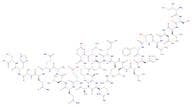
Formula:C141H231N41O43S
Sinonimi:- CRF (6-33) (human, rat)
- H-Ile-Ser-Leu-Asp-Leu-Thr-Phe-His-Leu-Leu-Arg-Glu-Val-Leu-Glu-Met-Ala-Arg-Ala-Glu-Gln-Leu-Ala-Gln-Gln-Ala-His-Ser-OH
- CORTICOTROPIN RELEASING FACTOR FRAGMENT 6-33, HUMAN, RAT
- CRF (6-33)
- 6-33-Corticotropin-releasing factor (human) (9CI)
- CRF (6-33) (human, rat) H-Ile-Ser-Leu-Asp-Leu-Thr-Phe-His-Leu-Leu-Arg-Glu-Val-Leu-Glu-Met-Ala-Arg-Ala-Glu-Gln-Leu-Ala-Gln-Gln-Ala-His-Ser-OH
- CORTICOTROPIN RELEASING FACTOR FRAGMENT 6-33, HUMA
- CRF(6-33)(human)
- ILE-SER-LEU-ASP-LEU-THR-PHE-HIS-LEU-LEU-ARG-GLU-VAL-LEU-GLU-MET-ALA-ARG-ALA-GLU-GLN-LEU-ALA-GLN-GLN-ALA-HIS-SER
- CORTICOTROPIN-RELEASING FACTOR (6-33) (HUMAN, RAT)
- Corticotropin Releasing Factor Fragment 6-33 human, rat >=97% (HPLC)
Ordinare per
Purezza (%)
0
100
|
0
|
50
|
90
|
95
|
100
4 prodotti.
CRF (6-33) (human, rat)
CAS:This CRF fragment may have two different beneficial effects in Alzheimer’s disease (AD). First CRF (6-33) dissociates CRF from the CRF-binding protein and may therefore be able to restore the dramatic reduction of free CRF content in AD. Second this fragment shows cognition-enhancing properties in animal models of learning and memory, without the characteristic anxiogenic effects of CRF receptor agonists, and may therefore be useful in the treatment of memory deficits seen in AD.Formula:C141H231N41O43SPurezza:96.8%Colore e forma:WhitePeso molecolare:3220.7CRF(6-33)(human)
CAS:CRFBP inhibitor peptide; blocks CRF, reduces weight gain, boosts activity in obese rats.Formula:C141H231N41O43SPurezza:98%Colore e forma:SolidPeso molecolare:3220.68CRF (6-33) (human, rat)
CAS:CRF (6-33) is a neuropeptide that is found in the human cerebral cortex and rat liver. It has been shown to inhibit protein synthesis and sequenced by Edmond H. Fischer, who also discovered corticotropin-releasing factor (CRF). CRF (6-33) binds to its receptor CRFR1, which activates phospholipase C and generates inositol 1,4,5-triphosphate. This leads to the release of calcium from intracellular stores and the activation of protein kinase C. The release of calcium ions into the cytosol causes an increase in intracellular levels of cAMP, which activates a series of reactions responsible for the cellular effects of CRF. CRF (6-33) has been shown to be involved in depression by controlling neurotransmitter levels.br>Formula:C141H231N41O43SPurezza:Min. 95%Peso molecolare:3,220.66 g/mol