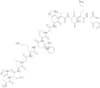
CAS 122018-58-0
:PLP (139-151)
Descrizione:
PLP, o fosfato di piridossale, è la forma attiva della vitamina B6 e svolge un ruolo cruciale come coenzima in varie reazioni biochimiche, in particolare nel metabolismo degli aminoacidi. È caratterizzato dalla sua capacità di partecipare a reazioni di transaminazione, decarbossilazione e racemizzazione, facilitando la conversione degli aminoacidi e la sintesi dei neurotrasmettitori. La sostanza è una polvere cristallina gialla solubile in acqua e presenta un profilo di stabilità dipendente dal pH, risultando più stabile in condizioni neutre o leggermente alcaline. Il PLP è essenziale per il corretto funzionamento degli enzimi coinvolti nel metabolismo di carboidrati, lipidi e aminoacidi, rendendolo vitale per numerosi processi fisiologici. La carenza di PLP può portare a vari problemi di salute, tra cui anemia e disturbi neurologici. Il suo numero CAS, 122018-58-0, lo identifica in modo univoco nei database chimici, aiutando nella ricerca e nei contesti normativi. In generale, il PLP è un composto biochimico significativo con ruoli diversi nella salute umana e nel metabolismo.
Formula:C72H104N20O17
Sinonimi:- Proteolipid Protein
- Myelin Proteolipid Protein Fragment (139-151)
- (Ser140)-Myelin Proteolipid Protein (139-151), Depalmitoylated, Human, Bovine, Dog, Mouse, Rat
- [Ser140]-Myelin Proteolipid Protein (139-151) (Human, Bovine, Dog, Mouse, Rat)
- H2N-Hslgkwlghpdkf-Oh
Ordinare per
Purezza (%)
0
100
|
0
|
50
|
90
|
95
|
100
Trovati 7 prodotti.
(Ser¹⁴⁰)-Myelin Proteolipid Protein (139-151) (depalmitoylated) (human, bovine, dog, mouse, rat)
CAS:This fragment of myelin proteolipid protein is an encephalitogenic determinant, able to bind to diverse sets of T cell receptors.Formula:C72H104N20O17Purezza:97.0%Colore e forma:WhitePeso molecolare:1521.74Ref: 54-OR1109747
1mgPrezzo su richiesta5mgPrezzo su richiesta10mgPrezzo su richiesta25mgPrezzo su richiesta50mgPrezzo su richiesta[SER140]-PLP(139-151)
CAS:[SER140]-PLP(139-151) is a polypeptide fragment of the lipid protein of myelin.Formula:C72H104N20O17Purezza:98%Colore e forma:SolidPeso molecolare:1521.72PLP (139-151)
CAS:PLP (139-151) is derived from Proteolipid Protein (PLP), an epitope of immunodominant encephalitogenic PLP and is involved in promoting encephalomyelitis.Formula:C72H104N20O17Purezza:Min. 95%Colore e forma:PowderPeso molecolare:1,520.8 g/molMyelin PLP (139-151)
CAS:Myelin PLP (139-151) is a basic protein that belongs to the family of oligodendrocyte-myelin glycoproteins. It has been shown to activate toll-like receptor, which is a pattern recognition receptor that recognizes invading pathogens and triggers an immune response. Myelin PLP (139-151) may play a role in the development of autoimmune diseases, as it has been found to be a target for autoantibodies. It has also been shown to have antioxidative properties, which may help prevent free radical damage in the brain and other tissues. The monoclonal antibody against this protein can be used for immunohistological analysis.Formula:C72H104N20O17Purezza:Min. 95%Peso molecolare:1,521.72 g/molPLP (139-151)
CAS:PLP (139-151) peptide is a fragment of myelin proteolipid protein (PLP or lipophilin), from amino acid residue 139 to 151 (HCLGKWLGHPDKF – CAS 131334-43-5 ). Myelin proteolipid protein is the major myelin protein from the central nervous system. PLP (139-151) peptide is commonly used to induce experimental autoimmune encephalomyelitis (EAE) in SJL/J mice. The PLP (139-151) peptide C140S is mutant of the wild-type version where the cystein is replaced by a serine to make the peptide more stable without impacting its antigenic activity.Formula:C72H104N20O17Peso molecolare:1,521.7 g/molMyelin PLP (139-151) acetate
CAS:Myelin PLP (139-151) acetate salt is a cyclic peptide that is derived from the sequence of human myelin basic protein and contains the sequence PLP (139-151). This peptide has shown to have antioxidative properties. It has been shown to have an inhibitory effect on the production of proinflammatory cytokines in experimental autoimmune encephalomyelitis (EAE), which is a model for multiple sclerosis. The peptide has also been shown to block signal pathways, such as toll-like receptor 4, and decrease Ca2+ overload. Clinical relevance remains unclear.
Formula:C72H104N20O17•(C2H4O2)xPurezza:Min. 95%Peso molecolare:1,521.76 g/mol



![[SER140]-PLP(139-151)](/_next/image/?url=https%3A%2Fstatic.cymitquimica.com%2Fproducts%2FTM%2Fthumb%2FTP1312.jpg&w=3840&q=75)