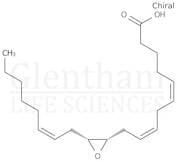
CAS 123931-40-8
:11,12-Eet
- 5,8-Decadienoic acid, 10-[(2S,3R)-3-(2Z)-2-octen-1-yl-2-oxiranyl]-, (5Z,8Z)-
- 11,12-Epoxy-(5Z,8Z,14Z)-eicosatrienoic acid ~100 mug/mL in ethanol, >=95%
(±)11(12)-EET
CAS:(±)11(12)-EET is a fully racemic version of the R/S enantiomeric forms biosynthesized from arachidonic acid by cytochrome P450 enzymes.[1][2][3[]A higher
Formula:C20H32O3Colore e forma:SolidPeso molecolare:320.4711,(12)-epoxy-5(Z),8(Z),14(Z)-eicosatrienoic acid
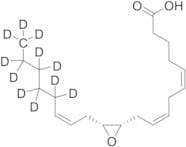
CAS:Formula:C20H32O3Purezza:>95%Colore e forma:In solution, EthanolPeso molecolare:320.4714(15)-Epoxy-5Z,8Z,11Z-eicosatrienoic Acid-D11
CAS:Prodotto controllatoFormula:C20D11H21O3Colore e forma:NeatPeso molecolare:331.53411,12-EET
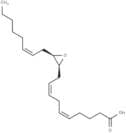
CAS:11,12-EET is an analog of the human protein that has been found to have potential medicinal benefits in the treatment of cancer. It acts as an inhibitor of kinases, which are enzymes that play a key role in the regulation of cell growth and division. 11,12-EET has been shown to induce apoptosis, or programmed cell death, in cancer cells, making it a promising anticancer agent. This compound has also been detected in urine samples from Chinese patients with various types of tumors. Ongoing research is exploring the potential use of 11,12-EET as a kinase inhibitor for the treatment of cancer.
Formula:C20H32O3Purezza:Min. 95%Peso molecolare:320.5 g/mol