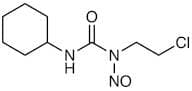
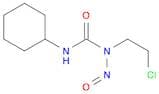
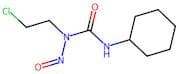
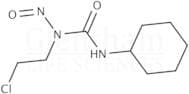
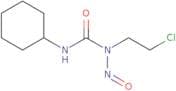
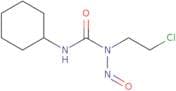
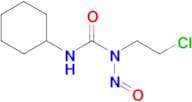
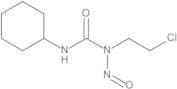
CAS 13010-47-4
:Lomustina
- (Chloro-2-Ethyl)-1-Cyclohexyl-3-Nitrosourea
- (Cloro-2-Etil)-1-Cicloesil-3-Nitrosourea
- 1-(2-Chloroethyl)-1-nitroso-3-cyclohexylurea
- 1-(2-Chloroethyl)-3-Cyclohexyl-1-Nitroso-Ure
- 1-(2-Chloroethyl)-3-Cyclohexyl-1-Nitrosoure
- 1-(2-Chloroethyl)-3-cyclohexyl-1-nitrosourea
- 1-(2-Chloroethyl)-3-cyclohexylnitrosourea
- 1-Chloro-3-Cyclohexyl-1-Ethyl-3-Nitrosourea
- 3-Cyclohexyl-1-(2-chloroethyl)-1-nitrosourea
- Belustine
- Ccnu
- Cecenu
- Ceenu
- Chloroethylcyclohexylnitrosourea
- Cinu
- Cyclohexylchloroethylnitrosourea
- Icig 1109
- Icig1109
- Lomtin
- Lomustin
- Lomustina
- Lustine
- Moostine
- N-(2-Chloroethyl)-N'-cyclohexyl-N-nitrosourea
- N-(2-Chloroethyl)-N’-Cyclohexyl-N-Nitroso-Ure
- Nci-C04740
- Nsc-79037
- Nsc79037
- Rb 1509
- Rb1509
- Sri 2200
- Urea, 1-(2-chloroethyl)-3-cyclohexyl-1-nitroso-
- Vedi altri sinonimi
Lomustine
CAS:Formula:C9H16ClN3O2Purezza:>98.0%(HPLC)(qNMR)Colore e forma:White to Light yellow powder to crystalPeso molecolare:233.70Lomustine
CAS:Compounds with other nitrogen function, nesoiFormula:C9H16ClN3O2Colore e forma:Light Yellow PowderPeso molecolare:233.0931Urea, N-(2-chloroethyl)-N'-cyclohexyl-N-nitroso-
CAS:Formula:C9H16ClN3O2Purezza:99%Colore e forma:SolidPeso molecolare:233.6952Lomustine
CAS:Lomustine (NSC-79037) is an alkylating agent of value against both hematologic malignancies and solid tumors.Formula:C9H16ClN3O2Purezza:98.36% - 99.44%Colore e forma:Solid SolidPeso molecolare:233.7Lomustine
CAS:Formula:C9H16ClN3O2Purezza:≥ 98.0%Colore e forma:White to light-yellow powderPeso molecolare:233.70Lomustine - Bio-X ™
CAS:Lomustine is an alkylating agent that is used as chemotherapy for treating metastatic brain tumors and relapsed Hodgkin’s disease in combination with radiation treatments. This drug causes alkylation and cross-linking of DNA, thus inducing cytotoxicity. Furthermore, this drug inhibits DNA synthesis.
Formula:C9H16ClN3O2Purezza:Min. 95%Colore e forma:PowderPeso molecolare:233.7 g/molLomustine
CAS:DNA cross linker
Formula:C9H16ClN3O2Purezza:Min. 95%Colore e forma:White Slightly Yellow PowderPeso molecolare:233.7 g/molLomustine
CAS:Prodotto controllatoApplications Chloroethylnitrosourea derivative with antitumor activity. Similar to carmustine, chlorozotocin, nimustine, ranimustine. Antineoplastic.
Not a dangerous good if item is equal to or less than 1g/ml and there is less than 100g/ml in the package
References Johnston, T.P., et al.: J. Med. Chem., 9, 892 (1966), Oliverio, V.T., et al.: Cancer Res., 30, 1330 (1970), Thompson, G.R., et al.: Toxicol. Appl. Pharmacol., 21, 405 (1972), Al-Shammary, F.J., et al.: Anal. Profiles Drug Subs., 19, 315 (1990),Formula:C9H16ClN3O2Colore e forma:NeatPeso molecolare:233.7