CAS 1302-78-9
:Bentonite
- 250M
- 250Sa-B
- 6900-20X
- 881B
- Akajo
- Aquagel
- Argel
- Asama
- Askangel
- Baroco
- Ben-Gel
- Benclay
- Bengel
- BentoGrout
- Bentolite
- Bentonit
- Bentonita
- Bentonite
- Bentonites
- Berugen
- Calcigel
- Culvin
- Cvis
- Ekobentokorm
- Exaloid
- Filgel
- Flottobent
- Grolleg
- Gumbrin
- Haruna
- Hodaka
- Impersol
- Kunigel
- Lightcoat
- Monomorilonite
- NaCalit
- Nalbrite
- Otaylite
- Pascalite
- Perstab
- Phyllosilicate
- Pluxcompact
- Printosil
- S-Ben
- Smf-Lv
- Steecoben
- Steecomull
- Suspengel
- Tone
- Volcansil
- Volclay
- Wilkinite
- Wilkonite
- Vedi altri sinonimi
Bentonite, sodium form
CAS:Bentonite, sodium form is used as a suspending agent, a gel binder, a filler in ceramics and a catalyst support.Sodium bentonite is widely utilized as a natural sealant in recreational ponds, dairy and sewage lagoons and city landfills. Due to its colloidal property, it is employed in drilling mud f
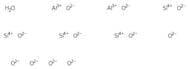
Formula:Al2H2O12Si4Colore e forma:Cream to brown or grey, powderPeso molecolare:360.31Bentonite powder (Montmorillonite)
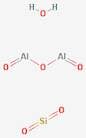
CAS:Formula:Al2H4O6SiColore e forma:No data available.Peso molecolare:182.074Bentonite
CAS:Prodotto controllatoBentonite is a type of clay that has been hydrated and activated with water. This material is used in wastewater treatment and as a filler for paper, rubber, and plastics. Bentonite is also used to adsorb chemical substances on surfaces. Sodium salts are the most common form of bentonite. Bentonite is highly reactive towards acids and bases, while chitosan quaternary ammonium can be used to stabilize this reaction. The kinetic data for bentonite show that it has an affinity for fatty acids and can adsorb them more strongly than other substances.
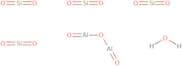
Formula:Al2O3•(SiO2)4•H2OPurezza:Min. 95%Peso molecolare:360.31 g/molRef: 3D-FB156775
Prodotto fuori produzione