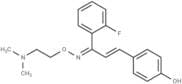
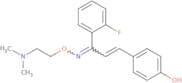
![2-Propen-1-one, 1-(2-fluorophenyl)-3-(4-hydroxyphenyl)-,O-[2-(dimethylamino)ethyl]oxime, (2E)-](/_next/image/?url=https%3A%2Fstatic.cymitquimica.com%2Fcas-image%2Fthumb-webp%2F490694-2-propen-1-one-1-2-fluorophenyl-3-4-hydroxyphenyl-o-2-dimethylamino-ethyl-oxime-2e.webp&w=3840&q=75)
CAS 130581-13-4
:2-Propen-1-one, 1-(2-fluorofenile)-3-(4-idrossifenile)-,O-[2-(dimetilammino)etil]ossima, (2E)-
Eplivanserin (mixture)
CAS:Eplivanserin mixture is a selective serotonin reuptake inhibitor and a 5-HT2A receptor antagonist,Formula:C19H21FN2O2Colore e forma:SolidPeso molecolare:328.387Eplivanserin
CAS:Eplivanserin is a potent tumor inhibitor that belongs to the class of indirubin kinase inhibitors. It has shown great promise as an anticancer agent due to its ability to induce apoptosis in cancer cells and inhibit their growth cycle. Eplivanserin has been found to be effective against a variety of cancers, including breast, lung, and prostate cancer. This medicinal compound is derived from Chinese herbs and has been extensively studied for its potential in cancer treatment. In addition, eplivanserin has been found in urine samples from humans, indicating that it may have potential as a diagnostic tool for cancer detection. Its protein targets are still being investigated, but it is believed that eplivanserin works by inhibiting key enzymes involved in cell signaling pathways that promote cancer cell growth and survival.
Formula:C19H21FN2O2Purezza:Min. 95%Peso molecolare:328.4 g/mol