CAS 1317-80-2
:Rutilo (TiO2)
Descrizione:
Il rutilo, con la formula chimica TiO2 e numero CAS 1317-80-2, è un minerale che si trova naturalmente ed è una delle forme primarie di biossido di titanio. È caratterizzato dal suo alto indice di rifrazione e dalla forte assorbimento della luce UV, rendendolo un pigmento importante in varie applicazioni, tra cui vernici, rivestimenti e plastiche. Il rutilo si trova tipicamente in una struttura cristallina tetragonale, mostrando una gamma di colori che vanno dal marrone rossastro al nero, a seconda delle impurità. È insolubile in acqua e nella maggior parte dei solventi organici, ma può reagire con acidi e basi forti. Il rutilo è anche noto per la sua alta stabilità termica e resistenza alla corrosione chimica, il che contribuisce al suo utilizzo in applicazioni ad alta temperatura. Inoltre, è un semiconduttore con potenziali applicazioni nella fotocatalisi e nella conversione dell'energia solare. Grazie alla sua abbondanza e alle sue proprietà favorevoli, il rutilo è ampiamente estratto e lavorato per uso industriale, in particolare nella produzione di metallo di titanio e pigmenti di biossido di titanio.
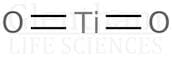
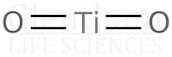
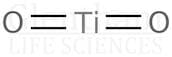
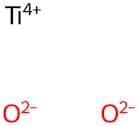
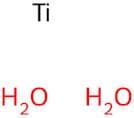
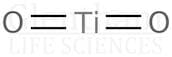
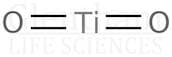
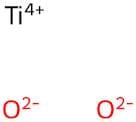
Formula:O2Ti
InChI:InChI=1S/2O.Ti
InChI key:InChIKey=GWEVSGVZZGPLCZ-UHFFFAOYSA-N
SMILES:[Ti](=O)=O
Sinonimi:- A 20-13
- Austiox R-CR
- B 2400
- Ba 0101
- Ba 101
- Baiyuying HTR 668
- CR Super 70
- CW-Ti 001
- Cr 510
- Cr 513
- Cr 515
- Ect 200
- GA 120 (titania)
- Ga 120
- HTTi 04-01
- Lomon R 996
- Longmang 996
- Mbr 9668
- Nr 950
- Nt-Gr 100
- Nt-Gr 150
- Pf 740
- R 20-104
- R 216
- R 2196
- R 237
- R 237 (titania)
- R 258
- R 5566
- R 628
- R 698
- R 699
- R 838
- R 930-4
- R 975
- R-Tc 30
- Rcl 595
- Rm 301Lp
- Rsc 5
- Rutil (TiO2)
- Rutile
- Rutile (TiO<sub>2</sub>)
- Rx 236
- Sagenite
- Sr 237
- Synthetic rutile (TiO2)
- T 595
- Tiona 696
- Tiona RCL 595
- Titania 595
- Titanium Dioxide (Rutile)
- Titanium oxide
- Titanox 3020
- Tr 248
- Tr 700
- Unitane OR
- Vk-T 06H
- ZR 110 (titania)
- Zr 110
- rutilo (TiO2)
- β-Rutile
- pigment white
- Titania
- titanium white
- Titanium Dioxide Anatase
- Titanium(Ⅳ)oxide
- Titanium dioxide,anatase
- Titanium(IV)oxide
- Tilac D
- Anatase,oxid titanium
- rutile titanium dioxide
- Titanium Dioxide food grade
- Titanium dioxide
- TiLox-Black
- Pigment Black 35
- C.I. 77891
- Rutile (TiO2)
- dioxotitanium
- Titanium (IV) dioxide
- C.I. Pigment White 6
- Vedi altri sinonimi
Ordinare per
Purezza (%)
0
100
|
0
|
50
|
90
|
95
|
100
20 prodotti.
Titanium(IV) oxide, rutile, 99.5% min (metals basis)
CAS:Titanium dioxide is used in paints, plastics, paper, and foods. It is used as a UV-resistant material. It shows useful applications in earth sciences. It is also useful in quantitative provenance studies. It is also useful for the photocatalytic applications. It is also useful in high temperature suFormula:O2TiPurezza:99.5%Peso molecolare:79.9Titanium(IV) oxide, rutile, 99.99% (metals basis)
CAS:Titanium(IV) oxide is used in paints, plastics, paper, and foods. It is used as a UV-resistant material. It shows useful applications in earth sciences. It is also useful in quantitative provenance studies. It is also useful for the photocatalytic applications. It is also useful in high temperatureFormula:TiO2Purezza:99.99%Peso molecolare:79.9Titanium(IV) oxide, rutile, 99.9% (metals basis)
CAS:Titanium dioxide is used in paints, plastics, paper, and foods. It is used as a UV-resistant material. It shows useful applications in earth sciences. It is also useful in quantitative provenance studies. It is also useful for the photocatalytic applications. It is also useful in high temperature suFormula:TiO2Purezza:99.9%Peso molecolare:79.9Titanium(IV) oxide, rutile, 99.8% (metals basis)
CAS:Titanium(IV) oxide is used in paints, plastics, paper, and foods. It is used as a UV-resistant material. It shows useful applications in earth sciences. It is also useful in quantitative provenance studies. It is also useful for the photocatalytic applications. It is also useful in high temperatureFormula:TiO2minrutilephasePurezza:99.8%Peso molecolare:79.9Titanium(IV) oxide, powder <100nm particle size
CAS:Titanium(IV) oxide, powder <100nm particle sizeFormula:·2O·TiPurezza:99.5%Colore e forma:White PowderPeso molecolare:79.87g/molTitanium(IV) oxide, rutile
CAS:Titanium(IV) oxide, rutilePurezza:99.8%,100nm(Before wrapping),golden red,OleophilicPeso molecolare:79.866g/molTitanium(IV) Oxide, Rutile (99.9%, trace metals basis)
CAS:Formula:TiO2Purezza:>99.99%Colore e forma:White to Almost white powder to crystalPeso molecolare:79.87Titanium(IV) Oxide, Rutile (99.99%, trace metals basis)
CAS:Formula:TiO2Purezza:>99.99%Colore e forma:White to Almost white powder to crystalPeso molecolare:79.87Titanium(IV) oxide
CAS:Titanium(IV) oxideFormula:·2O·TiPurezza:95%Colore e forma: off white solidPeso molecolare:79.8658g/molTitanium oxide Nanopowder, rutile, 99% [APS 200nm, spherical]
CAS:Formula:TiO2Purezza:≥ 99.0%Colore e forma:White powderPeso molecolare:79.87Titanium oxide Nanopowder, 10 - 30 nm, rutile, 99.5%
CAS:Formula:TiO2Purezza:≥ 99.5%Colore e forma:White powderPeso molecolare:79.87Titanium(IV) oxide
CAS:Titanium(IV) oxidePurezza:99.99%Colore e forma:White SolidPeso molecolare:79.8658g/molTitanium oxide Nanopowder, rutile, coated with SiO2, 99 %
CAS:Purezza:≥ 99.0%Colore e forma:White powderTitanium(IV) oxide, 99.998%
CAS:Formula:TiO2Purezza:≥ 99.998%Colore e forma:White to off-white powderPeso molecolare:79.90Titanium (IV) oxide - Rutile
CAS:Rutile is the most common form of titanium oxide and is a photocatalyst that can react with water vapor to produce hydrogen gas. Rutile has been shown to be toxicologically safe and has been used in analytical methods for the detection of sodium salts, such as the determination of sodium in seawater. Rutile can also be used for wastewater treatment, where it functions as a catalyst for chemical reactions that remove organic pollutants from water.Formula:TiO2Purezza:Min. 95%Colore e forma:White Clear LiquidPeso molecolare:79.87 g/mol













![Titanium oxide Nanopowder, rutile, 99% [APS 200nm, spherical]](/_next/image/?url=https%3A%2Fstatic.cymitquimica.com%2Fproducts%2F7W%2Fthumb%2FGX4909.jpg&w=3840&q=75)