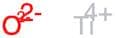
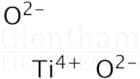
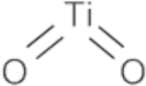
CAS 13463-67-7
:Titania
Descrizione:
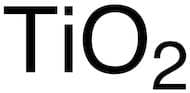
Titania, noto anche come biossido di titanio, è un composto inorganico ampiamente utilizzato con la formula chimica TiO2. È caratterizzato dal suo alto indice di rifrazione e dalla forte assorbimento della luce ultravioletta, rendendolo un pigmento bianco efficace in vernici, rivestimenti, plastiche e cosmetici. Titania esiste in diverse forme cristalline, con le più comuni che sono anatase e rutilo, ognuna delle quali presenta proprietà distinte. Il rutilo è noto per la sua superiore opacità e durabilità, mentre l'anatase è spesso utilizzata in applicazioni fotocatalitiche grazie alla sua maggiore superficie e reattività. Titania è non tossico e rispettoso dell'ambiente, contribuendo alla sua popolarità in varie applicazioni, inclusi prodotti alimentari e protezioni solari. Inoltre, ha proprietà semiconduttrici, che ne consentono l'uso nella fotocatalisi e nella conversione dell'energia solare. Titania è anche utilizzato nella produzione di ceramiche e come riempitivo nelle industrie della gomma e della carta. La sua stabilità, resistenza alla decolorazione e capacità di disperdere la luce lo rendono un materiale versatile sia in prodotti industriali che di consumo.
Formula:O2Ti
InChI:InChI=1S/2O.Ti
InChI key:InChIKey=GWEVSGVZZGPLCZ-UHFFFAOYSA-N
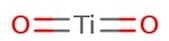
SMILES:[Ti](=O)=O
Sinonimi:- 1007Mc
- 1008Si
- 1120Zs95A8
- 1385Rn59
- 1500D
- 18Nr-Ao
- 234Da
- 500Hd
- 5480Mr
- 5484Wj
- 710T
- 760T
- 7910Dl
- 7M3001N
- 8180Tc
- 9W1100
- AgriTitan
- Ajantox
- CSB
- CZ
- Cab-O-Ti
- Cg-T
- Cr-El
- Cs-C
- Csb-M
- Dif-Ab-10W
- Finntitan
- Flamenco
- Fs-A
- Hrc-Ii
- Isoflux
- It-S
- Jhnm-W
- Jrnc
- Jupiter
- Kowet
- Kronos
- MCH
- Micromarimo
- New-Sp
- Nt-C
- Nufil
- Nw-Tio-A
- R706S
- REX
- RLX
- Rayox
- Rdi-S
- Rlx-A
- Rps-V
- Rr-Bc
- Rtipbc
- Rtspnb
- Rtt-Mibk
- Rutile
- Sachtopore
- Sad-M
- Smf-Lv
- Spp-M
- Srd-K
- Srd-M
- Srd-Pgme
- Srd-W
- Ssp-M
- T-Cote
- T-Lalt
- TS
- Ti-O-N
- Ti-Pure
- Ti-W
- TiO<sub>2</sub>-SDS
- TioTio
- Titan(Iv)-Oxid
- Titandioxid
- Titania
- Titanox
- Tofix-P
- Tto-S-1
- UT-White
- UV-Titan
- Unitane
- Vhp-Dcs
- WD-Ti50
- Zxl-Cqs
- C.I. Pigment White 6
- C.I. 77891
- Titanium dioxide
- dioxotitanium
- titanium white
- Titanium dioxide,anatase
- Titanium peroxide (TiO2)
- Titanium Dioxide Anatase
- Titanium oxide (TiO2)
- Titanium dioxide,rutile
- Tilac D
- Titanium(Ⅳ)oxide
- TiLox-Black
- Titanium Dioxide food grade
- Pigment Black 35
- Rutiox CR
- Titanium(IV)oxide
- Titanium (IV) dioxide
- pigment white
- rutile titanium dioxide
- Titanium Oxide
- anatase titanium dioxide
- Titanium dioxide
- Vedi altri sinonimi
Ordinare per
Purezza (%)
0
100
|
0
|
50
|
90
|
95
|
100
Titanium(IV) Oxide, AEROXIDE® P 25
CAS:Formula:TiO2Colore e forma:White to Almost white powder to crystalPeso molecolare:79.87Titanium(IV) oxide, high surface area, 99.9% (metals basis)
CAS:Photocatalyst, catalyst, catalyst supportTitanium(IV) oxide is used in paints, varnishes, paper, plastics printing inks, sun screen, fibers, rubber, cosmetic products, anti-fogging coatings, foodstuffs, pure titanium, glass, glass ceramics, memristor, electrical ceramics, catalysts, electric conductFormula:O2TiPurezza:99.9%Peso molecolare:79.87Titanium(IV) oxide, 20-36% in H{2}O colloidal dispersion
CAS:UV protection in clear coatingsFormula:O2TiColore e forma:DispersionPeso molecolare:79.87Titanium(IV) oxide, Puratronic™, 99.995% (metals basis)
CAS:Titanium(IV) oxide is used in paints, varnishes, paper, plastics printing inks, sun screen, fibers, rubber, cosmetic products, anti-fogging coatings, foodstuffs, pure titanium, glass, glass ceramics, memristor, electrical ceramics, catalysts, electric conductors and chemical intermediates. It exhFormula:O2TiPurezza:99.995%Colore e forma:White, PowderPeso molecolare:79.87Titanium(IV) oxide, sintered lumps, 99.5%
CAS:Titanium(IV) oxide, sintered lumps, 99.5%
Formula:TiO2Purezza:99.5%Colore e forma:white lumpPeso molecolare:79.90Titanium(IV) oxide (99.99+%-Ti) PURATREM
CAS:Titanium(IV) oxide (99.99+%-Ti) PURATREM
Formula:TiO2Purezza:(99.99+%-Ti)Colore e forma:white pwdr.Peso molecolare:79.90Titanium Dioxide
CAS:Titanium oxidesFormula:O2TiColore e forma:White PowderPeso molecolare:79.9 g/molRef: IN-DA003AN9
25kgPrezzo su richiesta5g25,00€25g28,00€100g28,00€500g73,00€6000g162,00€10000g305,00€10kg495,00€500kg12.131,00€Titanium(IV) oxide, 99+%
CAS:Titanium(IV) oxide, 99+%
Formula:TiO2Purezza:99+%Colore e forma:1.0-1.3 micron white pwdr.Peso molecolare:79.90Titanium dioxide
CAS:Formula:TiO2Purezza:≥ 98.0%Colore e forma:White to almost white powderPeso molecolare:79.87Titanium dioxide, 99%, Ph. Eur., BP, USP grade
CAS:Formula:TiO2Purezza:98.0 - 100.5 % (EP)Colore e forma:White to almost white powderPeso molecolare:79.87Titanium(IV) oxide Powder 220 nm, 95%
CAS:Formula:TiO2Purezza:≥ 95.0%Colore e forma:White powderPeso molecolare:79.90Titanium(IV) oxide, 99.999%
CAS:Formula:TiO2Purezza:≥ 99.999%Colore e forma:White to off-white powderPeso molecolare:79.90Titanium(IV) oxide, 99.9%
CAS:Formula:TiO2Purezza:≥ 99.9%Colore e forma:White to grey solid piecesPeso molecolare:79.90Titanium(IV) oxide, 99.5%
CAS:Formula:TiO2Purezza:≥ 99.5%Colore e forma:White to off-white powderPeso molecolare:79.90NorPro(TM) Titanium(IV) oxide catalyst support
CAS:Formula:TiO2Colore e forma:White to light-grey pelletsPeso molecolare:79.90Titanium(IV) oxide-Nano Powder (anatase); 99.9%
CAS:Formula:TiO2Purezza:≥ 99.9%Colore e forma:White powderPeso molecolare:79.90Titanium Dioxide
CAS:Prodotto controllatoApplications Titanium Dioxide is an effective bacteriocide when it is irradiated with UV-light, causing lipid peroxidation. Also commonly used in paint, coating materials and cosmetics due to its low toxicity.
References Maness, P. et al.: App. Env. Microbio., 65, 4094 (1999); Wang, J. et al.: Mut. Res., 628, 99 (2007);Formula:O2TiColore e forma:NeatPeso molecolare:79.87Titanium (IV) oxide - Rutile nanopowder ca. 25 nm particle size
CAS:Rutile titanium dioxide is a naturally occurring mineral that is composed of titanium (IV) oxide and oxygen. Rutile TiO2 nanopowder has shown to be an effective catalyst for the decomposition of organic matter in wastewater treatment, due to its strong reactive properties. Rutile TiO2 nanopowder can also be used as an additive in polymerase chain reactions (PCR). It has been shown to have a number of physiological effects, such as changes in the expression of genes related to the pathogenesis of certain cancers. The mechanism by which this occurs is not yet fully understood and requires further research. Rutile TiO2 nanopowder is produced by laser ablation and has been used for analytical methods such as electrochemical impedance spectroscopy. The toxicity of rutile TiO2 nanopowder has been studied extensively with regards to its effects on animals, humans, and plants.Formula:TiO2Purezza:(%) Min. 98%Colore e forma:White Off-White PowderPeso molecolare:79.87 g/mol