CAS 13629-22-6
:9H-Fluoren-9-one, idrazone
Descrizione:
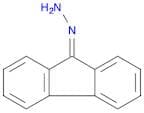
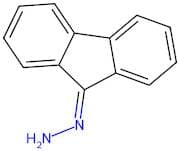
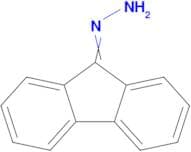
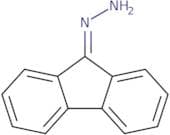
9H-Fluoren-9-one, idrazone è un composto organico caratterizzato dalla presenza di un gruppo funzionale idrazone attaccato a una struttura di fluorenone. Questo composto presenta tipicamente un aspetto cristallino che varia dal giallo all'arancione ed è noto per la sua stabilità in condizioni standard. Il legame idrazone, formato tra il gruppo carbonilico della fluorenone e un derivato della idrazina, conferisce una reattività unica, rendendolo utile in varie reazioni chimiche, comprese le reazioni di condensazione e accoppiamento. Può anche mostrare interessanti proprietà ottiche, che possono essere sfruttate nella scienza dei materiali e nell'elettronica organica. Il composto è generalmente solubile in solventi organici, come etanolo e diclorometano, ma può avere una solubilità limitata in acqua. Le sue applicazioni possono estendersi a campi come la sintesi organica, la farmaceutica e potenzialmente come colorante o pigmento grazie alle sue proprietà cromoforiche. Come per molti composti organici, è necessario adottare precauzioni di sicurezza durante la manipolazione, poiché può comportare rischi per la salute se ingerito o inalato.
Formula:C13H10N2
InChI:InChI=1S/C13H10N2/c14-15-13-11-7-3-1-5-9(11)10-6-2-4-8-12(10)13/h1-8H,14H2
InChI key:InChIKey=YCNUILAKOMIBAL-UHFFFAOYSA-N
SMILES:N(N)=C1C=2C(C=3C1=CC=CC3)=CC=CC2
Sinonimi:- (9H-Fluoren-9-ylidene)hydrazine
- 9H-Fluoren-9-one hydrazone
- 9H-fluoren-9-ylidenehydrazine
- Fluoren-9-one, hydrazone
- Fluoren-9-ylidenehydrazine
- Fluorenone hydrazone
- NSC 24099
- NSC 90662
Ordinare per
Purezza (%)
0
100
|
0
|
50
|
90
|
95
|
100
4 prodotti.
Ref: 10-F635268
1gPrezzo su richiesta5gPrezzo su richiesta25gPrezzo su richiesta100gPrezzo su richiesta250mgPrezzo su richiesta9-Fluorenone hydrazone
CAS:<p>9-Fluorenone hydrazone is a compound that belongs to the group of chemical compounds known as heterocycles. It can be synthesized by reacting 9-fluorenone with hydrazine. The synthesis proceeds via an intramolecular hydrogen transfer reaction, which forms an unsymmetrical aldehyde. This aldehyde is oxidized to form the corresponding hydrazone through protonation and subsequent attack of a nitrogen nucleophile. Hydrazones are important for their antimicrobial properties and are used in the treatment of bacterial infections such as tuberculosis and leprosy. They are also used in the production of dyes and pharmaceuticals. The mechanism for this reaction involves the formation of an intermediate carbocation, followed by deprotonation to form the final product.</p>Formula:C13H10N2Purezza:Min. 95%Colore e forma:Yellow PowderPeso molecolare:194.23 g/mol