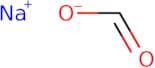
CAS 141-53-7
:formiato di sodio
Descrizione:
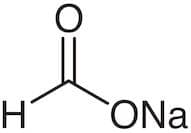
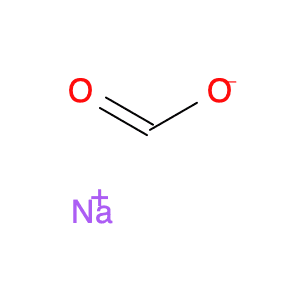
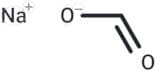
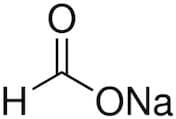
formiato di sodio, con la formula chimica HCOONa e numero CAS 141-53-7, è il sale sodico dell'acido formico. Si presenta come una polvere cristallina bianca e igroscopica che è solubile in acqua e ha un sapore leggermente salato. formiato di sodio è comunemente usato in varie applicazioni, tra cui come agente tampone nella ricerca biochimica, conservante nell'industria alimentare e agente antigelo per strade. Può anche servire come fonte di acido formico nella sintesi chimica. La sostanza è generalmente considerata non tossica, ma deve essere maneggiata con cura per evitare irritazioni alla pelle e agli occhi. In termini delle sue proprietà chimiche, formiato di sodio può subire decomposizione termica a temperature elevate, rilasciando gas come l'anidride carbonica. La sua capacità di agire come agente riducente lo rende utile in alcuni processi industriali. In generale, formiato di sodio è un composto versatile con una significativa utilità in diversi campi, tra cui chimica, scienza alimentare e applicazioni ambientali.
Formula:CH2O2·Na
InChI:InChI=1S/CH2O2.Na/c2-1-3;/h1H,(H,2,3);
InChI key:InChIKey=ZDPALFHDPFYJDY-UHFFFAOYSA-N
SMILES:C(O)=O.[Na]
Sinonimi:- Formate, Sodium
- Formiate de sodium
- Formiato De Sodio
- Formic acid, sodium salt (1:1)
- NA-Amasil
- Natriumformiat
- Natriumformiat, Techn.
- Sodium Formate
- Formic acid, sodium salt
Ordinare per
Purezza (%)
0
100
|
0
|
50
|
90
|
95
|
100
12 prodotti.
Sodium Formate
CAS:Formula:CHNaO2Purezza:>97.0%(T)Colore e forma:White to Almost white powder to crystalPeso molecolare:68.01Sodium formate, ACS, 99.0% min
CAS:Reducing agent, buffering agent, complexing agent, Noble metal precipitantSodium formate is used in analytical chemistry to precipitate noble metals. It is used for tanning leather, for dyeing and printing fabrics. It acts as an electroplating agent, an acidulant in the textile industry, a reducingFormula:CHNaO2Purezza:99.0%Peso molecolare:68.01Sodium formate, 98%
CAS:Sodium formate is used in analytical chemistry to precipitate noble metals. It is used for tanning leather, for dyeing and printing fabrics. It acts as an electroplating agent, an acidulant in the textile industry, a reducing agent, a mordant, a complexing agent. Further, it is used in photographicFormula:CHNaO2Purezza:98%Colore e forma:White or pale cream, Crystals or powder or crystalline powderPeso molecolare:68.01Formic acid, sodium salt (1:1)
CAS:Formula:CHNaO2Purezza:98%Colore e forma:SolidPeso molecolare:68.0072Sodium formate
CAS:Formula:NaOOCHPurezza:≥ 97.0% (dried basis)Colore e forma:White to off-white crystalline poweder or crystalsPeso molecolare:68.01Sodium formate
CAS:Sodium formate has antiviral and antifungal properties, can inhibit carbonic anhydrase, and can also be used as a biochemical buffer.Formula:CHNaO2Colore e forma:SolidPeso molecolare:68.01Sodium Formate
CAS:Formula:CHNaO2Purezza:97%Colore e forma:Solid, Crystalline Powder or PowderPeso molecolare:68.007Sodium Formate extrapure AR, ACS
CAS:Formula:HCOONaPurezza:min. 99%Colore e forma:White, Crystalline powder, Clear, ColourlessPeso molecolare:68.01Sodium Formate pure, 98%
CAS:Formula:CHNaO2Purezza:min. 98%Colore e forma:White, Crystalline powder, Clear, ColourlessPeso molecolare:68.01Formic acid sodium salt
CAS:Formic acid is a carboxylic acid that is found in the form of calcium formate. Formic acid has synergistic effects with many other drugs, including calcium, and it is often used as a model system for studying the effects of various drugs on biological systems. The constant pressure analytical method was developed to determine the concentration of formic acid in blood samples and can be used as an analytical tool for biocompatible polymers. Formic acid has been shown to inhibit bowel disease by inhibiting certain enzymes involved in the disease process. It also has inhibitory properties against complex enzymes such as lipases and proteases. Formic acid undergoes a phase transition from liquid to gas at a temperature of about -76°C (-108°F).
Formula:HCOONaPurezza:Min. 95%Colore e forma:White PowderPeso molecolare:68.01 g/mol