CAS 144-62-7
:Acido ossalico
Descrizione:
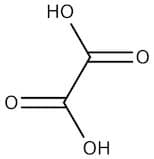
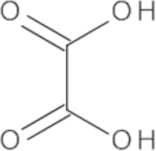
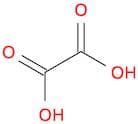
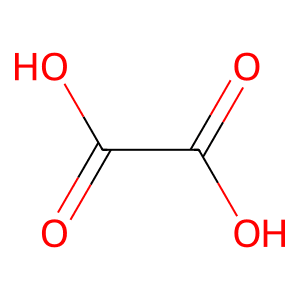
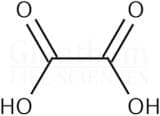
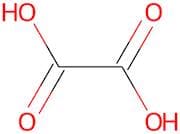
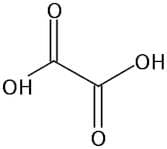
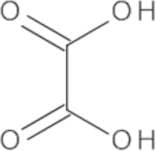
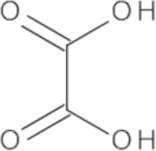
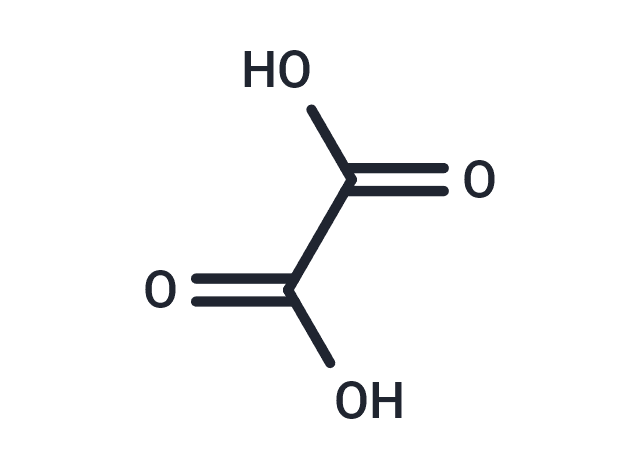
Acido ossalico, con il numero CAS 144-62-7, è un composto organico cristallino e incolore classificato come acido dicarbossilico. Ha una formula molecolare di C2H2O4 ed è noto per le sue forti proprietà acide, essendo significativamente più acido di molti altri acidi carbossilici. Acido ossalico è altamente solubile in acqua e può formare vari sali, noti come ossalati, quando reagisce con basi. Si trova naturalmente in molte piante, tra cui il rabarbaro e gli spinaci, ed è spesso utilizzato in varie applicazioni industriali, come la pulizia dei metalli, il sbiancamento e come agente riducente nelle reazioni chimiche. Oltre ai suoi usi industriali, Acido ossalico è utilizzato anche nei laboratori per scopi analitici. Tuttavia, è importante maneggiare Acido ossalico con cura, poiché può essere tossico e corrosivo, presentando rischi per la salute in caso di ingestione o contatto con la pelle. La sua capacità di chelare ioni metallici lo rende prezioso in vari processi chimici, ma le precauzioni di sicurezza sono essenziali a causa dei suoi potenziali pericoli.
Formula:C2H2O4
InChI:InChI=1S/C2H2O4/c3-1(4)2(5)6/h(H,3,4)(H,5,6)
InChI key:InChIKey=MUBZPKHOEPUJKR-UHFFFAOYSA-N
SMILES:C(C(O)=O)(O)=O
Sinonimi:- ACIDO OSSALICO (s)
- Acide oxalique
- Acide(S) Oxalique(S)
- Acido Ossalico
- Acido Oxalico
- Aktisal
- Anhydrous Oxalic Acid
- Aquisal
- ÁCido(S) OxáLico(S)
- DeerClean
- Ethanedioate
- Ethanedioic Acid
- Ethanedioic acid, conjugate acid (1:2)
- Ethanedionic acid
- Nsc 132055
- Nsc 151956
- Nsc 62774
- Nsc 76990
- OA
- OXAALZUUR (s)
- OXALSÄURE(n)
- Oxaalzuur
- Oxagel
- Oxalic Acid (Crystal) C.P. (1LB/BT)
- Oxalic acid anhydrous
- Oxalsaeure
- Oxalsaure
- Refined Oxalic Acid
- Ultraplast Activate S 52
- シュウ酸
- Vedi altri sinonimi
Ordinare per
Purezza (%)
0
100
|
0
|
50
|
90
|
95
|
100
17 prodotti.
Oxalic acid, anhydrous, 98%
CAS:Oxalic acid is used as reducing agent for photographic films, as mordant in dyeing process, as bleaching agent for removal of rust through complex formation, and as grinding agent during polishing of marble. It is used in waste water treatment to remove calcium. The conjugate base of oxalic acid aFormula:C2H2O4Purezza:98%Colore e forma:White to pale cream, Crystals or powder or crystalline powderPeso molecolare:90.03Oxalic acid, anhydrous
CAS:Formula:C2H2O4Purezza:98.0 - 102.0 %Colore e forma:White crystalline powderPeso molecolare:90.04Ref: 4Z-I-3727
5mgPrezzo su richiesta10mgPrezzo su richiesta25mgPrezzo su richiesta50mgPrezzo su richiesta100mgPrezzo su richiestaOxalic acid
CAS:Oxalic acid (Ethanedioic acid) is a strong dicarboxylic acid occurring in many plants and vegetables, produced in the body by metabolism of glyoxylic acid.Formula:C2H2O4Purezza:98.51% - 99.39%Colore e forma:White Solid CrystallinePeso molecolare:90.03Ref: ST-EA-CP-A25005
10mgPrezzo su richiesta25mgPrezzo su richiesta50mgPrezzo su richiesta100mgPrezzo su richiestaOxalic Acid
CAS:Applications An impurity of oxaliplatin which is a coordination complex that is used in cancer chemotherapy.A reducing agent and its conjugate base, known as oxalate (C2O42−), is a useful chelating agent for metal cations.
References Wheate, N., et al.: Dalton Trans., 39, 8113 (2010),Formula:C2H2O4Colore e forma:White To Off-WhitePeso molecolare:90.03Ref: ST-EA-CP-O12001
10mgPrezzo su richiesta25mgPrezzo su richiesta50mgPrezzo su richiesta100mgPrezzo su richiestaOxalic acid
CAS:Oxalic acid is an organic compound that is a dicarboxylic acid. It is found in many plants, including the leaves of rhubarb and spinach. Oxalic acid exists in two forms: the anhydrous form (known as calcium oxalate) and the hydrated form (known as calcium oxalate dihydrate). The detection sensitivity of this compound can be increased by using a matrix effect. When light emission is detected, it can be used to detect oxalic acid in a solution. Sodium citrate has been shown to increase the sensitivity of the reaction solution for detecting oxalic acid. This reaction creates a particle with sodium carbonate that can be measured by kinetic data.Formula:C2H2O4Purezza:Min. 95%Colore e forma:White Off-White PowderPeso molecolare:90.03 g/mol