CAS 153-91-3
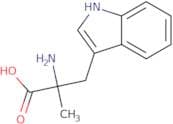
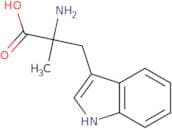
:A-metil-dl-triptofano
Descrizione:
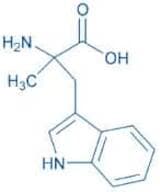
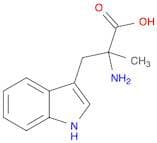
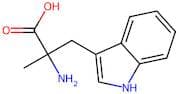
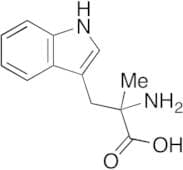
A-metil-dl-triptofano, con il numero CAS 153-91-3, è un derivato di aminoacido che è strutturalmente correlato all'aminoacido essenziale triptofano. Presenta un gruppo metile attaccato al carbonio alfa, il che altera le sue proprietà biochimiche rispetto al suo composto originale. Questo composto è spesso utilizzato nella ricerca biochimica, in particolare negli studi che coinvolgono la sintesi proteica e il metabolismo, poiché può agire come un analogo del triptofano. Si sa che A-metil-dl-triptofano inibisce l'attività di alcuni enzimi coinvolti nel metabolismo del triptofano, rendendolo uno strumento prezioso nello studio delle vie metaboliche. È tipicamente un solido cristallino bianco a bianco sporco ed è solubile in solventi polari. La struttura unica del composto consente di interagire con vari sistemi biologici, influenzando processi come la sintesi dei neurotrasmettitori e il ripiegamento delle proteine. Come con molti derivati di aminoacidi, è importante maneggiare A-metil-dl-triptofano con cura in ambienti di laboratorio, seguendo i protocolli di sicurezza per mitigare eventuali rischi.
Formula:C12H14N2O2
Sinonimi:- Alpha-Methyl-DL-Tryptophan
- H-.alpha.-Me-DL-Trp-OH
- A-Methyl-L-Tryptophan
Ordinare per
Purezza (%)
0
100
|
0
|
50
|
90
|
95
|
100
7 prodotti.
H-α-Me-DL-Trp-OH
CAS:Bachem ID: 4008387.
Formula:C12H14N2O2Purezza:> 99%Colore e forma:White PowderPeso molecolare:218.26α-Methyl-DL-tryptophan
CAS:Applications α-methyl-DL-tryptophan is used as a blocker of ATBo, an amino acid transporter whose expression is upregulated in cancer. It is also a substrate or non-transported inhibitor of the amino acid transporter PAT2 (slc36a2).
References Karunakaran, J., et al.: J. Biochem., 414, 343 (2008); Edwards, N., et al.: Biochimica et Biophysica Acta, Biomembranes, 1808, 260 (2011)Formula:C12H14N2O2Colore e forma:Off White SolidPeso molecolare:218.25DL-α-Methyltryptophan
CAS:DL-alpha-Methyltryptophan is a metabolite of the amino acid tryptophan. It is a monoamine neurotransmitter that has been implicated in brain function and inflammatory lesions. DL-alpha-Methyltryptophan can be used as a potential drug target for the treatment of Parkinson's disease, depression, and anxiety disorders. The hydroxyl group on the indole ring of DL-alpha-Methyltryptophan gives it an increased reactivity with oxygen, which allows it to be oxidized by monoamine oxidase B (MAO B) to 3-hydroxyanthranilic acid. This reaction can be inhibited by MAO A inhibitors such as clorgyline or selegiline. The oxidation of DL-alpha-Methyltryptophan leads to increased concentrations of serotonin in the brain and increased activity of aminotransferases.Formula:C12H14N2O2Purezza:Min. 98 Area-%Colore e forma:PowderPeso molecolare:218.25 g/mol2-Amino-3-(1H-indol-3-yl)-2-methylpropanoic acid
CAS:Formula:C12H14N2O2Purezza:98%Colore e forma:SolidPeso molecolare:218.256α-Methyl-DL-tryptophan
CAS:Alpha-methyl-DL-tryptophan is a useful building block that is used as a reaction component in the synthesis of other compounds. It is a versatile building block that can be used to synthesize complex compounds and as a necessary intermediate in the synthesis of other compounds. Alpha-methyl-DL-tryptophan is an important reagent for research purposes, and is also a speciality chemical. This compound has been shown to have beneficial effects on the central nervous system and may have potential therapeutic uses for neurological disorders (e.g., Parkinson's disease). Alpha-methyl-DL-tryptophan has been shown to be safe with minimal side effects when given at appropriate doses, but it should not be used by pregnant women or patients with epilepsy or depression.Formula:C12H14N2O2Purezza:Min. 97.0 Area-%Peso molecolare:218.26 g/molRef: 3D-M-5098
5gPrezzo su richiesta10gPrezzo su richiesta25gPrezzo su richiesta50gPrezzo su richiesta2500mgPrezzo su richiesta-Unit-ggPrezzo su richiesta