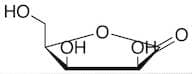
CAS 15384-34-6
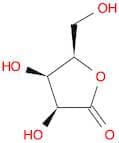
:(3R,5R)-3,4-diidrossi-5-(idrossimetil)tetraidrofurano-2-one
Descrizione:
La sostanza chimica nota come (3R,5R)-3,4-diidrossi-5-(idrossimetil)tetraidrofurano-2-one, con il numero CAS 15384-34-6, è un derivato di zucchero ciclico caratterizzato dalla sua struttura ad anello di tetraidrofurano. Questo composto presenta più gruppi idrossilici, che contribuiscono alla sua natura idrofila e al potenziale di legame idrogeno, influenzando la sua solubilità in acqua e in altri solventi polari. La presenza di stereocentri nelle posizioni 3 e 5 conferisce chiralità, portando a una specifica attività ottica. Questo composto è spesso studiato per la sua attività biologica, in particolare in relazione al suo ruolo nelle vie metaboliche o come potenziale precursore nella chimica organica sintetica. Le sue caratteristiche strutturali suggeriscono che possa partecipare a varie reazioni chimiche, inclusa l'ossidazione e l'estereficazione, rendendolo di interesse sia nella ricerca farmaceutica che biochimica. In generale, le sue caratteristiche strutturali uniche e i gruppi funzionali lo posizionano come un composto prezioso nello studio della chimica dei carboidrati e dei campi correlati.
Formula:C5H8O5
InChI:InChI=1/C5H8O5/c6-1-2-3(7)4(8)5(9)10-2/h2-4,6-8H,1H2/t2-,3?,4-/m1/s1
SMILES:C([C@@H]1C([C@H](C(=O)O1)O)O)O
Ordinare per
Purezza (%)
0
100
|
0
|
50
|
90
|
95
|
100
7 prodotti.
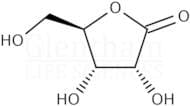
D-Lyxono-1,4-lactone
CAS:D-Lyxono-1,4-lactone is a 4-deoxy-l-fucose derivative that is a potent inhibitor of bacterial growth. It is a highly effective antibiotic with a broad spectrum of activity against Gram-positive and Gram-negative bacteria. D-Lyxono-1,4-lactone has been shown to be active against multivorans, including Escherichia coli and Salmonella enterica serovar Typhimurium. This compound was found to be more active than antibiotics such as penicillin and streptomycin. The structure of D-Lyxono-1,4-lactone includes two hydroxamic acid groups that are connected by an acetal linkage to form the benzylidene acetal moiety. The optical enantiomers of this molecule have been characterized using high resolution NMR spectroscopy and magnetic resonance spectroscopy techniques.BR> Dosis: 250Formula:C5H8O5Purezza:Min. 95.0 Area-%Peso molecolare:148.11 g/molRef: 3D-W-201380
-Unit-ggPrezzo su richiesta5gPrezzo su richiesta10gPrezzo su richiesta25gPrezzo su richiesta50gPrezzo su richiesta2500mgPrezzo su richiestaD-Lyxono-1,4-lactone
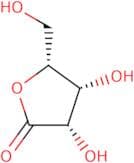
CAS:D-Lyxono-1,4-lactone is an inhibitor of the enzyme fucosidase. It competitively inhibits the enzyme, but does not inhibit other hydroxamic acids such as enantiomers of D-lyxono-1,4-lactone. D-Lyxono-1,4-lactone has been used to treat HIV and AIDS because it prevents viral replication by blocking the synthesis of glycoproteins in the virus's envelope. It also has inhibitory effects on tumor cells that are not dependent on fucosidase activity. Magnetic resonance spectroscopy (NMR) studies have shown that d-lyxono-1,4-lactone binds to human liver cells and blocks the binding site for cytotoxic molecules in these cells. The molecular modelling study has demonstrated that d-lyxono 1,4 lactone binds to a specific site on human HLA class II molecule and reduces itsFormula:C5H8O5Purezza:(%) Min. 97%Colore e forma:PowderPeso molecolare:148.11 g/mol(3S,4R,5R)-3,4-Dihydroxy-5-(hydroxymethyl)dihydrofuran-2(3H)-one
CAS:Formula:C5H8O5Purezza:95%Peso molecolare:148.114D-Lyxono-1,4-lactone
CAS:Prodotto controllatoApplications D-Lyxono-1,4-lactone is used for synthesis of 1,4-dideoxy-1,4-imino-L-arabinitol, a glucosidase inhibitor with in vitro antiviral activity.
References Mitrakou, A., et al.: Diab. Med., 15, 657 (1998), Scott, L., et al.: Drugs, 59, 521 (2000), Vasella, A., et al.: Curr. Opin. Chem. Biol., 6, 619 (2002), Kato, A., et al.: J. Med. Chem., 48, 2036 (2005),Formula:C5H8O5Colore e forma:NeatPeso molecolare:148.11