CAS 1556-34-9
:Bromoetilacridina
Descrizione:
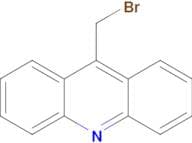
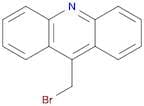
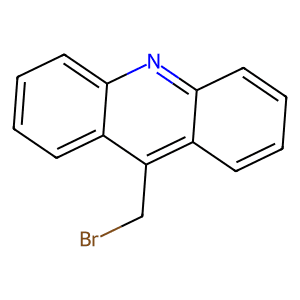
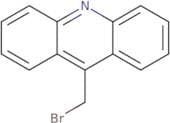
Bromoetilacridina, con il numero CAS 1556-34-9, è un composto chimico caratterizzato dalla sua struttura ad acridina sostituita con un gruppo bromoetile. Questo composto tipicamente mostra proprietà associate sia a sistemi aromatici che alifatici, il che può influenzare la sua reattività e interazioni. Bromoetilacridina è spesso studiato per le sue potenziali applicazioni in chimica medicinale, in particolare nello sviluppo di agenti antitumorali, grazie all'attività biologica nota del gruppo acridina. La presenza del gruppo bromoetile può aumentare la sua lipofilia, influenzando potenzialmente la sua farmacocinetica e biodisponibilità. Inoltre, il composto può partecipare a varie reazioni chimiche, comprese sostituzioni nucleofile e sostituzioni aromatiche elettrofile, rendendolo un intermedio versatile nella sintesi organica. Le sue proprietà fisiche, come solubilità e punto di fusione, possono variare in base alle condizioni specifiche e alla purezza del campione. In generale, Bromoetilacridina rappresenta un composto significativo nel campo della chimica organica e medicinale, giustificando ulteriori indagini sul suo potenziale terapeutico.
Formula:C14H10BrN
InChI:InChI=1/C14H10BrN/c15-9-12-10-5-1-3-7-13(10)16-14-8-4-2-6-11(12)14/h1-8H,9H2
SMILES:c1ccc2c(c1)c(CBr)c1ccccc1n2
Sinonimi:- 9-(Bromomethyl)acridine
Ordinare per
Purezza (%)
0
100
|
0
|
50
|
90
|
95
|
100
5 prodotti.
9-(Bromomethyl)acridine [for HPLC Labeling]
CAS:Formula:C14H10BrNPurezza:>98.0%(T)(HPLC)Colore e forma:Light yellow to Brown powder to crystalPeso molecolare:272.159-(Bromomethyl)acridine
CAS:Purezza:95.0%Colore e forma:Liquid, No data available.Peso molecolare:272.1449890136719Acridine, 9-(bromomethyl)-
CAS:Formula:C14H10BrNPurezza:98%Colore e forma:SolidPeso molecolare:272.13999-(Bromomethyl)acridine
CAS:9-(Bromomethyl)acridine (9-BMA) is a fluorescent molecule that has been used as a probe for the identification of fatty acids, with an acyl chain length between 10 and 20 carbon atoms. It is also an important reagent in biological studies, such as the investigation of the mechanism of action of antidepressant drugs. 9-BMA was first synthesized in 1884 by German chemist Richard Willstätter. The compound is used as a starting material to synthesize other chemicals, such as trifluoromethanesulfonate (TMS). In analytical chemistry, TMS can be used to modify glycerides into fatty acid methyl esters (FAMEs), which are then analysed using gas chromatography (GC). GC analysis allows for the detection of individual fatty acids in a sample, which may then be used to determine dietary habits. The FAMEs can also be analysed using linear regression analysis to determine their molecular weightFormula:C14H10BrNPurezza:Min. 95%Colore e forma:PowderPeso molecolare:272.14 g/mol
![9-(Bromomethyl)acridine [for HPLC Labeling]](/_next/image/?url=https%3A%2Fstatic.cymitquimica.com%2Fproducts%2F3B%2Fthumb%2FB1926.jpg&w=3840&q=75)