CAS 156251-01-3
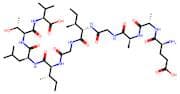
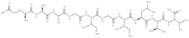
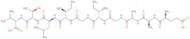
:H-GLU-ALA-ALA-GLY-ILE-GLY-ILE-LEU-THR-VAL-OH
Descrizione:
La sostanza chimica con il nome "H-GLU-ALA-ALA-GLY-ILE-GLY-ILE-LEU-THR-VAL-OH" e numero CAS "156251-01-3" è un peptide composto da una sequenza di amminoacidi. Questo peptide presenta una combinazione di residui idrofili e idrofobici, che possono influenzare la sua solubilità e interazione con le membrane biologiche. La presenza di acido glutammico (GLU) introduce una catena laterale caricata negativamente, mentre gli amminoacidi a catena ramificata come l'isoleucina (ILE) e la leucina (LEU) contribuiscono al suo carattere idrofobico. Il gruppo idrossile terminale (OH) suggerisce che potrebbe avere alcune caratteristiche polari, potenzialmente migliorando la sua solubilità in ambienti acquosi. Peptidi come questo possono svolgere ruoli significativi nei processi biologici, inclusi segnalazione, attività enzimatica e funzioni strutturali nelle proteine. La sequenza e la composizione specifiche possono anche influenzare la sua attività biologica, stabilità e potenziali applicazioni in farmacologia o biotecnologia. Comprendere le proprietà di tali peptidi è cruciale per il loro utilizzo in contesti di ricerca e terapeutici.
Formula:C42H74N10O14
Sinonimi:- Glu-Ala-Ala-Gly-Ile-Gly-Ile-Leu-Thr-Val
- Eaagigiltv
- Antigen Sk29-Aa (26-35) (Human)
- Antigen Lb39-Aa (26-35) (Human)
- Mart 1 (26-35)
- Mart-1 (26-35) (Human)
- Melanoma Antigen Recognized By T-Cells 1 (26-35) (Human)
Ordinare per
Purezza (%)
0
100
|
0
|
50
|
90
|
95
|
100
6 prodotti.
MART-1 (26-35) (human)
CAS:MART-1 (26-35) has been shown to be better recognized by a number of polyclonal and monoclonal populations of tumor-reactive HLA-A*0201-restricted cytotoxic T lymphocytes (CTL) than MART-1 (27-35) (human).Formula:C42H74N10O14Purezza:96.7%Colore e forma:WhitePeso molecolare:943.11MART-1 (26-35) (human)
CAS:MART-1 (26-35) (human) (MART-1 (26-35) human) is a peptide fragment of MART-1 protein.Formula:C42H74N10O14Purezza:>99.99%Colore e forma:SolidPeso molecolare:943.1MART-1 (26-35)
CAS:Native Melan-A (26-35) decapeptide derives from the melanocyte lineage-specific protein Melan-A/MART-1, which is expressed in almost 75-100% of primary and metastatic melanomas. The region 26-35 of Melan-A protein acts as an antigenic peptide that is recognized by CD8+ tumor-reactive cytolytic T lymphocytes (CTLs) for designing antigen-specific cancer vaccines1. It has been shown that CD8+ Melan-A-specific CTLs isolated from melanoma patients efficiently lyse the Melan-A-expressing HLA-A*0201+ melanoma cell line. However, CTLs preferentially recognize the Melan-A (26-35) peptide as compared with the Melan-A (27-35) peptide. Moreover, the Melan-A (26-35) A27L analog (ELAGIGILTV) has a higher binding affinity to HLA-A*0201 than the native Melan-A (26-35) peptide (EAAGIGILTV), and consequently displays more potent antigenicity and immunogenicity. It has been reported that the concentration of Melan-A (26-35) A27L analog required to obtain 50% of maximal antigenic activity (EC50) is 0.01nM, whereas that of the native Melan-A (26-35) peptide is 0.25nM1. Therefore, the relative activity of Melan-A (26-35) A27L analog is 25 fold higher than that of the native Melan-A (26-35) peptide. Furthermore, functional competition assay has shown that the concentration of Melan-A (26-35) A27L analog required to achieve 50% inhibition (IC50) of tumor lysis is 2nM, which is 10 fold lower than that of the native Melan-A (26-35) peptide. Regarding peptide stability in human serum, the half-lifes (t1/2) of the native Melan-A (26-35) peptide and the A27L analog are quite similar (45 and 40min, respectively) as measured by HPLC-ESI-MS, but much higher than that of the Melan-A (27-35) nonapeptide (5min).Formula:C42H74N10O14Colore e forma:PowderPeso molecolare:943.1 g/molMART-1 (26-35) (human)
CAS:Native Melan-A (26-35) decapeptide derives from the melanocyte lineage-specific protein Melan-A/MART-1, which is expressed in almost 75-100% of primary and metastatic melanomas. The region 26-35 of Melan-A protein acts as an antigenic peptide that is recognized by CD8+ tumor-reactive cytolytic T lymphocytes (CTLs) for designing antigen-specific cancer vaccines1. It has been shown that CD8+ Melan-A-specific CTLs isolated from melanoma patients efficiently lyse the Melan-A-expressing HLA-A*0201+ melanoma cell line. However, CTLs preferentially recognize the Melan-A (26-35) peptide as compared with the Melan-A (27-35) peptide. Moreover, the Melan-A (26-35) A27L analog (ELAGIGILTV) has a higher binding affinity to HLA-A*0201 than the native Melan-A (26-35) peptide (EAAGIGILTV), and consequently displays more potent antigenicity and immunogenicity. It has been reported that the concentration of Melan-A (26-35) A27L analog required to obtain 50% of maximal antigenic activity (EC50) is 0.01nM, whereas that of the native Melan-A (26-35) peptide is 0.25nM1. Therefore, the relative activity of Melan-A (26-35) A27L analog is 25 fold higher than that of the native Melan-A (26-35) peptide. Furthermore, functional competition assay has shown that the concentration of Melan-A (26-35) A27L analog required to achieve 50% inhibition (IC50) of tumor lysis is 2nM, which is 10 fold lower than that of the native Melan-A (26-35) peptide. Regarding peptide stability in human serum, the half-lifes (t1/2) of the native Melan-A (26-35) peptide and the A27L analog are quite similar (45 and 40min, respectively) as measured by HPLC-ESI-MS, but much higher than that of the Melan-A (27-35) nonapeptide (5min).Formula:C42H74N10O14Peso molecolare:943.11 g/molMART-1 (26-35) (human) trifluoroacetate salt
CAS:Native Melan-A (26-35) decapeptide derives from the melanocyte lineage-specific protein Melan-A/MART-1, which is expressed in almost 75-100% of primary and metastatic melanomas. The region 26-35 of Melan-A protein acts as an antigenic peptide that is recognized by CD8+ tumor-reactive cytolytic T lymphocytes (CTLs) for designing antigen-specific cancer vaccines1. It has been shown that CD8+ Melan-A-specific CTLs isolated from melanoma patients efficiently lyse the Melan-A-expressing HLA-A*0201+ melanoma cell line. However, CTLs preferentially recognize the Melan-A (26-35) peptide as compared with the Melan-A (27-35) peptide. Moreover, the Melan-A (26-35) A27L analog (ELAGIGILTV) has a higher binding affinity to HLA-A*0201 than the native Melan-A (26-35) peptide (EAAGIGILTV), and consequently displays more potent antigenicity and immunogenicity. It has been reported that the concentration of Melan-A (26-35) A27L analog required to obtain 50% of maximal antigenic activity (EC50) is 0.01nM, whereas that of the native Melan-A (26-35) peptide is 0.25nM1. Therefore, the relative activity of Melan-A (26-35) A27L analog is 25 fold higher than that of the native Melan-A (26-35) peptide. Furthermore, functional competition assay has shown that the concentration of Melan-A (26-35) A27L analog required to achieve 50% inhibition (IC50) of tumor lysis is 2nM, which is 10 fold lower than that of the native Melan-A (26-35) peptide. Regarding peptide stability in human serum, the half-lifes (t1/2) of the native Melan-A (26-35) peptide and the A27L analog are quite similar (45 and 40min, respectively) as measured by HPLC-ESI-MS, but much higher than that of the Melan-A (27-35) nonapeptide (5min).Formula:C42H74N10O14Purezza:Min. 95%Peso molecolare:943.1 g/mol