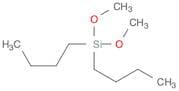
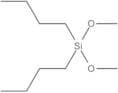
CAS 18132-63-3
:Di-n-butil-dimetossisilano
- Dibutyl(Dimethoxy)Silane
Silane, dibutyldimethoxy-
CAS:Formula:C10H24O2SiPurezza:98%Colore e forma:LiquidPeso molecolare:204.3819DI-n-BUTYLDIMETHOXYSILANE
CAS:Alkyl Silane - Conventional Surface Bonding
Aliphatic, fluorinated aliphatic or substituted aromatic hydrocarbon substituents are the hydrophobic entities which enable silanes to induce surface hydrophobicity. The organic substitution of the silane must be non-polar. The hydrophobic effect of the organic substitution can be related to the free energy of transfer of hydrocarbon molecules from an aqueous phase to a homogeneous hydrocarbon phase. A successful hydrophobic coating must eliminate or mitigate hydrogen bonding and shield polar surfaces from interaction with water by creating a non-polar interphase. Although silane and silicone derived coatings are in general the most hydrophobic, they maintain a high degree of permeability to water vapor. This allows coatings to breathe and reduce deterioration at the coating interface associated with entrapped water. Since ions are not transported through non-polar silane and silicone coatings, they offer protection to composite structures ranging from pigmented coatings to rebar reinforced concrete. A selection guide for hydrophobic silanes can be found on pages 22-31 of the Hydrophobicity, Hydrophilicity and Silane Surface Modification brochure.
Di-n-butyldimethoxysilane; Dimethoxydi-n-butylsilane
Dialkoxy silaneFormula:C10H24O2SiPurezza:97%Colore e forma:Straw LiquidPeso molecolare:204.39