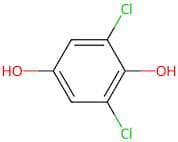
CAS 20103-10-0
:2,6-Dicloroidrochinone
- 1,4-Benzenediol, 2,6-dichloro-
- 1,4-Benzenediol, 2,6-dichloro- (9CI)
- 2,6-Dichloro-1,4-benzenediol
- 2,6-Dichloro-4-hydroquinone
- 2,6-Dichloro-4-hydroxyphenol
- 2,6-Dichloro-p-benzohydroquinone
- 2,6-Dichloro-p-hydroquinone
- 2,6-Dichlorobenzene-1,4-Diol
- Hydroquinone, 2,6-dichloro-
- Hydroquinone, 2,6-dichloro- (8CI)
- Nsc 36936
- 2,6-Dichlorohydroquinone
- 2,6-Dichlorohydroquinone
- C07097
- 2,6-Dichloroquinol
- Vedi altri sinonimi
1,4-Benzenediol, 2,6-dichloro-
CAS:Formula:C6H4Cl2O2Purezza:97%Colore e forma:SolidPeso molecolare:179.0008Ref: 4Z-P-57138
5mgPrezzo su richiesta10mgPrezzo su richiesta25mgPrezzo su richiesta50mgPrezzo su richiesta100mgPrezzo su richiesta2,6-Dichlorohydroquinone
CAS:2,6-Dichlorohydroquinone (2,6-DCQ) is a reactive chemical that has been shown to be cytotoxic and genotoxic in vitro. 2,6-DCQ binds to the thiol group of cysteine residues on the enzyme's active site. This binding changes the redox potential of the molecule and inhibits its activity. 2,6-DCQ also reacts with other proteins in the cell and disrupts their function. This compound is found in high concentrations in samples from wastewater treatment plants. It is also found to be present in some foods such as milk and cheese due to bacterial metabolism.
2,6-DCQ is a metabolite of chlorpyrifos (an insecticide), and it has been shown that it can react with glutathione reductase to form a glutathione adduct which may have toxic effects on cells. The mechanism by which this occurs is not well understood at this time butFormula:C6H4Cl2O2Purezza:Min. 95 Area-%Colore e forma:White PowderPeso molecolare:179 g/molRef: 3D-FD21676
Prodotto fuori produzione