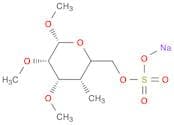
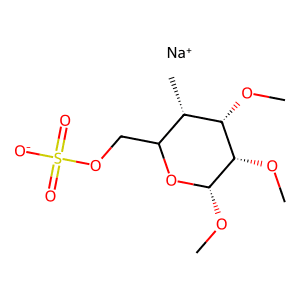
CAS 201346-23-8
:HEPTAKIS(2,3-DI-O-METIL-6-O-SULFO)-(B)
Descrizione:
Heptakis(2,3-di-O-metile-6-O-solfato)-β-ciclodextrina, identificata dal numero CAS 201346-23-8, è una ciclodextrina modificata che presenta proprietà uniche di solubilità e complessazione grazie alle sue modifiche strutturali. Le ciclodextrine sono oligomeri ciclici composti da unità di glucosio, e la variante heptakis contiene sette monomeri di glucosio. Le modifiche specifiche, inclusa l'aggiunta di gruppi sulfonato e metossile, migliorano la sua solubilità in acqua e aumentano la sua capacità di formare complessi di inclusione con vari composti idrofobici. Questo la rende particolarmente utile nelle applicazioni farmaceutiche, come i sistemi di somministrazione di farmaci, dove può migliorare la solubilità e la biodisponibilità di farmaci poco solubili. Inoltre, il gruppo sulfonato conferisce caratteristiche anioniche, che possono influenzare le interazioni con altre molecole, comprese proteine e acidi nucleici. In generale, questo composto è prezioso in vari campi, tra cui la chimica medicinale, la scienza alimentare e le applicazioni ambientali, grazie alla sua capacità di incapsulare e stabilizzare diverse entità chimiche.
Formula:C10H19NaO8S
Sinonimi:- Sodium Heptakis(2,3-dimethyl-6-sulfato)--cyclodextrin
- HEPTAKIS(2 3-DI-O-METHYL-6-O-SULFO)-(B)&
- Heptakis(2,3-dimethyl-6-sulfato)--cyclodextrin Sodium Salt
- 2,3-Di-O-methyl-6-O-sulfo-β-cyclodextrin heptasodium salt, HDMS-β-CD
- 2,3-di-o-methyl-6-o-sulfo-β-cyclodextrin heptasodium salt
- HEPTAKIS(2,3-DI-O-METHYL-6-O-SULFO)-(B) -CYCLODEXTRIN NA7 96%
- Heptakis(2,3-di-O-methyl-6-O-sulfo)-β-cyclodextrin Heptasodium Salt
- 2,3-Dimethyl-cyclodextrin-6-hydrogen sulfate, sodium salt
- heptakis-(2,3-di-o-methyl-6-o-sulfo)-β-cyclodextrin heptasodium salt
- Heptakis(2,3-di-O-methyl-6-sulfo)-beta-cyclodextrin sodium salt
- heptakis(2,3-di-o-methyl-6-o-sulfo)-(b)-cyclodextrinna7
Ordinare per
Purezza (%)
0
100
|
0
|
50
|
90
|
95
|
100
Trovati 4 prodotti.
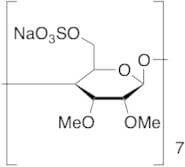
Heptakis(2,3-di-O-methyl-6-O-sulfo)-b-cyclodextrin Heptasodium Salt
CAS:Formula:C56H91Na7O56S7Colore e forma:SolidPeso molecolare:2045.6715Heptakis(2,3-di-O-methyl-6-sulfo)-β-cyclodextrin sodium salt
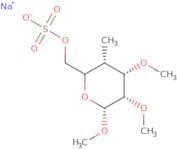
CAS:Heptakis(2,3-di-O-methyl-6-sulfo)-β-cyclodextrin sodium saltHeptakis(2,3-di-O-methyl-6-O-sulfo)-β-cyclodextrin Heptasodium Salt
CAS:Prodotto controllatoApplications A β-Cyclodextrin derivative that inhibits anthrax lethal toxin.
References Friedlander, A., et al.: J. Biol. Chem., 261, 7123 (1986), Finkelstein, A., et al.: Toxicology, 87, 29 (1994), Benson, E., et al.: Biochemistry, 37, 3941 (1998), Brossier, F., et al.: Toxicon, 39, 1747 (2001),Formula:C56H91O56S7·7NaColore e forma:NeatPeso molecolare:2045.67Heptakis(2,3-di-O-methyl-6-O-sulfo)-β-cyclodextrin heptasodium
CAS:This beta-cyclodextrin (β-CD) derivative is a functionalized cyclic oligosaccharide composed of seven glucose units, characterized by a hydrophilic exterior and a lipophilic cavity (bigger than α-CD and smaller than γ-CDs), which allows it to encapsulate various guest molecules. This structural feature facilitates its use in multiple applications, including pharmaceuticals, food enhancement, and cosmetics. In the pharmaceutical industry, it enhances the solubility and stability of poorly water-soluble drugs, improving their bioavailability and efficacy while also masking unpleasant tastes. The food sector utilizes it as a stabilizer for flavors, colors, and nutrients, extending shelf life by protecting sensitive ingredients from degradation. In cosmetics, it serves as a complexing agent for fragrances and active components, ensuring their stability and controlled release. Its use expands to many other fields, including nanotechnology for drug delivery systems, environmental remediation for extracting organic pollutants, textiles for slow-release fragrances, and analytical chemistry for chiral separation.Formula:C56H98O56S7Purezza:Min. 95%Peso molecolare:1890.28657