CAS 20449-79-0
:Melittina
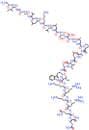
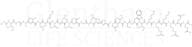
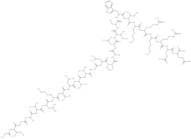
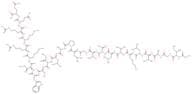
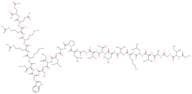
- H-Gly-Ile-Gly-Ala-Val-Leu-Lys-Val-Leu-Thr-Thr-Gly-Leu-Pro-Ala-Leu-Ile-Ser-Trp-Ile-Lys-Arg-Lys-Arg-Gln-Gln-NH2
- Melittin From Bee Venom Sequencing*Grade
- Beevenommelittin
Melittin
CAS:Formula:C131H229N39O31Purezza:≥ 97.0%Colore e forma:White to faint yellow or faint tan powderPeso molecolare:2846.46Melittin
CAS:Melittin: principal bee venom toxin, 26 amino acids, activates low-weight PLA2, not high-weight PLA2.Formula:C131H229N39O31Purezza:98.37% - 99.92%Colore e forma:SolidPeso molecolare:2846.46Melittin
CAS:Melittin is a 26-residue peptide originally isolated from venom of the European honeybee. Melittin is a cationic, hemolytic peptide from honey bee venom. Melittin lowers the surface tension at the plasma membrane and causes cell lysis. Melittin exhibits potent anti-inflammatory and antimicrobial activity. Melittin has been extensively used as a model peptide for observing membrane lipid-protein interactions.
Formula:C131H229N39O31Colore e forma:PowderPeso molecolare:2,846.47 g/molMelittin - 95%
CAS:Apitherapy (the use of honey bee products in alternative medicine) is an emerging field, with a long history of unsupported health benefits, particularly in cancer. Components of bee venom have been demonstrated to have antitumoral effects in various cancers. For example, honey bee venom (XM176021) was shown to reduce metastases of breast cancer to the lungs and inhibit tumour growth (OrsoliÄ, et al., 2003). Similarly, the active component of bee venom, a peptide called melittin (FM10065), showed anticancer selectivity through undefined molecular mechanisms and suggests novel treatment strategies for aggressive breast cancers (Duffy, et al., 2020).
Formula:C131H229N39O31Purezza:Min. 95%Colore e forma:PowderPeso molecolare:2,846.47 g/molMelittin, 70%
CAS:Apitherapy (the use of honey bee products in alternative medicine) is an emerging field, with a long history of unsupported health benefits, particularly in cancer. Components of bee venom have been demonstrated to have antitumoral effects in various cancers. For example, honey bee venom (XM176021) was shown to reduce metastases of breast cancer to the lungs and inhibit tumour growth (OrsoliÄ, et al., 2003). Similarly, the active component of bee venom, a peptide called melittin (FM10065), showed anticancer selectivity through undefined molecular mechanisms and suggests novel treatment strategies for aggressive breast cancers (Duffy, et al., 2020).Formula:C131H229N39O31Purezza:Min. 95%Colore e forma:PowderPeso molecolare:2,846.46 g/molMelittin
CAS:Synthetic melittin, the main component of the honeybee venom. The amphiphilic nature of this antimicrobial peptide makes it a excellent model compound for monitoring lipid-protein interactions in membranes. Adade et al. observed that melittin peptide could kill Trypanosoma cruzi parasites by inducing different cell death pathways.Formula:C131H229N39O31Purezza:98.5%Colore e forma:WhitePeso molecolare:2846.5Melittin
CAS:Melittin is a major component of bee venom that has been shown to have antibacterial efficacy against gram-positive bacteria, including methicillin-resistant Staphylococcus aureus. It also demonstrates anti-viral activity, for example it inhibits human immunodeficiency virus and herpes simplex virus. Furthermore it can be used in the treatment of inflammatory-related illnesses due to it inhibiting the phospholipase A2 enzyme. In addition to this Melittin's abaility to inhibit inflammatory mediators such as nitric oxide and cyclooxygenase-2 aids in the treatment of inflammatory diseases. As a result of Melittin having the capabilities of attacking lipid membranes and it surpressing COX-2 mRNA expression it can also be used in the treatment of tumours. The bound form of melittin is not toxic to mammalian cells, but it is toxic when it is released into the cell cytoplasm. Melittin has been shown to inhibit transcriptional regulation and locomotor activity in mice. This may be due to its ability to bind DNA, preventing transcription and translation of certain genes. Lastly It has strong hemolytic activity and been seen to increase insulin secretion via depolarization of pancreatic beta-cells. Melittin is a diverse peptide which can be used ina whole spectrum of research and therapeutic areas.
Formula:C131H229N39O31Purezza:Min. 95%Peso molecolare:2,846.47 g/mol