CAS 206660-42-6
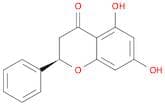
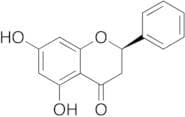
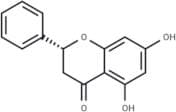
:(2R)-Pinocembrina
- (2R)-Pinocembrin
- 4H-1-Benzopyran-4-one, 2,3-dihydro-5,7-dihydroxy-2-phenyl-, (2R)-
- (R)-PinoceMbrin
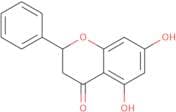
4H-1-Benzopyran-4-one, 2,3-dihydro-5,7-dihydroxy-2-phenyl-, (2R)-
CAS:Formula:C15H12O4Colore e forma:SolidPeso molecolare:256.2534(R)-Pinocembrin
CAS:Prodotto controllatoApplications (2R)-Pinocembrin is the (R)-enantiomer of Pinocembrin, a flavanoid with antioxidant activity found in damiana, honey, and propolis. (2R)-Pinocembrin is a potential inhibitor of PIM1 kinase, an oncogene that has been implicated in the development of leukemias, lymphomas, and prostate cancer.
References Zhao, J. et al.: J. Ethnopharmacol., 120, 387 (2008); Holder, S. et al.: Mol. Cancer Ther., 6, 163 (2007); Holder, S. et al.: Bioorg. Med. Chem., 15, 6463 (2007);Formula:C15H12O4Colore e forma:WhitePeso molecolare:256.25(-)-Pinocembrin
CAS:(-)-Pinocembrin: Anti-tuberculosis (IC50: 1.11 mg/mL dormant, 1.21 mg/mL active), antiproliferative (IC50: 1.88-11 mg/mL on various cell lines).Formula:C15H12O4Colore e forma:SolidPeso molecolare:256.25(R)-Pinocembrin
CAS:(R)-Pinocembrin is a flavanone, which is a type of flavonoid compound. It is naturally sourced from a variety of plants, notably in honey, propolis, and certain fruits and vegetables. Its mode of action is primarily through its antioxidative and anti-inflammatory activities. (R)-Pinocembrin functions by scavenging free radicals, inhibiting inflammatory cytokines, and modulating various cellular pathways, which can impact oxidative stress and inflammation at a molecular level.
Formula:C15H12O4Purezza:Min. 95%Peso molecolare:256.25 g/mol