CAS 2138-48-9
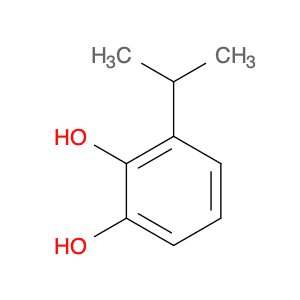
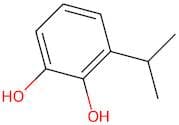
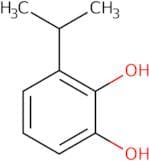
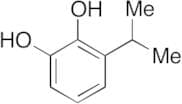
:3-(1-Metiletil)-1,2-benzenediolo
Descrizione:
3-(1-Metiletil)-1,2-benzenediolo, comunemente noto come 2,6-Di-tert-butile-4-metilfenolo (DTBMP), è un composto organico caratterizzato dalla sua struttura fenolica. Presenta un anello benzenico sostituito con due gruppi tert-butile e un gruppo idrossile, che contribuisce alle sue proprietà antiossidanti. Questo composto è tipicamente un solido bianco a giallo pallido a temperatura ambiente ed è solubile in solventi organici. Il DTBMP è utilizzato principalmente come stabilizzatore in varie applicazioni industriali, tra cui plastica, gomma e combustibili, grazie alla sua capacità di inibire la degradazione ossidativa. La sua struttura molecolare gli consente di catturare efficacemente i radicali liberi, rendendolo prezioso per prolungare la durata dei materiali. Inoltre, presenta bassa tossicità, il che lo rende adatto per l'uso in prodotti di consumo. Tuttavia, come per molte sostanze chimiche, è necessario osservare adeguate misure di gestione e sicurezza per mitigare eventuali rischi potenziali associati all'esposizione.
Formula:C9H12O2
InChI:InChI=1S/C9H12O2/c1-6(2)7-4-3-5-8(10)9(7)11/h3-6,10-11H,1-2H3
InChI key:InChIKey=XLZHGKDRKSKCAU-UHFFFAOYSA-N
SMILES:C(C)(C)C1=C(O)C(O)=CC=C1
Sinonimi:- 1,2-Benzendiol, (1-methylethyl)-
- 1,2-Benzenediol, 3-(1-Methylethyl)-
- 1,2-Dihydroxy-3-isopropylbenzene
- 218-385-0
- 3-(1-Methylethyl)-1,2-benzenediol
- 3-Isopropyl-1,2-dihydroxybenzene
- 3-Isopropylbenzene-1,2-diol
- 3-Isopropylcatechol
- 3-Isopropylpyrocatechol
- 3-Propan-2-ylbenzene-1,2-diol
- Isopropyl catechol
- NSC 62675
- Vedi altri sinonimi
Ordinare per
Purezza (%)
0
100
|
0
|
50
|
90
|
95
|
100
5 prodotti.
3-Isopropylbenzene-1,2-diol
CAS:Formula:C9H12O2Purezza:97%Colore e forma:SolidPeso molecolare:152.19043-Isopropylcatechol
CAS:3-Isopropylcatechol is a chemical compound that belongs to the group of catechols. It is a subunit of the catecholamine neurotransmitters dopamine, norepinephrine, and epinephrine. 3-Isopropylcatechol is oxidized to form 3-hydroxycatechol and 3,4-dihydroxybenzoic acid by hydroxy groups in the presence of oxygen. The oxidation products can be used as carbon sources for growth by bacteria. The bacterium Escherichia coli expresses 3-isopropylcatechol from its DNA sequences, which is then converted into extradiol (a precursor) and then into the final product. Escherichia coli requires an organic solvent such as methanol or ethanol to grow on this substrate.Formula:C9H12O2Purezza:Min. 95%Colore e forma:PowderPeso molecolare:152.19 g/mol3-Isopropylcatechol
CAS:Prodotto controllatoApplications 3-Isopropylcatechol is an intermediate formed in the synthesis of Miltirone (M344500), an active component in Salvia miltiorrhiza that has been shown to inhibit the increase in the abundance of the mRNA for the α4 subunit of the GABAA receptor induced by ethanol withdrawal in cultured hippocampal neurons. A potential phytotherapeutic agent in the treatment of alcohol dependence.
References Mostallino, M. et al.: Eur. J. Pharmacol., 494, 83 (2004); Abenavoli, L. et al.: Rec. Prog. Med. Plants, 29, 19 (2010); Colombo, G. et al.: Alcohol. Clin. Exp. Res., 30, 754 (2006)Formula:C9H12O2Colore e forma:NeatPeso molecolare:152.19