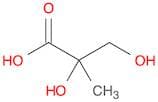
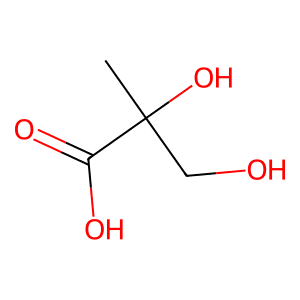
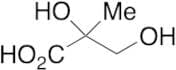
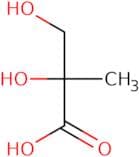
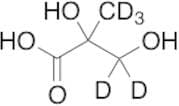
CAS 21620-60-0
:Acido 2-metilglicerico
- 2,3-Dihydroxy-2-methylpropionic acid
- 2-C-methylglyceric acid
- 2-Methyl-2,3-Dihydroxypropionic Acid
- 2-Methylglyceric Acid
- 2-Methylglyceronic acid
- A-Methylglyceric Acid
- Alpha-Methylglyceric Acid
- Glyceric acid, 2-methyl-
- Propanoic Acid, 2,3-Dihydroxy-2-Methyl-
- α,β-Dihydroxyisobutyric acid
- 2,3-Dihydroxy-2-methylpropanoic acid
- 2,3-dihydroxy-2-methyl-propanoic acid
- 2-hydroxy-2-(hydroxymethyl)propanoic acid
- 2,3-Dihydroxyisobutyric acid
- Vedi altri sinonimi
Propanoic acid, 2,3- dihydroxy-2-methyl-
CAS:Formula:C4H8O4Purezza:97%Colore e forma:SolidPeso molecolare:120.10392,3-Dihydroxy-2-methylpropanoic acid
CAS:2,3-Dihydroxy-2-methylpropanoic acidPurezza:97%Peso molecolare:120.1g/molα-Methylglyceric Acid
CAS:Prodotto controllatoApplications α-Methylglyceric Acid is a biogenic secondary organic aerosol used in air quality diagnosis.
References Ru, P., et. al.: Environ. Sci. Technol., 48, 8491 (2014); Napelenok, S.L., et. al.: Environ. Sci. Technol., 48, 464 (2014); Stone, E.A., et. al.: Environ. Chem., 9, 263 (2012)Formula:C4H8O4Colore e forma:NeatPeso molecolare:120.12,3-Dihydroxy-2-methyl-propanoic acid
CAS:2,3-Dihydroxy-2-methylpropanoic acid (DMP) is a reactive carbonyl compound that can be formed by the reaction of α-pinene with hydroxyl radicals in the atmosphere. DMP is a product of the oxidation of p-hydroxybenzoic acid (PHBA), which is an oxygenated carboxylic acid. The chemical structure of DMP consists of two carbonyl groups connected to a methyl group and an alcohol functional group. It has been identified as one of the major volatile organic compounds emitted from anthropogenic sources. 2,3-Dihydoxy-2-methylpropanoic acid reacts rapidly with ozone and water vapor to form other products such as malic acid (MAA). This reaction also produces particles that are composed mainly of carbon dioxide, sulfur dioxide, and nitric oxide. The rate at which 2,3-dihydroxy-2-methylpropanoic acid formsFormula:C4H8O4Purezza:Min. 95 Area-%Colore e forma:PowderPeso molecolare:120.1 g/molα-Methylglyceric Acid-d5
CAS:Prodotto controllatoApplications α-Methylglyceric Acid-d4 is derived from Acetone-d6 (A163802), which is an isotope labeled Acetone, a common organic building block in organic chemistry. Also, it is the deuterated form of α-Methylglyceric Acid (M311505), which is a biogenic secondary organic aerosol used in air quality diagnosis.
References Neubert, L., et al.: J. Am. Chem. Soc., 134, 12239 (2012); Zhai, J.J., et al.: J. Am. Soc. Mass. Spec., 20, 1366 (2009); Ru, P., et. al.: Environ. Sci. Technol., 48, 8491 (2014); Napelenok, S.L., et. al.: Environ. Sci. Technol., 48, 464 (2014); Stone, E.A., et. al.: Environ. Chem., 9, 263 (2012)Formula:C4D5H3O4Colore e forma:NeatPeso molecolare:125.135