


CAS 218-01-9
:Crisene
Descrizione:
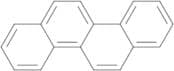
Crisene è un idrocarburo aromatico policiclico (PAH) caratterizzato dai suoi quattro anelli di benzene fusi, risultando in una struttura piana e aromatica. Appare come un solido cristallino giallastro a temperatura ambiente ed è insolubile in acqua ma solubile in solventi organici come benzene e cloroformio. Crisene ha una formula molecolare di C18H12 e un peso molecolare di circa 228,3 g/mol. È noto per le sue proprietà di fluorescenza, rendendolo utile in varie applicazioni, tra cui l'elettronica organica e come sonda fluorescente negli studi biochimici. Crisene è anche un componente del catrame di carbone e può essere trovato nei combustibili fossili, portando alla sua presenza nei campioni ambientali. Tuttavia, è importante notare che Crisene è considerato un potenziale cancerogeno e l'esposizione ad esso dovrebbe essere minimizzata. La sua stabilità sotto calore e luce lo rende oggetto di studio in chimica ambientale, in particolare riguardo alla sua persistenza e trasformazione nell'ambiente.
Formula:C18H12
InChI:InChI=1S/C18H12/c1-3-7-15-13(5-1)9-11-18-16-8-4-2-6-14(16)10-12-17(15)18/h1-12H
InChI key:InChIKey=WDECIBYCCFPHNR-UHFFFAOYSA-N
SMILES:C12=C(C=3C(C=C1)=CC=CC3)C=CC=4C2=CC=CC4
Sinonimi:- 1,2-Benzophenanthrene
- 1,2-Benzphenanthrene
- Benzo(a)phenanthrene
- Chrysen
- Chrysene (purity)
- Coaltarpitchvolatiles
- Criseno
- Nsc 6175
- [4]Phenacene
- Chrysene
Ordinare per
Purezza (%)
0
100
|
0
|
50
|
90
|
95
|
100
PAH Mixture 390 1000 µg/mL in Dichloromethane
CAS:Prodotto controllato- 120-12-7
- 129-00-0
- 191-24-2
- 192-97-2
- 193-39-5
- 198-55-0
- 205-82-3
- 205-99-2
- 206-44-0
- 207-08-9
- 208-96-8
- 218-01-9
- 260-94-6
- 50-32-8
- 53-70-3
- 56-55-3
- 83-32-9
- 85-01-8
- 86-73-7
- 90-12-0
- 90-13-1
- 91-20-3
- 91-22-5
- 91-57-6
- 91-58-7
Formula:C10H7ClColore e forma:MixturePeso molecolare:162.62Chrysene
CAS:<p>Applications Occurs in coal tar. Is formed during distillation of coal, in very small amount during distillation or pyrolysis of many fats and oils. Chrysene is one of the basic polycyclic aromatic hydrocarbon (PAH) which is toxic environmental pollutant and consistently exposed to sunlight. However, little information is available on its photogenotoxicity. The objective of the present study was to analyze the effects of Chrysene, under environmental intensity of UVB (0.6 mW/cm2) in human skin epidermal cell line (HaCaT).<br> Not a dangerous good if item is equal to or less than 1g/ml and there is less than 100g/ml in the package<br>References Anderson, D., et al.: Mutat. Res., 307, 261 (1994), Diamond, S., et al.: Environ. Toxicol. Chem., 25, 3015 (2006), Fotakis, G., et al.: Toxicol. Lett., 160, 171 (2006),<br></p>Formula:C18H12Colore e forma:White To GreyPeso molecolare:228.29Benzo[a]phenanthrene
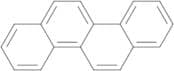
CAS:<p>Benzo[a]phenanthrene is a polycyclic aromatic hydrocarbon that is found in petroleum and coal tar. It has been shown to be a potent inducer of enzymes involved in the detoxification of xenobiotics, such as chrysene-inducible cytochrome P450 1A1 (CYP1A1), s-phenylmercapturic acid-inducible cytochrome P450 2E1 (CYP2E1), and benzo[a]pyrene-inducible glutathione S-transferase (GST). The optimum concentration for benzo[a]phenanthrene is determined by measuring the amount of enzyme activity in rat liver microsomes following the addition of benzo[a]phenanthrene. A fluorescence detector can be used to measure the fluorescence emission from benzo[a]phenanthrene at an excitation wavelength of 300 nm and an emission wavelength of 400 nm.</p>Formula:C18H12Purezza:Min. 95%Colore e forma:White PowderPeso molecolare:228.29 g/molEPA Method 8270 B/N Mixture 2 1000 µg/ml in Benz:MeCl2:ACCN 4:4:2
CAS:Prodotto controllato- 101-55-3
- 103-33-3
- 106-46-7
- 108-60-1
- 111-44-4
- 111-91-1
- 117-81-7
- 117-84-0
- 118-74-1
- 120-12-7
- 120-82-1
- 121-14-2
- 129-00-0
- 131-11-3
- 191-24-2
- 193-39-5
- 205-99-2
- 206-44-0
- 207-08-9
- 208-96-8
- 218-01-9
- 50-32-8
- 53-70-3
- 541-73-1
- 56-55-3
- 606-20-2
- 62-75-9
- 621-64-7
- 67-72-1
- 7005-72-3
- 77-47-4
- 78-59-1
- 83-32-9
- 84-66-2
- 84-74-2
- 85-01-8
- 85-68-7
- 86-30-6
- 86-73-7
- 87-68-3
- 91-20-3
- 91-58-7
- 95-50-1
- 98-95-3
Formula:C6H3Cl3Colore e forma:MixturePeso molecolare:181.45EPA Method 8270 Calibration Mixture 500-1000 µg/mL in Dichloromethane
CAS:Prodotto controllato- 100-01-6
- 100-02-7
- 100-25-4
- 100-51-6
- 101-55-3
- 103-23-1
- 103-33-3
- 105-67-9
- 106-44-5
- 106-46-7
- 106-47-8
- 108-39-4
- 108-60-1
- 108-95-2
- 110-86-1
- 111-44-4
- 111-91-1
- 117-81-7
- 117-84-0
- 118-74-1
- 120-12-7
- 120-82-1
- 120-83-2
- 121-14-2
- 122-39-4
- 129-00-0
- 131-11-3
- 132-64-9
- 191-24-2
- 193-39-5
- 205-99-2
- 206-44-0
- 207-08-9
- 208-96-8
- 218-01-9
- 50-32-8
- 51-28-5
- 528-29-0
- 53-70-3
- 534-52-1
- 541-73-1
- 56-55-3
- 58-90-2
- 59-50-7
- 606-20-2
- 62-53-3
- 62-75-9
- 621-64-7
- 67-72-1
- 7005-72-3
- 77-47-4
- 78-59-1
- 83-32-9
- 84-66-2
- 84-74-2
- 85-01-8
- 85-68-7
- 86-73-7
- 86-74-8
- 87-68-3
- 87-86-5
- 88-06-2
- 88-74-4
- 88-75-5
- 90-12-0
- 91-20-3
- 91-57-6
- 91-58-7
- 935-95-5
- 95-48-7
- 95-50-1
- 95-57-8
- 95-95-4
- 98-95-3
- 99-09-2
- 99-65-0
Formula:C6H3Cl3Colore e forma:MixturePeso molecolare:181.45



![Benzo[a]phenanthrene](/_next/image/?url=https%3A%2Fstatic.cymitquimica.com%2Fproducts%2F3D%2Fthumb%2FFB15612.jpg&w=3840&q=75)
