

![Benzo[h]quinoline](/_next/image/?url=https%3A%2Fstatic.cymitquimica.com%2Fcas-image%2Fthumb-webp%2F289771-78-benzoquinoline.webp&w=3840&q=75)
CAS 230-27-3
:Benzo[h]chinolina
- 4-Azaphenanthrene
- 7,8-Benzo[h]quinoline
- 7,8-Benzoquinoline~alpha-Naphthoquinoline
- Benzo[h]quinoline
- NSC 16033
- alpha-Benzoquinoline
- alpha-Naphthoquinoline
- Α-Naphthoquinoline
- α-Benzoquinoline
- 7,8-Benzoquinoline
- Benzohüquinoline, 98+%
- 7,S-Benzochinolin
- 1-Naphthoquinoline, 7,8-Benzoquinoline
- Benzohüquinoline, 98%
- α-naphthaquinoline
- 7,8-naphthoquinoline
- 7,8-BENZOQUINOLINE 98%
- 7,8-benoz(h)quinoline
- Vedi altri sinonimi
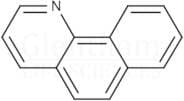
Benzo[h]quinoline
CAS:Formula:C13H9NPurezza:>99.0%(GC)(T)Colore e forma:White to Light yellow powder to crystalPeso molecolare:179.22Benzo[h]quinoline, 98%
CAS:This Thermo Scientific Chemicals brand product was originally part of the Alfa Aesar product portfolio. Some documentation and label information may refer to the legacy brand. The original Alfa Aesar product / item code or SKU reference has not changed as a part of the brand transition to Thermo SciFormula:C13H9NPurezza:98%Colore e forma:White to yellow to pale brown, Crystals or powder or crystalline powderPeso molecolare:179.22Benzo[h]quinoline
CAS:Benzo[h]quinoline is a fused heterocyclic compound widely used in biochemical experiments and drug synthesis research.Formula:C13H9NPurezza:99.21%Colore e forma:SolidPeso molecolare:179.22Benzo[h]quinoline
CAS:Purezza:98.0%Colore e forma:Solid, White to slightly pale yellow powderPeso molecolare:179.2220001220703Benzo[h]quinoline
CAS:Benzo[h]quinoline is a type of aromatic compound that forms stable complexes with protonated nitrogen atoms. The hydrogen bond between the benzo[h]quinoline and protonated nitrogen atom is a significant factor in the stability of these complexes. Benzo[h]quinoline also has cytotoxic properties, as observed by its significant cytotoxicity to cancer cells in the WST-1 assay. It has been shown to bind to proteins, such as DNA polymerase β and topoisomerase II, through an intramolecular hydrogen bond. The macrocyclic structure of benzo[h]quinoline allows it to be highly soluble in organic solvents, such as trifluoroacetic acid. The kinetic energy required for this complexation is significantly less than that required for other types of compounds with similar structures.
Formula:C13H9NPurezza:Min. 95%Peso molecolare:179.22 g/mol
![Benzo[h]quinoline](/_next/image/?url=https%3A%2Fstatic.cymitquimica.com%2Fproducts%2F3B%2Fthumb%2FB0088.jpg&w=3840&q=75)

![Benzo[h]quinoline, 98%](/_next/image/?url=https%3A%2Fstatic.cymitquimica.com%2Fproducts%2F02%2Fthumb%2FA17794.jpg&w=3840&q=75)

![Benzo[h]quinoline](/_next/image/?url=https%3A%2Fstatic.cymitquimica.com%2Fproducts%2FIN%2Fthumb%2FDA002LTV.jpg&w=3840&q=75)


![Benzo[h]quinoline](/_next/image/?url=https%3A%2Fstatic.cymitquimica.com%2Fproducts%2F54%2Fthumb%2FOR74911.jpg&w=3840&q=75)

![Benzo[h]quinoline](/_next/image/?url=https%3A%2Fstatic.cymitquimica.com%2Fproducts%2FTM%2Fthumb%2FTN9307.jpg&w=3840&q=75)

![Benzo[h]quinoline](/_next/image/?url=https%3A%2Fstatic.cymitquimica.com%2Fproducts%2F10%2Fthumb%2FF321250.jpg&w=3840&q=75)

![Benzo[h]quinoline](/_next/image/?url=https%3A%2Fstatic.cymitquimica.com%2Fproducts%2F3D%2Fthumb%2FAAA23027.jpg&w=3840&q=75)
