


CAS 25316-40-9
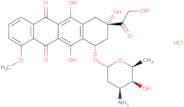
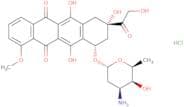
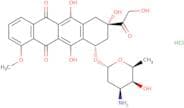
:Cloridrato di doxorubicina
Descrizione:
Cloridrato di doxorubicina è un antibiotico antraciclino comunemente usato nella chemioterapia per il cancro. È caratterizzato dal suo colore rosso brillante ed è noto per la sua potente attività antitumorale. Il composto agisce intercalando il DNA, inibendo così la sintesi degli acidi nucleici e interrompendo la replicazione delle cellule tumorali. La doxorubicina è solubile in acqua e presenta un profilo di solubilità dipendente dal pH, che è importante per la sua formulazione e somministrazione. Il suo meccanismo d'azione implica anche la generazione di radicali liberi, contribuendo ai suoi effetti citotossici. Tuttavia, l'uso della doxorubicina è associato a diversi effetti collaterali, inclusa la cardiotossicità, che limita la sua dose cumulativa. Viene tipicamente somministrata per via endovenosa ed è spesso utilizzata in combinazione con altri agenti chemioterapici per aumentare l'efficacia contro varie malignità, inclusi il cancro al seno, la leucemia e i linfomi. A causa dei suoi significativi benefici terapeutici e dei potenziali rischi, un attento monitoraggio e gestione sono essenziali durante il trattamento.
Formula:C27H29NO11·ClH
InChI:InChI=1S/C27H29NO11.ClH/c1-10-22(31)13(28)6-17(38-10)39-15-8-27(36,16(30)9-29)7-12-19(15)26(35)21-20(24(12)33)23(32)11-4-3-5-14(37-2)18(11)25(21)34;/h3-5,10,13,15,17,22,29,31,33,35-36H,6-9,28H2,1-2H3;1H/t10-,13-,15-,17-,22+,27-;/m0./s1
InChI key:InChIKey=MWWSFMDVAYGXBV-RUELKSSGSA-N
SMILES:OC=1C2=C([C@@H](O[C@H]3C[C@H](N)[C@H](O)[C@H](C)O3)C[C@@](C(CO)=O)(O)C2)C(O)=C4C1C(=O)C=5C(C4=O)=C(OC)C=CC5.Cl
Sinonimi:- (1S,3S)-3,5,12-trihydroxy-3-(hydroxyacetyl)-10-methoxy-6,11-dioxo-1,2,3,4,6,11-hexahydrotetracen-1-yl 3-amino-2,3,6-trideoxy-alpha-L-lyxo-hexopyranoside hydrochloride (1:1)
- (1S,3S)-3,5,12-trihydroxy-3-(hydroxyacetyl)-10-methoxy-6,11-dioxo-1,2,3,4,6,11-hexahydrotetracen-1-yl 3-amino-2,3,6-trideoxyhexopyranoside hydrochloride (1:1)
- (8S-Cis)-10-((3-Amino-2,3,6-Trideoxy-Alpha-L-Lyxo-Hexopyranosyl)Oxy)-7,8,9,10-Tetrahydro-6,8,11-Trihydroxy-8-(Hydroxyacetyl)-1-Methoxynaphthacene-5,12-Dione Hydrochloride
- (8S-cis)-10-[(3-Amino-2,3,6-tridesoxy-α-L-lyxo-hexopyranosyl)oxy]-7,8,9,10-tetrahydro-6,8,11-trihydroxy-8-(hydroxyacetyl)-1-methoxynaphthacen-5,12-dionhydrochlorid
- (8S-cis)-10-[(3-amino-2,3,6-trideoxy-α-L-lyxo-hexopyranosyl)oxy]-7,8,9,10-tetrahydro-6,8,11-trihydroxy-8-(hydroxyacetyl)-1-methoxynaphthacene-5,12-dione hydrochloride
- (8S-cis)-10-[(3-amino-2,3,6-tridesoxi-α-L-lyxo-hexopiranosil)oxi]-7,8,9,10-tetrahidro-6,8,11-trihidroxi-8-(hidroxiacetil)-1-metoxinaftaceno-5,12-diona, clorhidrato
- (8S-cis)-10-[(3-amino-2,3,6-tridesoxy-α-L-lyxo-hexopyrannosyl)oxy]-7,8,9,10-tetrahydro-6,8,11-trihydroxy-8-(hydroxyacetyl)-1-methoxynaphtacene-5,12-dione, chlorhydrate
- 5,12-Naphthacenedione, 10-[(3-amino-2,3,6-trideoxy-α-<span class="text-smallcaps">L</span>-lyxo-hexopyranosyl)oxy]-7,8,9,10-tetrahydro-6,8,11-trihydroxy-8-(2-hydroxyacetyl)-1-methoxy-, hydrochloride (1:1), (8S,10S)-
- 5,12-Naphthacenedione, 10-[(3-amino-2,3,6-trideoxy-α-<span class="text-smallcaps">L</span>-lyxo-hexopyranosyl)oxy]-7,8,9,10-tetrahydro-6,8,11-trihydroxy-8-(hydroxyacetyl)-1-methoxy-, hydrochloride, (8S,10S)-
- 5,12-Naphthacenedione, 10-[(3-amino-2,3,6-trideoxy-α-<span class="text-smallcaps">L</span>-lyxo-hexopyranosyl)oxy]-7,8,9,10-tetrahydro-6,8,11-trihydroxy-8-(hydroxyacetyl)-1-methoxy-, hydrochloride, (8S-cis)-
- 5,12-Naphthacenedione, 10-[(3-amino-2,3,6-trideoxy-α-L-lyxo-hexopyranosyl)oxy]-7,8,9,10-tetrahydro-6,8,11-trihydroxy-8-(2-hydroxyacetyl)-1-methoxy-, hydrochloride (1:1), (8S,10S)-
- 5,12-Naphthacenedione, 10-[(3-amino-2,3,6-trideoxy-α-L-lyxo-hexopyranosyl)oxy]-7,8,9,10-tetrahydro-6,8,11-trihydroxy-8-(hydroxyacetyl)-1-methoxy-, hydrochloride, (8S,10S)-
- 5,12-Naphthacenedione, 10-[(3-amino-2,3,6-trideoxy-α-L-lyxo-hexopyranosyl)oxy]-7,8,9,10-tetrahydro-6,8,11-trihydroxy-8-(hydroxyacetyl)-1-methoxy-, hydrochloride, (8S-cis)-
- ADM hydrochloride
- ADR
- Adriablastina CS
- Adriacin
- Adriamycin
- Adriamycin, hydrochloride
- Adriblastin
- Adriblastina
- Adriblastina RD
- Adrosal
- Ameisu hydrochloride
- Caelyx pegylated liposomal
- DOX HCl
- Doxolipad
- Doxorubicin, HCl
- Doxorubicin-LANS
- Doxorubicin-TEVA
- Doxourbicin HCl
- Fi 106
- Fi 6804
- Hydroxydaunorubicin hydrochloride
- Lipo-Dox
- Lipodox
- Myocet liposomal
- Vedi altri sinonimi
Ordinare per
Purezza (%)
0
100
|
0
|
50
|
90
|
95
|
100
Doxorubicin hydrochloride - Bio-X ™
CAS:<p>Doxorubicin hydrochloride is an inhibitor of topoisomerase II with anti-neoplastic activity and belongs to the class of anthracyclines. It is cytotoxic, and interferes with the topoisomerase II-mediated repair of DNA causing accumulation of mutations. Doxorubicin also leads to the generation of reactive oxygen species (ROS), which further damages DNA as well as proteins and membranes. Doxorubicin is used as a chemotherapy treatment for various types of cancer, including breast cancer, lung cancer, ovarian cancer, and leukaemia. However, the compound presents with a risk of developing cardiomyopathy as well as drug resistance.</p>Formula:C27H29NO11•HClPurezza:Min. 95%Colore e forma:PowderPeso molecolare:579.98 g/molDoxorubicin HCl
CAS:<p>Doxorubicin (DOX) is an antineoplastic chemotherapy drug used to treat breast, ovarian and pancreatic cancers. It is an antitumor antibiotic that inhibits DNA topoisomerase II. DOX interferes with the topoisomerase II-mediated repair of DNA causing accumulation of mutations. It also leads to the generation of reactive oxygen species (ROS), which further damage DNA as well as proteins and membranes. However, the compound presents with a risk of developing cardiomyopathy as well as drug resistance. Pegylated liposomal doxorubicin has also been developed to treat breast and ovarian cancers, myeloma, and HIV-related Kaposi’s sarcoma.</p>Formula:C27H29NO11·HClPurezza:Min. 98 Area-%Colore e forma:Red PowderPeso molecolare:579.98 g/molDoxorubicin hydrochloride
CAS:Formula:C27H30ClNO11Purezza:95.0%Colore e forma:Solid, Crystalline Powder or Granules or PowderPeso molecolare:579.98Doxorubicin hydrochloride, 10 mg/ml aqueous solution
CAS:<p>Doxorubicin hydrochloride, 10 mg/ml aqueous solution, is a chemotherapeutic agent, which is an anthracycline antibiotic derived from the bacterium *Streptomyces peucetius var. caesius*. Its mode of action involves the intercalation into DNA, disrupting the replication and transcription processes crucial for cancer cell proliferation. Additionally, it generates free radicals that cause further damage to cellular structures and inhibit topoisomerase II, thereby preventing the unwinding of DNA necessary for replication.</p>Formula:C27H29NO11•HClPurezza:Min. 95%Colore e forma:PowderPeso molecolare:579.98 g/molDes-[(4-Amino-2,3,6-trideoxy-hexapyranosyl)oxy)-1-methyl] 2-Carboxylate Doxorubicin
CAS:Prodotto controllatoFormula:C20H12O7Colore e forma:NeatPeso molecolare:364.305Ref: ST-EA-CP-E117003
10mgPrezzo su richiesta25mgPrezzo su richiesta50mgPrezzo su richiesta100mgPrezzo su richiestaRef: ST-EA-CP-D104004
10mgPrezzo su richiesta25mgPrezzo su richiesta50mgPrezzo su richiesta100mgPrezzo su richiesta



![Des-[(4-Amino-2,3,6-trideoxy-hexapyranosyl)oxy)-1-methyl] 2-Carboxylate Doxorubicin](/_next/image/?url=https%3A%2Fstatic.cymitquimica.com%2Fproducts%2FTR%2Fthumb%2FD558001.jpg&w=3840&q=75)


