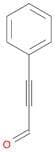
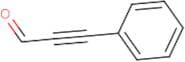
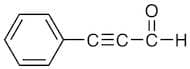
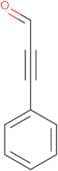
CAS 2579-22-8
:Fenilpropinale
- 2-Propynal, 3-phenyl-
- 3-Phenyl-2-propiolaldehyde
- 3-Phenyl-2-propyn-1-al
- 3-Phenyl-2-propynal
- 3-Phenylprop-2-Ynal
- 3-Phenylpropiolaldehyde
- 3-Phenylpropynal
- Benzenepropiolaldehyde
- Formylphenylacetylene
- NSC 47568
- Phenylacetylenecarboxaldehyde
- Phenylpropargyl Aldehyde
- Phenylpropargylaldehyde
- Phenylpropynal
- Propiolaldehyde, phenyl-
- 3-Phenyl-2-propynal, Phenylpropiolaldehyde
- PHENYLPROPIOLALDEHYDE
- Benzenepropynal
- Vedi altri sinonimi
Phenylpropargyl aldehyde
CAS:Phenylpropargyl aldehydeFormula:C9H6OPurezza:98%Colore e forma: clear. very dark orange liquidPeso molecolare:130.14g/mol3-Phenylpropiolaldehyde
CAS:Formula:C9H6OPurezza:>98.0%(GC)Colore e forma:Colorless to Brown clear liquidPeso molecolare:130.15Phenylpropargylaldehyde
CAS:Phenylpropargylaldehyde is an organic compound that is a chiral molecule, which means it has two enantiomers. It was first synthesized in 1964 by R.B. Woodward and T.W. Rittenberg at the University of Chicago, and is used as a chemical intermediate in the synthesis of other compounds with biological activity such as matrix metalloproteinase inhibitors, for example marimastat. Phenylpropargylaldehyde can be prepared from malonic acid and phenylboronic acid in a reaction mechanism that involves nucleophilic substitutions, carbonyl group activation and hydrogen bonding to lysine residues on proteins. The asymmetric synthesis of this compound has been shown to suppress genes associated with metabolic disorders such as diabetes mellitus type 2, fatty acid metabolism disorders and endocrine disorders (e.g., thyroid). It also has adjuvant therapeutic properties in cancer treatment, especially when combined with synthetic fatty acids such as oleic acid or ar
Purezza:Min. 95%