CAS 2628-17-3
:4-Vinilfenolo
Descrizione:
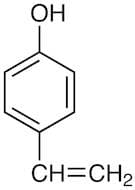
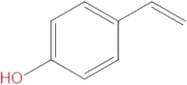
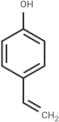
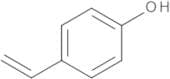
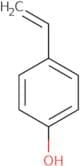
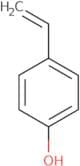
4-Vinilfenolo, noto anche come p-vinilfenolo, è un composto organico caratterizzato da una struttura fenolica con un gruppo vinilico attaccato alla posizione para dell'anello aromatico. La sua formula molecolare è C8H8O e presenta un gruppo idrossile (-OH) che conferisce proprietà fenoliche tipiche, come reattività e la capacità di formare legami idrogeno. Questo composto è un liquido incolore o giallo chiaro a temperatura ambiente e ha un odore caratteristico. 4-Vinilfenolo è solubile in solventi organici e presenta una solubilità moderata in acqua. È utilizzato principalmente nella produzione di polimeri e resine, in particolare nella sintesi di resine fenoliche e come monomero in varie applicazioni di copolimeri. Inoltre, può fungere da intermedio nella sintesi organica e ha potenziali applicazioni nel campo della scienza dei materiali. A causa del suo gruppo vinilico reattivo, 4-Vinilfenolo può subire polimerizzazione e altre reazioni chimiche, rendendolo un composto prezioso in vari processi industriali. Devono essere adottate precauzioni di sicurezza quando si maneggia questa sostanza, poiché può causare irritazione della pelle e degli occhi.
Formula:C8H8O
InChI:InChI=1S/C8H8O/c1-2-7-3-5-8(9)6-4-7/h2-6,9H,1H2
InChI key:InChIKey=FUGYGGDSWSUORM-UHFFFAOYSA-N
SMILES:C(=C)C1=CC=C(O)C=C1
Sinonimi:- 4-Ethenylphenol
- 4-Hydroxystyrene
- P-Vinilfenol
- Phenol, 4-ethenyl
- Phenol, p-vinyl-
- p-Hydroxystyrene
- p-Oxystyrene
- p-Vinylphenol
Ordinare per
Purezza (%)
0
100
|
0
|
50
|
90
|
95
|
100
12 prodotti.
4-Vinylphenol (ca. 10% in Propylene Glycol)
CAS:Formula:C8H8OColore e forma:Light yellow to Yellow to Orange clear liquidPeso molecolare:120.154-Vinylphenol, min 10% soln. in propylene glycol
CAS:4-Vinylphenol acts as a monomer and used in the preparation of poly-4-vinylphenol polymer, which is used in electronics as a dielectric layer in organic transistors in organic thin-film-transistor liquid-crystal displays (TFT LCD). It is a phenolic compound and presents in wine and beer. This ThermFormula:C8H8OColore e forma:Liquid, Clear colorless to yellow or orangePeso molecolare:120.154-Vinylphenol
CAS:Formula:C8H8OPurezza:>98.0%(GC)Colore e forma:White to Light yellow powder to crystalPeso molecolare:120.154-Vinylphenol
CAS:4-Vinylphenol, a metabolite from lactic acid bacteria in wine, induces apoptosis. Found in Hedyotis diffusa Willd.Formula:C8H8OPurezza:97.07%Colore e forma:SolidPeso molecolare:120.154-Vinylphenol, 10 wt.% In Propylene Glycol
CAS:Applications 4-Vinylphenol, 10 wt.% In propylene glycol (cas# 2628-17-3) is a useful research chemical.
Formula:C8H8OColore e forma:Single SolutionPeso molecolare:120.144-Vinylphenol, 10 wt % in propylene glycol
CAS:4-Vinylphenol is a chemical compound that has the molecular formula CH2=CHC6H4OH. It is a hydroxyl derivative of phenol and has the chemical structure of a phenolic acid. This compound is used in the laboratory to study the effects of cationic polymerization on surface methodology and activation energies. 4-Vinylphenol inhibits Saccharomyces cerevisiae strain, which is commonly found in urine samples as well as in recombinant cells, by inhibiting cell growth and reducing ATP production. The inhibition of Saccharomyces cerevisiae strain by 4-vinylphenol can be reversed with p-hydroxybenzoic acid or cationic polymerization. The molecule also contains two nitrogen atoms that can form hydrogen bonds with other molecules, such as water molecules. It is possible that these hydrogen bonds are what allow 4-vinylphenol to inhibit Saccharomyces cerevisiae strain, although this hypothesis hasFormula:C8H8OPurezza:Min. 95 Area-%Colore e forma:Colorless Clear LiquidPeso molecolare:120.15 g/mol4-Vinylphenol
CAS:4-Vinylphenol is a phenolic compound that is used as an industrial chemical. It has been shown to inhibit the growth of bacteria in nonpolar solvents, including aerobacter aerogenes and Saccharomyces cerevisiae. 4-Vinylphenol inhibits bacterial growth through its ability to disrupt the hydrogen bonds between proteins and nucleic acids. This results in increased hydroxyl groups on the protein surface and cationic polymerization of the DNA gyrase enzyme, which disrupts its function. 4-Vinylphenol has also been shown to activate mouse CD-1 cells by increasing their sensitivity to chemical inhibitors, such as ethidium bromide or 2',7'-dichlorofluorescin diacetate (DCFH2DA).Formula:C8H8OPurezza:Min. 95%Colore e forma:LiquidPeso molecolare:120.15 g/mol4-Vinylphenol 10% solution in Propylene glycol
CAS:Formula:C8H8OPurezza:95.0%Colore e forma:SolidPeso molecolare:120.151