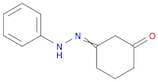
CAS 27385-45-1
:1,3-Cicloesanodione, 1-(2-fenilidrazone)
Descrizione:
1,3-Cicloesanodione, 1-(2-fenilidrazone) è un composto organico caratterizzato dal suo gruppo funzionale idrazone, che si forma dalla reazione di 1,3-cicloesandione con fenilidrazina. Questo composto appare tipicamente come un solido ed è noto per le sue potenziali applicazioni nella sintesi organica e come reagente in varie reazioni chimiche. Presenta un anello di cicloesano con due gruppi chetonici nelle posizioni 1 e 3, contribuendo alla sua reattività e capacità di formare derivati. La presenza del moiety fenilidrazone migliora le sue proprietà, rendendolo utile nello sviluppo di coloranti e prodotti farmaceutici. Inoltre, questo composto può mostrare proprietà ottiche specifiche a causa della sua configurazione strutturale, che possono essere sfruttate nella chimica analitica. Come molti composti organici, è importante maneggiarlo con cura, considerando la sua potenziale reattività e la necessità di protocolli di sicurezza adeguati durante l'uso.
Formula:C12H14N2O
InChI:InChI=1S/C12H14N2O/c15-12-8-4-7-11(9-12)14-13-10-5-2-1-3-6-10/h1-3,5-6,13H,4,7-9H2
InChI key:InChIKey=ASBKHKGFGCNQJB-UHFFFAOYSA-N
SMILES:N(NC1=CC=CC=C1)=C2CC(=O)CCC2
Sinonimi:- 1,3-Cyclohexanedione, 1-(2-phenylhydrazone)
- 1,3-Cyclohexanedione, mono(phenylhydrazone)
Ordinare per
Purezza (%)
0
100
|
0
|
50
|
90
|
95
|
100
3 prodotti.
3-(2-phenylhydrazin-1-ylidene)cyclohexan-1-one
CAS:Formula:C12H14N2OPurezza:95%Colore e forma:SolidPeso molecolare:202.2524(Z)-3-(2-Phenylhydrazono)cyclohexanone
CAS:The method involves refluxing ethanol with a solid acid catalyst and a condensation agent. The reaction is catalyzed by the acid catalyst, which can be either an inorganic or organic acid. The reaction time is typically 3 to 4 hours. Effective catalysts include aluminum chloride, zinc chloride, and titanium tetrachloride. Carvedilol is an effective product of this reaction because it has a high yield and a low production cost. Solid-acid catalysts are used for this synthesis because they have excellent stability in the presence of water and air and can be easily recovered from the reaction mixture. The reactants are heated at reflux until the desired product is formed. This process is typically carried out using a reflux apparatus equipped with an efficient condenser and an ice bath to maintain the temperature below boiling point. The yields of the desired product are typically high, ranging from 80% to 95%.Formula:C12H14N2OPurezza:Min. 95%Peso molecolare:202.25 g/mol