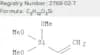
CAS 2768-02-7
:Viniltrimetossisilano
- (Trimethoxysilyl)ethene
- (Vinyl)trimethoxylsilane
- A 101
- A 101 (silane)
- A 171
- A 171 (silane derivative)
- AP Silane 21
- Ac 71
- Cv 4917
- Db 171
- Dl 171
- Dow Corning 6300
- Dynasylan Si 108
- Dynasylan Silfin
- Dynasylan Silfin 24
- Dynasylan VTMO
- Emi 1833
- Ethenyltrimethoxysilane
- Geniosil X 10GS
- Geniosil XL 10
- Gx 171
- Jh-V 171
- Kbm 1003
- Kbm 3100
- Kh 171
- Kh 921
- Kha 171
- Lks 015
- Lmd 171
- Ls 815
- Lt 171
- NUC Silicone A 171
- Nuc-Y 9818
- Penta 1002
- Q 9-6300
- S 210
- SG-Si 171
- Sb 6301
- Sca 1603
- Sh 6300
- Sigma T 5051
- Sila-Ace 210
- Sila-Ace S 210
- Silane A 171
- Silane V Trimethoxy
- Silane, trimethoxyvinyl-
- Silaplane S 210
- Silfin 13
- Silfin 22
- Silfin 24
- Silfin 59
- Silfin 6
- Silopren TP 3625
- Silox VS 911
- Silquest A 171
- Siv 9220.0
- Sl 815
- Sv 002
- Sz 6300
- Trimethoxy-Vinyl-Silan
- Trimethoxyvinylsilan
- Trimethoxyvinylsilane
- Trimetoxivinilsilano
- Tsl 8310
- U 611
- Up 171
- V 0042
- V 06 (coupling agent)
- V 171
- V 4917
- Vinyltrimethoxysilane
- Vtmo
- Vts-M
- Wd 21
- Wm 171
- XL 10 (silane)
- Xiameter OFS 6300
- Xl 10
- Y 4302
- Ydh 171
- Ygo 1202
- Yhd 171
- Z 6300
- Vedi altri sinonimi
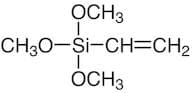
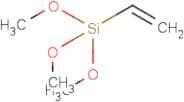
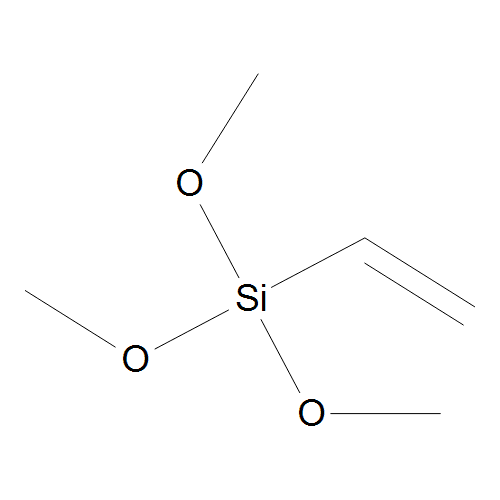
Vinyltrimethoxysilane
CAS:Formula:C5H12O3SiPurezza:>98.0%(GC)Colore e forma:Colorless to Almost colorless clear liquidPeso molecolare:148.23Vinyltrimethoxysilane, 98%
CAS:Trimethoxyvinylsilane is used as a chemical intermediate in the production of other fine chemicals or as a monomer in the production of vinyl functional silicone polymers. The use of Trimethoxyvinylsilane in coatings is intended to improve bonding or adhesion between organic polymers and mineral surFormula:C5H12O3SiPurezza:98%Colore e forma:Clear colorless, LiquidPeso molecolare:148.23Vinyltrimethoxysilane
CAS:ISI2650 - Vinyltrimethoxysilane
Formula:C5H12O3SiPurezza:99%Colore e forma:Clear LiquidPeso molecolare:148.233Trimethoxyvinylsilane
CAS:Prodotto controllatoFormula:C5H12O3SiColore e forma:NeatPeso molecolare:148.2325Vinyltrimethoxysilane
CAS:Applications Vinyltrimethoxysilane (cas# 2768-02-7) is a useful research chemical.
Formula:C5H12O3SiColore e forma:NeatPeso molecolare:148.2325VINYLTRIMETHOXYSILANE
CAS:Olefin Functional Trialkoxy Silane
Silane coupling agents have the ability to form a durable bond between organic and inorganic materials to generate desired heterogeneous environments or to incorporate the bulk properties of different phases into a uniform composite structure. The general formula has two classes of functionality. The hydrolyzable group forms stable condensation products with siliceous surfaces and other oxides such as those of aluminum, zirconium, tin, titanium, and nickel. The organofunctional group alters the wetting or adhesion characteristics of the substrate, utilizes the substrate to catalyze chemical transformations at the heterogeneous interface, orders the interfacial region, or modifies its partition characteristics, and significantly effects the covalent bond between organic and inorganic materials.
Alkenylsilane Cross-Coupling Agent
The cross-coupling reaction is a highly useful methodology for the formation of carbon-carbon bonds. It involves two reagents, with one typically being a suitable organometallic reagent - the nucleophile - and the other a suitable organic substrate, normally an unsaturated halide, tosylate or similar - the electrophile.
Vinyltrimethoxysilane; Ethenyltrimethoxysilane; Trimethoxyvinylsilane; Trimethoxysilylethylene, VTMS
Viscosity: 0.6 cStCopolymerization parameters- e,Q: -0.38, 0.031Specific wetting surface area: 528 m2/gVapor pressure, 20 °C: 9 mmEmployed in two-stage and one-stage graft polymerization/crosslinking for polyethylene (PE)Copolymerizes with ethylene to form moisture crosslinkable polymersConverts arylselenyl bromides to arylvinylselenidesReacts with anhydrides to transfer both vinyl and methoxy and thus form the mixed diesterCross-couples with α-bromo esters to give α-vinyl esters in high eeUsed in microparticle surface modificationFor vinylationsAlkenyltrialkoxysilanes react w/ aryl bromides and iodides to form styrenes under fluoride- and ligand-free and aqeous conditionsReacts in presence of fluorideExtensive review of silicon based cross-coupling agents: Denmark, S. E. et al. "Organic Reactions, Volume 75" Denmark, S. E. ed., John Wiley and Sons, 233, 2011Formula:C5H12O3SiPurezza:97%Colore e forma:LiquidPeso molecolare:148.23Ref: 3H-SIV9220.0
2kgPrezzo su richiesta16kgPrezzo su richiesta25gPrezzo su richiesta180kgPrezzo su richiesta