CAS 2971-79-1
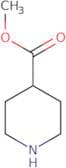
:metil isonipecotato
Descrizione:
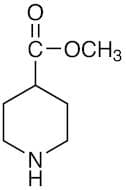
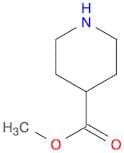
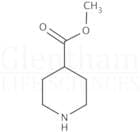
metil isonipecotato è un composto chimico caratterizzato dalla sua struttura come un estere derivato dall'acido isonipecotico e dal metanolo. È classificato come una sostanza psicoattiva ed è noto per il suo potenziale utilizzo nella ricerca relativa al sistema nervoso centrale. Il composto presenta un anello di piperidina, che contribuisce alle sue proprietà farmacologiche. metil isonipecotato è tipicamente un solido cristallino bianco e la sua solubilità è generalmente maggiore nei solventi organici che in acqua. Il composto ha suscitato interesse a causa delle sue interazioni con i sistemi di neurotrasmettitori, in particolare in relazione ai suoi effetti sulle vie della dopamina e della serotonina. Tuttavia, è importante notare che il profilo di sicurezza, la tossicità e gli effetti a lungo termine di metil isonipecotato non sono completamente compresi, richiedendo cautela nel suo maneggiamento e utilizzo. Come molti prodotti chimici di ricerca, è soggetto a controllo normativo in varie giurisdizioni e il suo stato legale può variare. Devono essere seguite pratiche di laboratorio adeguate quando si lavora con questa sostanza.
Formula:C7H13NO2
InChI:InChI=1/C7H13NO2/c1-10-7(9)6-2-4-8-5-3-6/h6,8H,2-5H2,1H3
SMILES:COC(=O)C1CCNCC1
Sinonimi:- Isonipecotic acid methyl ester
- Methyl 4-piperidinecarboxylate
- Methyl Piperidinecarboxylate
- 4-Piperidinecarboxylic Acid Methyl Ester
- Methyl Piperidine-4-Carboxylate
Ordinare per
Purezza (%)
0
100
|
0
|
50
|
90
|
95
|
100
9 prodotti.
Methyl 4-Piperidinecarboxylate
CAS:Formula:C7H13NO2Purezza:>98.0%(T)Colore e forma:Colorless to Almost colorless clear liquidPeso molecolare:143.19Methyl piperidine-4-carboxylate, 98%
CAS:Methyl piperidine-4-carboxylate is a reactant for C-2 arylation of piperidines through directed transition metal-catalyzed sp3 C-H activation. It is used as a reactant for synthesis of antitubercular agents, aminopyrazine inhibitors, orally available naphthyridine protein kinase D inhibitors and a sFormula:C7H13NO2Purezza:98%Peso molecolare:143.194-Piperidinecarboxylic acid, methyl ester
CAS:Formula:C7H13NO2Purezza:97%Colore e forma:LiquidPeso molecolare:143.1836Methyl piperidine-4-carboxylate
CAS:Methyl piperidine-4-carboxylatePurezza:98%Peso molecolare:143.18g/molMethyl piperidine-4-carboxylate
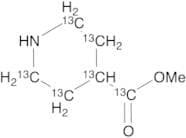
CAS:Formula:C7H13NO2Purezza:97%Colore e forma:SolidPeso molecolare:143.186Isonipecotic Acid-13C6 Methyl Ester
CAS:Prodotto controllatoApplications Isotope labelled Isonipecotic Acid Methyl Ester is a an ester derivative of 4-piperidinecarboxylic acid used as a reagent in the organic synthesis of neurochemicals, antibacterials and other biologically active compounds.
References Kim, E.-K. et al.: Yak. Hoechi, 48, 182 (2004); Tanitame, A. et al.: Bioorg. Med. Chem. Lett., 14, 2857 (2004);Formula:C6CH13NO2Colore e forma:NeatPeso molecolare:149.14Isonipecotic Acid Methyl Ester-13C3 Hydrochloride
CAS:Prodotto controllatoStability Hygroscopic
Applications Labelled Isonipecotic Acid Methyl Ester is a an ester derivative of 4-piperidinecarboxylic acid used as a reagent in the organic synthesis of neurochemicals, antibacterials and other biologically active compounds.
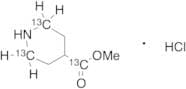
References Kim, E.-K. et al.: Yak. Hoechi, 48, 182 (2004); Tanitame, A. et al.: Bioorg. Med. Chem. Lett., 14, 2857 (2004);Formula:C3C4H13NO2·HClColore e forma:NeatPeso molecolare:182.623Methyl isonipecotate
CAS:Methyl isonipecotate is a natural triterpene that has been found to have anticancer activity. This compound binds to lysine residues on the surface of cancer cells, which leads to a decrease in the viscosity of the cell membrane. This causes an increase in hydrogen bonding interactions and inhibits the growth of primary tumors. Methyl isonipecotate also has been shown to modulate nerve tissue and promote apoptosis by inhibiting the production of epoxyeicosatrienoic acids (EETs). Methyl isonipecotate can be synthesized from piperazine, which makes it biodegradable.Formula:C7H13NO2Purezza:Min. 95%Peso molecolare:143.18 g/mol