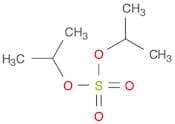
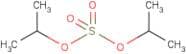
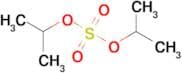
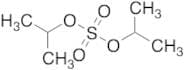
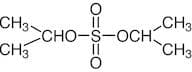
CAS 2973-10-6
:Solfato di diisopropile
- 221-011-9
- Diisopropyl sulfate
- Dipropan-2-Yl Sulfate
- Isopropyl sulfate ((C<sub>3</sub>H<sub>7</sub>O)<sub>2</sub>SO<sub>2</sub>)
- Sulfuric Acid, Bis(1-Methylethyl) Ester
- Sulfuric acid, diisopropyl ester
- Isopropyl sulfate ((C3H7O)2SO2)
Sulfuric acid, bis(1-methylethyl) ester
CAS:Formula:C6H14O4SPurezza:97%Colore e forma:LiquidPeso molecolare:182.2380Ref: 10-F608782
1gPrezzo su richiesta5gPrezzo su richiesta10gPrezzo su richiesta250mgPrezzo su richiestaDiisopropyl Sulfate
CAS:Prodotto controllatoApplications DIISOPROPYL SULFATE (cas# 2973-10-6) is a useful research chemical.
Not a dangerous good if item is equal to or less than 1g/ml and there is less than 100g/ml in the packageFormula:C6H14O4SColore e forma:NeatPeso molecolare:182.24Diisopropyl Sulfate
CAS:Formula:C6H14O4SPurezza:>97.0%(GC)Colore e forma:Colorless to Light yellow clear liquidPeso molecolare:182.23Diisopropyl sulfate
CAS:Diisopropyl sulfate (DPS) is a chemical compound used in analytical chemistry as an alkylation agent. It is used to prepare derivatives of carboxylic acids, amines, and other compounds. DPS has been shown to cause cancer in animals when administered at high doses. DPS has been detected in the environment and can be found in food and drinking water at low levels. It is also present in some pharmaceuticals and personal care products. DPS may also be found in cosmetics and toiletries such as shampoos, toothpastes, soaps, detergents, hair dyes, and nail polish remover. DPS may react with nitric acid or nitrous acid to produce genotoxic impurities such as hydrogen sulfate or hydrogen chloride. DPS may also react with hydroxylamine to form dibutyl sulfoxide, which has been shown to cause heart disease in animals when administered at high doses.
Formula:C6H14O4SPurezza:Min. 95%Peso molecolare:182.24 g/molRef: 3D-FD172857
Prodotto fuori produzione