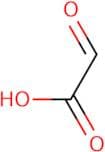
CAS 298-12-4
:Acido gliossilico
Descrizione:
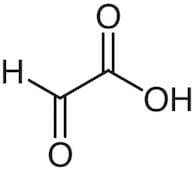
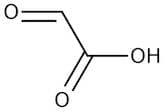
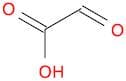
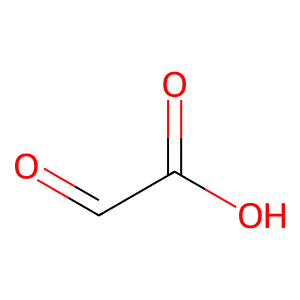
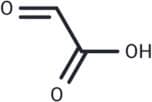
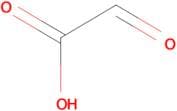
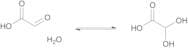
Acido gliossilico, con il numero CAS 298-12-4, è un composto organico semplice caratterizzato dalla sua struttura come composto dicarbonilico, presentando sia un gruppo funzionale aldeidico che un gruppo funzionale acido carbossilico. È un liquido incolore a giallo pallido con un odore pungente ed è altamente solubile in acqua, rendendolo un reagente versatile in varie reazioni chimiche. Acido gliossilico è noto per la sua reattività, in particolare nelle reazioni di condensazione, ed è spesso utilizzato nella sintesi di vari composti organici, inclusi aminoacidi e prodotti farmaceutici. Può anche agire come agente riducente ed è coinvolto nella formazione di derivati del glioxilato. In termini di sicurezza, Acido gliossilico è considerato pericoloso, con potenziali effetti irritanti sulla pelle, sugli occhi e sul sistema respiratorio, richiedendo precauzioni adeguate nella manipolazione. Le sue applicazioni si estendono ai campi della biochimica, dell'agricoltura e della produzione di coloranti e fragranze, evidenziando la sua importanza sia in contesti industriali che di laboratorio.
Formula:C2H2O3
InChI:InChI=1/C2H2O3/c3-1-2(4)5/h1H,(H,4,5)/p-1
InChI key:InChIKey=HHLFWLYXYJOTON-UHFFFAOYSA-N
SMILES:C(C=O)(O)=O
Sinonimi:- 2-Oxoacetic acid
- Acetic acid, 2-oxo-
- Acide glyoxylique
- Acido Glioxilico
- Carboxyformaldehyde
- Formylcarboxylic acid
- Formylformic acid
- Glyoxalic acid
- Glyoxo High Pure 50
- Glyoxylic Acid
- Glyoxylsaeure
- Glyoxylsaure
- Nsc 27785
- Oxalaldehydic acid
- Oxoacetic acid
- Oxoethanoic acid
- α-Ketoacetic acid
- Acetic acid, oxo-
- Glyoxalate
- glyoxylate
- oxoacetate
- Aldehydoformicacid
- 2-Oxoethanoic Acid
- oxo-acetic acid
- Formic acid, formyl-
- Formylformic
- glyoxylicacid(50%orless)
- formyl-formicaci
- alpha-ketoaceticacid
- oxo-aceticaci
- GA
- oxalaldehydicacid
- OCHCOOH
- alpha-Ketoacetic acid
- kyselinaglyoxylova
- Kyselina glyoxylova
- Vedi altri sinonimi
Ordinare per
Purezza (%)
0
100
|
0
|
50
|
90
|
95
|
100
12 prodotti.
Glyoxylic Acid (ca. 50% in Water, ca. 9mol/L)
CAS:Formula:C2H2O3Colore e forma:Colorless to Light orange to Yellow clear liquidPeso molecolare:74.04Glyoxylic acid, 50% w/w aq. soln.
CAS:This Thermo Scientific Chemicals brand product was originally part of the Alfa Aesar product portfolio. Some documentation and label information may refer to the legacy brand. The original Alfa Aesar product / item code or SKU reference has not changed as a part of the brand transition to Thermo SciFormula:C2H2O3Colore e forma:Clear colorless to yellow, LiquidPeso molecolare:74.04Glyoxylic acid solution, 50% in water
CAS:Formula:C2H2O3Purezza:%Colore e forma:LiquidPeso molecolare:74.0355Glyoxylic acid, 50% in water
CAS:Formula:OHCCO2HColore e forma:Colourless to light yellow liquidPeso molecolare:74.04Glyoxalic acid
CAS:Glyoxalic acid is an organic compound. It is both an aldehyde and a carboxylic acid.Formula:C2H2O3Colore e forma:SoildPeso molecolare:74.04Glyoxylic acid (ca. 50% in Water, ca. 9mol/L)
CAS:Purezza:95.0%Colore e forma:LiquidPeso molecolare:74.03500366210938Ref: 4Z-A-138014
5mgPrezzo su richiesta10mgPrezzo su richiesta25mgPrezzo su richiesta50mgPrezzo su richiesta100mgPrezzo su richiestaRef: ST-EA-CP-A182001
10mgPrezzo su richiesta25mgPrezzo su richiesta50mgPrezzo su richiesta100mgPrezzo su richiestaGlyoxylic Acid (50% aqueous solution)
CAS:Applications Glyoxylic Acid is used as a reagent in the synthesis of N-{[6-chloro-4-(2,6-dimethoxyphenyl)quinazolin-2-yl]carbonyl}-L-leucine, a novel nonpeptide chemotype selective for neurotensin receptor 2. Also used as a reagent in the synthesis of elemonic acid derivatives as Pin1 inhibitors.
References Thomas, J.B., et al.: Bioorg. Med. Chem. Lett., 25, 292 (2015); Li, X., et al.: Bioorg. Med. Chem. Lett., 24, 5612 (2014)Formula:C2H2O3Colore e forma:Colourless LiquidPeso molecolare:74.04Glyoxylic acid - 50% aqueous solution
CAS:Glyoxylic acid is a dicarboxylic acid that can be found in the human body. It is oxidized to glyoxylate, which is then converted to oxalate by enzymes. Glyoxylic acid is a product of glycolysis, and has been shown to have antioxidant properties. Glyoxylic acid has been shown to inhibit the production of peptide hormones such as ACTH and TRH, as well as infectious diseases such as AIDS and malaria. It also has an effect on biochemical properties such as the redox potentials. The optimum extraction process for this compound is by ion-exchange chromatography with aqueous solvent. X-ray diffraction data can be used to identify this compound. The reaction mechanism for glyoxylic acid involves two steps: oxidation at carbon 2 followed by elimination at carbon 3. This chemical can be detected using analytical methods such as spectrophotometry or x-ray photoelectron spectroscopy (XPSFormula:C2H2O3Purezza:Min. 95%Colore e forma:Clear LiquidPeso molecolare:74.04 g/mol