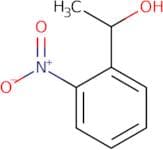
CAS 3205-25-2
:1-(2-nitrofenil)etanolo
Descrizione:
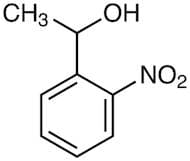
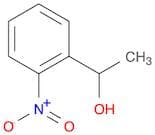
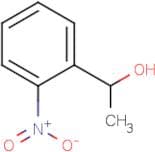
1-(2-nitrofenil)etanolo, con il numero CAS 3205-25-2, è un composto organico caratterizzato dalla presenza di un gruppo nitrofenile attaccato a una parte di etanolo. Questo composto presenta un gruppo idrossile (-OH), che contribuisce alla sua classificazione come alcol. Il gruppo nitro (-NO2) è posizionato sul secondo carbonio dell'anello fenilico, influenzando la reattività e la polarità del composto. Tipicamente, 1-(2-nitrofenil)etanolo appare come un solido o un liquido, a seconda delle condizioni specifiche, ed è noto per le sue potenziali applicazioni nella sintesi organica e come intermedio nella produzione di vari composti chimici. La presenza di entrambi i gruppi, idrossile e nitro, può conferire proprietà uniche, come una maggiore solubilità in solventi polari e la capacità di partecipare a legami idrogeno. Inoltre, il composto può mostrare interessanti proprietà elettroniche a causa della natura attrattiva di elettroni del gruppo nitro, che può influenzare il suo comportamento nelle reazioni chimiche. Devono essere adottate precauzioni di sicurezza quando si maneggia questa sostanza, poiché i composti nitro possono essere pericolosi.
Formula:C8H9NO3
InChI:InChI=1/C8H9NO3/c1-6(10)7-4-2-3-5-8(7)9(11)12/h2-6,10H,1H3
SMILES:CC(c1ccccc1N(=O)=O)O
Sinonimi:- Benzenemethanol, alpha-methyl-2-nitro-
- Nitrophenylethanol
Ordinare per
Purezza (%)
0
100
|
0
|
50
|
90
|
95
|
100
6 prodotti.
1-(2-Nitrophenyl)ethanol
CAS:Formula:C8H9NO3Purezza:>98.0%(GC)Colore e forma:Light yellow to Yellow to Orange clear liquidPeso molecolare:167.16(R,S)-1-(2-Nitrophenyl)ethanol
CAS:Prodotto controllatoApplications (R,S)-1-(2-Nitrophenyl)ethanol (cas# 3205-25-2) is a compound useful in organic synthesis.
Formula:C8H9NO3Colore e forma:NeatPeso molecolare:167.16c(R,S)-1-(2-Nitrophenyl)ethanol
CAS:1,2-Dichloroethane is an organic solvent that has a number of industrial uses. It is also used as an antigen for the detection of antibodies in biological studies. 1,2-Dichloroethane reacts with free amino groups on proteins to form antigen-binding sites. The cavity created by the reaction then binds to the antigen and induces a change in fluorescence. This process can be detected using fluorescence resonance energy transfer (FRET). Irradiation of 1,2-dichloroethane leads to the formation of reactive oxygen species (ROS) such as singlet oxygen, which can react with aspartyl groups in proteins to form diphosgene. This reaction can lead to protein denaturation and loss of function, which may be responsible for some of the toxic effects observed with this compound.Formula:C8H9NO3Purezza:Min. 95%Colore e forma:PowderPeso molecolare:167.16 g/mol