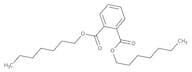
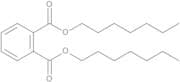
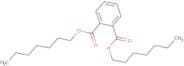
CAS 3648-21-3
:Ftalato di diheptile
- 1,2-Benzenedicarboxylic acid, 1,2-diheptyl ester
- 1,2-Benzenedicarboxylic acid, diheptyl ester
- Bis-heptyl phthalate
- Brn 2336623
- Di-n-Heptylphthalate
- Di-n-heptyl phthalate
- Diheptyl 1,2-benzenedicarboxylate
- Diheptyl Benzene-1,2-Dicarboxylate
- Diheptyl ester of phthalic acid
- Heptyl phthalate
- Hsdb 344
- N-Diheptyl phthalate
- Phthalic acid, diheptyl ester
- Sansocizer DHP
- Diheptyl phthalate
- 4-09-00-03180 (Beilstein Handbook Reference)
- Di-n-heptyl phthalate, 98+%
- Phthalic acid diheptyl
- diheptyl
- PHTHALIC ACID, BIS-N-HEPTYL ESTER
- 1,2-benzenedicarboxylicacid,diheptylester
- PHTHALIC ACID DI-N-HEPTYL ESTER
- diheptylesterofphthalicacid
- diheptyl1,2-benzenedicarboxylate
- TIMTEC-BB SBB008120
- heptylphthalate
- Dihept-1-yl phthalate
- Diheptyl o-phthalate
- Vedi altri sinonimi
Di-n-heptyl phthalate, 98+%
CAS:Di-n-heptyl Phthalate is a Phthalate derivative and an organic extract contaminant found in drinking water, which was shown to activate Nrf-2-Mediated Antioxidant response in human cell line. This Thermo Scientific Chemicals brand product was originally part of the Alfa Aesar product portfolio. SomeFormula:C22H34O4Purezza:98+%Colore e forma:Clear colorless to pale yellow, LiquidPeso molecolare:362.51Phthalic acid, bis-n-heptyl ester 100 µg/mL in Acetonitrile
CAS:Prodotto controllatoFormula:C22H34O4Colore e forma:Single SolutionPeso molecolare:362.50Di-n-heptyl Phthalate
CAS:Applications Di-n-heptyl Phthalate is a Phthalate derivative and an organic extract contaminant found in drinking water, which was shown to activate Nrf-2-Mediated Antioxidant response in human cell line.
Not a dangerous good if item is equal to or less than 1g/ml and there is less than 100g/ml in the package
References Wang, S., et al.: Environ. Sci. Technol., 47, 4768 (2013);Formula:C22H34O4Colore e forma:Light YellowPeso molecolare:362.5Di-n-heptyl phthalate
CAS:Di-n-heptyl Phthalate (DHP) is a phthalate. It is a reactive compound that can be used as a polymerization catalyst and a surface methodology. DHP has been shown to have low toxicity in mice, with the highest toxicity seen at doses of 1000 mg/kg body weight. The hydroxyl group on the molecule reacts with sodium carbonate, which causes it to form sodium salts of DHP. These salts are then hydrolyzed by glucuronidase in the liver, resulting in DHP being released back into the bloodstream. The acetate extract from DHP is toxic to CD-1 mice at doses greater than 1 mg/kg body weight.
Formula:C22H34O4Purezza:Min. 95%Colore e forma:Clear LiquidPeso molecolare:362.5 g/molRef: 3D-DAA64821
Prodotto fuori produzione