CAS 36653-82-4
:Alcol cetilico
Descrizione:
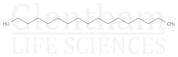
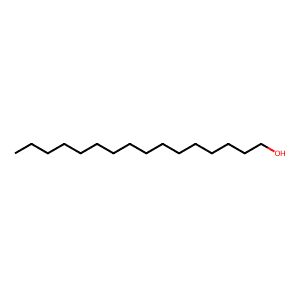
Alcol cetilico, noto anche come esadecanolo, è un alcol grasso a catena lunga con la formula chimica C16H34O. È un solido bianco e ceroso a temperatura ambiente ed è insolubile in acqua ma solubile in solventi organici come etanolo e cloroformio. Alcol cetilico è derivato da fonti naturali, come olio di palma e olio di cocco, ed è comunemente usato in prodotti cosmetici e per la cura personale come emolliente, emulsionante e agente addensante. La sua capacità di stabilizzare le emulsioni lo rende prezioso in formulazioni come creme e lozioni. Inoltre, Alcol cetilico ha applicazioni nell'industria farmaceutica e come lubrificante in vari processi industriali. È generalmente considerato sicuro per l'uso nei cosmetici, sebbene alcune persone possano sperimentare sensibilità. La sostanza ha un punto di fusione tipicamente intorno ai 49-50°C e un punto di ebollizione di circa 344°C. In generale, Alcol cetilico è riconosciuto per le sue proprietà idratanti e il suo ruolo nel migliorare la consistenza e la stabilità di vari prodotti.
Formula:C16H34O
InChI:InChI=1S/C16H34O/c1-2-3-4-5-6-7-8-9-10-11-12-13-14-15-16-17/h17H,2-16H2,1H3
InChI key:InChIKey=BXWNKGSJHAJOGX-UHFFFAOYSA-N
SMILES:C(CCCCCCCC)CCCCCCCO
Sinonimi:- 1-Cetanol
- 1-Hydroxyhexadecane
- Adol 52
- Adol 52NF
- Adol 54
- Alcohol, C16
- Alfol 16
- Alfol 16RD
- Atalco C
- C16 Fatty Alcohol
- Cachalot C 51
- Cachalot C-50
- Cetaffine
- Cetal
- Cetalcos
- Cetalol CA
- Cetanol
- Cetanol 70
- Cetanol NX
- Cetyl Alcohol
- Cetyl Alcohol NX
- Cetylic alcohol
- Cetylol
- Co 1695
- Co 1695F
- Co-1670
- Conol 1670
- Conol 1695
- Crodacol C
- Crodacol C 90
- Crodacol C 95
- Crodacol CAT
- Crodacol-cas
- Dytol F-11
- Elfacos C
- Epal 16
- Ethal
- Ethol
- Ginol 16
- Hainol 16 SS
- Hainol 16SS
- Hexadecan-1-ol
- Hexadecane-1-Ol
- Hexadecanol
- Hexadecyl alcohol
- Hyfatol 16
- Hyfatol 16-85
- Hyfatol 16-95
- Kalcohl 60
- Kalcohl 6098
- Kalcol 6028
- Kalcol 6098
- Kalcol 68
- Kolliwax CA
- Lanette 16
- Lanette 1665
- Lanol C
- Laurex 16
- Lipocol C
- Lorol 24
- Lorol C 14/98
- Lorol C 16
- LorolL 24
- Loxanol K
- Loxanol K extra
- Loxanwax SK
- Naa 44
- Nacol 16-95
- Nacol 16-99
- Nacol 1618
- Nafol 16
- Nsc 4194
- Palmitic alcohol
- Palmityl alcohol
- Product 308
- Siponol CC
- Siponol Wax A
- Spermol
- Speziol C 16
- Tego Alkanol 16
- n-1-Hexadecanol
- n-Cetyl alcohol
- n-Hexadecanol
- n-Hexadecyl alcohol
- Vedi altri sinonimi
Ordinare per
Purezza (%)
0
100
|
0
|
50
|
90
|
95
|
100
16 prodotti.
1-Hexadecanol
CAS:Formula:C16H34OPurezza:>98.0%(GC)Colore e forma:White powder to lumpPeso molecolare:242.451-Hexadecanol, 98%
CAS:1-Hexadecanol is used as cosmetic ingredient, emollient, foam stabilizer. It is also used as the raw material for the manufacture of surfactants. It is used in Organic Synthesis, Pharmaceuticals, Agrochemicals and Dyestuffs. This Thermo Scientific Chemicals brand product was originally part of the AFormula:C16H34OPurezza:98%Colore e forma:Flakes or pellets, WhitePeso molecolare:242.45Cetyl Alcohol
CAS:Dodecan-1-ol (lauryl alcohol), hexadecan-1-ol (cetyl alcohol), and octadecan-1-ol (stearyl alcohol)Formula:C16H34OColore e forma:White Oily Flakes Granules Cubes CastingsPeso molecolare:242.260971-Hexadecanol
CAS:Formula:C16H34OPurezza:≥ 98.0%Colore e forma:White powder, crystals or flakesPeso molecolare:242.441-Hexadecanol
CAS:1-Hexadecanol (Hexadecan-1-ol), a fatty alcoholis, is utilized for making other chemicals.Formula:C16H34OPurezza:99.39% - 99.88%Colore e forma:Colourless Solid Paraffin LikePeso molecolare:242.44Ref: 4Z-D-114009
5mgPrezzo su richiesta10mgPrezzo su richiesta25mgPrezzo su richiesta50mgPrezzo su richiesta100mgPrezzo su richiesta1-Hexadecanol
CAS:Applications 1-Hexadecanol, is used in the cosmetic industry as an opacifier in shampoos, or as an emollient, emulsifier or thickening agent in the manufacture of skin creams and lotions.
References Smolinske S. C., et al.: Handbook Food Drug and Cosmetic Exipients, 75 (1992);Formula:C16H34OColore e forma:White To Off-WhitePeso molecolare:242.441-Hexadecanol
CAS:1-Hexadecanol is a monohydroxy alcohol that is used as a surfactant in analytical chemistry. It can be found naturally in the secretions of some glands and has an optimum concentration of 0.2% to 1%. 1-Hexadecanol has been shown to inhibit bacterial growth by reducing the mitochondrial membrane potential, which leads to cell death. 1-Hexadecanol also reacts with benzalkonium chloride to form ester hydrochloride, which is a reagent for the detection of bacteria. The reaction mechanism for this process is not yet fully understood, but it may involve a metastable form of 1-hexadecanol reacting with benzalkonium chloride.Formula:C16H34OPurezza:Min. 95%Colore e forma:PowderPeso molecolare:242.44 g/molCetyl Alcohol pure, 98%
CAS:Formula:C16H34OPurezza:min. 98%Colore e forma:White, Crystalline powder / Pellets / FlakesPeso molecolare:242.45