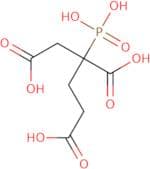
CAS 37971-36-1
:Acido 2-fosfonobutano-1,2,4-tricarbossilico
Descrizione:
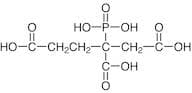
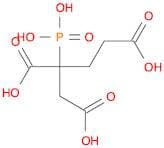
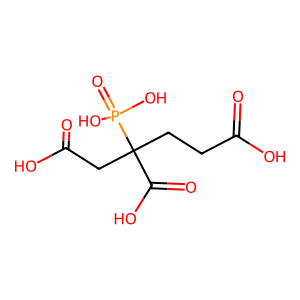
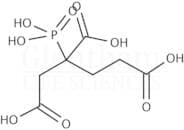
Acido 2-fosfonobutano-1,2,4-tricarbossilico, comunemente noto come PBTC, è un composto organofosforato caratterizzato dai suoi tre gruppi di acido carbossilico e da un gruppo di acido fosfonico. Questa struttura conferisce proprietà uniche, rendendolo un agente chelante versatile e un inibitore delle incrostazioni in varie applicazioni industriali, in particolare nel trattamento delle acque e nel recupero del petrolio. Il PBTC è noto per la sua capacità di formare complessi stabili con ioni metallici, il che aiuta a prevenire la formazione di incrostazioni in sistemi in cui gli ioni di calcio e magnesio sono prevalenti. Inoltre, presenta una buona stabilità termica e solubilità in acqua, migliorando la sua efficacia in ambienti acquosi. Il composto è tipicamente utilizzato in formulazioni per migliorare l'efficienza dei detergenti e per aumentare le prestazioni degli inibitori di corrosione. Il suo profilo ambientale è generalmente favorevole, poiché è biodegradabile e meno tossico rispetto ad altri fosfonati. In generale, Acido 2-fosfonobutano-1,2,4-tricarbossilico è apprezzato per le sue proprietà multifunzionali in applicazioni chimiche e industriali.
Formula:C7H11O9P
InChI:InChI=1S/C7H11O9P/c8-4(9)1-2-7(6(12)13,3-5(10)11)17(14,15)16/h1-3H2,(H,8,9)(H,10,11)(H,12,13)(H2,14,15,16)
InChI key:InChIKey=SZHQPBJEOCHCKM-UHFFFAOYSA-N
SMILES:C(CCC(O)=O)(CC(O)=O)(P(=O)(O)O)C(O)=O
Sinonimi:- 1,2,4-Butanetricarboxylic acid, 2-phosphono-
- 1,2,4-Tricarboxy-sec-butylphosphonic acid
- 2-Phosphonbutane-1,2,4-tricarboxylic acid
- 2-Phosphono butane-1,2,4-tricarboxylic acid
- 2-Phosphono-1,2,4-butanetricarboxylic acid
- 2-Phosphonobutane-1,1,1-Tricarboxylic Acid
- 2-Phosphonobutyl-1,2,4-tricarboxylic acid
- 3-Carboxy-3-phosphonohexanedioic acid
- Bayhibit AM
- Bayhibit AM 50
- Belclene 650
- Chelest PH 430
- Cublen P 50
- Dequest 7000
- Jh 906
- Mayoquest 2100
- Pbdca
- Pbs-Am
- Pbtc
- Pbtca
- Phosphonobutanetricarboxylic acid
- Vedi altri sinonimi
Ordinare per
Purezza (%)
0
100
|
0
|
50
|
90
|
95
|
100
5 prodotti.
2-Phosphonobutane-1,2,4-tricarboxylic Acid (ca. 50% in Water)
CAS:Formula:C7H11O9PColore e forma:Colorless to Light yellow clear liquidPeso molecolare:270.132-Phosphonobutane-1,2,4-Tricarboxylic Acid
CAS:Formula:C7H11O9PPurezza:%Colore e forma:LiquidPeso molecolare:270.13062-Phosphonobutane-1,2,4-Tricarboxylic Acid
CAS:2-Phosphonobutane-1,2,4-Tricarboxylic AcidPeso molecolare:270.13g/mol2-Phosphonobutane-1,2,4-tricarboxylic acid solution
CAS:Formula:C7H11O9PColore e forma:Colourless to pale yellow liquidPeso molecolare:270.132-Phosphonobutane-1,2,4-tricarboxylic acid, 50% aqueous solution
CAS:Polymerase chain reaction (PCR) is a technique that can be used to amplify a specific segment of DNA. This technique is based on the use of primers, which are short single strands of DNA, to initiate DNA synthesis. The PCR process consists of two steps: 1) an initial denaturation step in which the temperature is raised to 90-95°C for 10 minutes and 2) a series of 30-40 cycles consisting of a sequence of 94°C for 30 seconds, 55°C for 20 seconds, and 72°C for 10 seconds. The optimum concentration for the polymerase chain reaction depends on the type of polymerase enzyme used and the type of nucleotide or base being added. Nitrogen atoms are found in all living organisms and have been shown to be necessary for bacterial growth. When nitrogen atoms are removed from water vapor, it has been shown that bacteria will not grow as well as when there are nitrogen atoms present. Inhibitor molecules such as benzalkFormula:C7H11O9PPurezza:Min. 95%Peso molecolare:270.13 g/mol