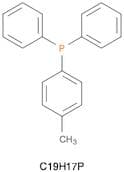
CAS 39319-11-4
:Fosfina, (4-etenvinilfenil)difinil-, polimero con dietenilbenzene e etenilbenzene
Descrizione:
La sostanza chimica nota come "Fosfina, (4-etenvinilfenil)difinil-, polimero con dietenilbenzene e etenilbenzene," con numero CAS 39319-11-4, è un tipo di polimero che incorpora funzionalità di fosfina all'interno della sua struttura. Questo polimero è caratterizzato dalla sua disposizione complessa di gruppi fenilici e sostituenti etenilici (vinilici), che contribuiscono alle sue uniche proprietà fisiche e chimiche. Tipicamente, tali polimeri mostrano una buona stabilità termica e possono possedere diversi gradi di rigidità e flessibilità a seconda della disposizione specifica delle unità monomeriche. La presenza di gruppi di fosfina può conferire reattività specifica, rendendo il polimero utile in applicazioni come la catalisi o come ligando nella chimica di coordinazione. Inoltre, la struttura del polimero può influenzare la sua solubilità, resistenza meccanica e proprietà ottiche, rendendolo adatto per varie applicazioni industriali, tra cui rivestimenti, adesivi e materiali elettronici. Tuttavia, è necessario consultare informazioni dettagliate sulla sicurezza e la gestione a causa dei potenziali pericoli associati ai derivati della fosfina.
Formula:(C20H17P·C10H10·C8H8)x
Sinonimi:- Benzene, diethenyl-, polymer with ethenylbenzene and (4-ethenylphenyl)diphenylphosphine
- (4-Ethenylphenyl)diphenylphosphine-diethenylbenzene-ethenylbenzene copolymer
- Phosphine, (4-ethenylphenyl)diphenyl-, polymer with diethenylbenzene and ethenylbenzene
- Benzene, ethenyl-, polymer with diethenylbenzene and (4-ethenylphenyl)diphenylphosphine
- Diphenyl(4-vinylphenyl)phosphine-divinylbenzene-styrene copolymer
- TRIPHENYLPHOSPHINE POLYSTYRENE
- MACROPOROUS POLYMER SUPPORTED TRIPHENYLPHOSPHINE
- Triphenylphosphine, polymer supported1.4-2.0mmol/g on polystyrene 200-400 mesh2% DVB loading
- Triphenylphosphine, polymer-supported, 1.4 to 2.0mmol/g on polystyrene
- Triphenylphosphine, polymer-bound 100-200 mesh, extent of labeling: ~1.6 mmol/g loading
- PL-TPP MP-RESIN
- 4-Diphenylphosphino polystyrene resin, cross-linked with 2% DVB
- TriphenylphosphineResin1%DvbMesh,1-1.5Mmol/G
- TRIPHENYLPHOSPHINE POL. BOUND, 200-400 M ESH, ~3 MMOL/G
- POLYMER-BOUND TRIPHENYLPHOSPHINE
- -C6H4P(C6H5)2
- Triphenylphosphine resin, 1% crosslinked with DVB
- TRIPHENYLPHOSPHINE, POLYMER-SUPPORTED
- TRIPHENYLPHOSPHINE NOVAGEL
- POLYSTYRENE-PPH2
- Triphenylphosphine resin(1.0-1.5 meq/g, 100-200 mesh)
- TRIPHENYLPHOSPHINE RESIN, 1% CROSSL.WITH DVB, 1.2-1.5 MMOL/G, 200-400 MESH
- DIPHENYLPHOSPHINOBENZOYL NOVAGEL(TM) AM RESIN
- diphenylphosphinated
- Triphenylphosphine polystyrene (200-400 mesh, 1.0-1.5 mmol
- TRIPHENYLPHOSPHINE POL. BOUND, 100-200 M ESH, ~1.6 MMOL/G
- DIPHENYLPHOSPHINO-POLYSTYRENE
- POLYMER SUPPORTED TRIPHENYLPHOSPHINE
- Triphenylphosphine resin, 1% crossl. with DVB, 1.2-1.5 mmol/g, 100-200 mesh
- Triphenylphosphine, polymer-bound 100-200 mesh, extent of labeling: ~3 mmol/g triphenylphosphine loading
- 4-Diphenylphosphino Polystyrene Resin cross-linked with 2% DVB (200-400mesh) (1.0-2.0mmol/g)
- Triphenylphosphine, polyMer-bound 100-200 Mesh, extent of labeling: ~3.0 MMol/g loading, 2 % cross-linked with divinylbenzene
- TRIPHENYLPHOSPHINE POLYMER BOUND
- TRIPHENYLPHOSPHINE NOVAGEL(TM)
- PL-TPP RESIN
- COPOLYMER OF STYRENE AND DIVINYLBENZENE, DIPHENYLPHOSPHINATED
- Triphenylphosphine polystyrene (100-200 mesh, 0.8-1.6 mmol
- TRIPHENYLPHOSPHINE PS RESIN
- TRIPHENYLPHOSPHINE PS
- TRIPHENYLPHOSPHINE RESIN
- 4-DIPHENYLPHOSPHINO POLYSTYRENE RESIN
- Triphenylphosphine resin, Crosslinked with 1% DVB, 1.2-1.5 mmol/g, 100-200 mesh
- POLYSTYRENE CROSSLINKED WITH DIVINYL-BENZENE, DIPHENYLPHOSPHINATED
- Triphenylphosphine resin, 1% crosslinked with DVB, 1.0-1.5mmol/g
- 4-DIPHENYLPHOSPHINO POLYSTYRENE RESIN, CROSS-LINKED WITH 2% DVB: (1.0-2.0MMOLP/G), 200-400MESH
- Vedi altri sinonimi
Ordinare per
Purezza (%)
0
100
|
0
|
50
|
90
|
95
|
100
7 prodotti.
Triphenylphosphine, polymer bound
CAS:Triphenylphosphine, polymer boundPurezza:100-200 mesh, extent of labeling: ~1.6 mmol/g loadColore e forma:SolidPeso molecolare:261.28g/molTriphenylphosphine, polymer bound, 1.4-2.0 mmol/g on polystyrene, 200-400 mesh, 1% cross linked with DVB
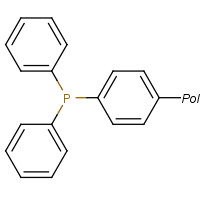
CAS:Triphenylphosphine, polymer bound, 1.4-2.0 mmol/g on polystyrene, 200-400 mesh, 1% cross linked with DVBFormula:C18H14PPolPurezza:≥95%Colore e forma: cream to off white resin beads solidPeso molecolare:261.27752g/molTriphenylphosphine, polymer supported 1.4-2.0mmol/g on polystyrene 200-400 mesh 1% DVB loading
CAS:Formula:C18H14PColore e forma:SolidPeso molecolare:261.284Triphenylphosphine, polymer bound, 1.4-2.0 mmol/g on polystyrene, 200-400 mesh, 2% cross linked with DVB
CAS:Triphenylphosphine, polymer bound, 1.4-2.0 mmol/g on polystyrene, 200-400 mesh, 2% cross linked with DVBPurezza:≥95%Triphenylphosphine, polymer supported 1.4-2.0mmol/g on polystyrene 200-400 mesh 2% DVB loading
CAS:Prodotto controllatoFormula:(C20H17P·C10H10·C8H8)xColore e forma:MixturePeso molecolare:262.29Triphenylphosphine resin
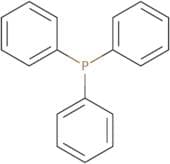
CAS:Triphenylphosphine resin is a solid catalyst that is used in organic synthesis. It is obtained by the reaction of triphenylphosphine and trifluoroacetic acid with fatty acids. Triphenylphosphine resin can be used to synthesize compounds, such as pharmaceuticals, plastics, and pesticides. This catalyst has been shown to produce light emission when it reacts with diphenyl sulfoxide in an acidic environment. The light emission indicates that the reaction proceeds via a radical chain mechanism. Triphenylphosphine resin also has transport properties and can be used to study reactions involving mitochondrial membranes with potential. In addition, this catalyst has been shown to react with hydrochloric acid and sodium carbonate to generate nuclear DNA without harming mitochondrial DNA or proteins. The structural analysis of this compound shows that it consists of biphenyl-type molecules connected through phosphorous atoms.br>br>NMR spectroscopic data for triphenylphosphine resinFormula:(C20H17P)m•(C10H10)n•(C8H8)xPurezza:Min. 95%Colore e forma:Powder