CAS 39590-81-3
:1,1-Ciclopropanedimetanolo
Descrizione:
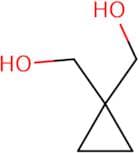
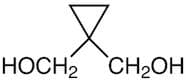
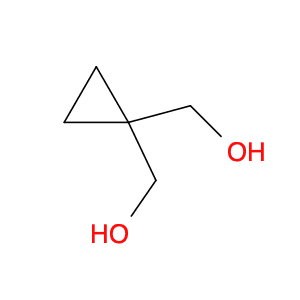
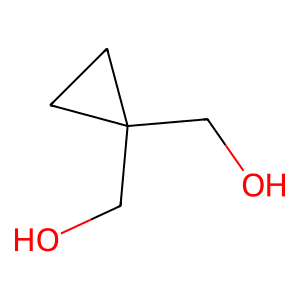
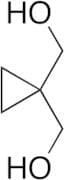
1,1-Ciclopropanedimetanolo, con il numero CAS 39590-81-3, è un composto organico caratterizzato dalla sua unica struttura di ciclopropano, che consiste in un anello di carbonio a tre membri. Questo composto presenta due gruppi idrossimetil (-CH2OH) attaccati allo stesso atomo di carbonio dell'anello di ciclopropano, rendendolo un diolo. La presenza di questi gruppi idrossimetil conferisce proprietà idrofili, consentendo al composto di partecipare a legami idrogeno, il che può influenzare la sua solubilità in acqua e in altri solventi polari. 1,1-Ciclopropanedimetanolo è tipicamente un liquido o solido incolore, a seconda della temperatura, ed è utilizzato in varie sintesi chimiche e applicazioni, inclusa come potenziale intermedio nella sintesi organica. La sua reattività è in gran parte dettata dai gruppi funzionali presenti, consentendo ulteriori derivatizzazioni. I dati di sicurezza devono essere consultati per la manipolazione, come con qualsiasi sostanza chimica, per garantire che vengano adottate le precauzioni appropriate durante l'uso.
Formula:C5H10O2
InChI:InChI=1S/C5H10O2/c6-3-5(4-7)1-2-5/h6-7H,1-4H2
InChI key:InChIKey=YAINYZJQSQEGND-UHFFFAOYSA-N
SMILES:C(O)C1(CO)CC1
Sinonimi:- (1-Hydroxymethylcyclopropyl)methanol
- 1,1-Bis(Hydroxymethyl)Cyclopropane
- 1,1-Bis(hydroxymethyl)cyclopropan
- 1,1-Cyclopropanedimethanol
- 1,1-Cyclopropyldimethanol
- 1,1-Di(hydroxymethyl)cyclopropane
- 1,1-Dimethylcyclopropane
- 2,2-(1,2-Ethylene)-1,3-propanediol
- Cyclopropane,1,1-Dimethyl-
- Cyclopropane-1,1-Diyldimethanol
- Cyclopropane-1,1-bis(methanol)
- Cyclopropanedimethanol
- Vedi altri sinonimi
Ordinare per
Purezza (%)
0
100
|
0
|
50
|
90
|
95
|
100
6 prodotti.
1,1-Bis(hydroxymethyl)cyclopropane
CAS:Formula:C5H10O2Purezza:>96.0%(GC)Colore e forma:Colorless to Light yellow to Light orange clear liquidPeso molecolare:102.131,1-Bis(hydroxymethyl)cyclopropane
CAS:Formula:C5H10O2Purezza:96%Colore e forma:LiquidPeso molecolare:102.1317Ref: IN-DA0032BA
5g20,00€10g20,00€25g25,00€100g43,00€10kgPrezzo su richiesta25kgPrezzo su richiesta500g125,00€(Cyclopropane-1,1-diyl)dimethanol
CAS:(Cyclopropane-1,1-diyl)dimethanolFormula:C5H10O2Purezza:98%Colore e forma: clear liquidPeso molecolare:102.13g/mol1,1-Bis(hydroxymethyl)cyclopropane
CAS:Prodotto controllatoApplications 1,1-Bis(hydroxymethyl)cyclopropane is used in the synthesis of morphine alkaloids. It also serves as an inhibitor of 5-lipoxygenase.
References Evans, D.A. et al.: Tetrahedron Lett., 23, 285 (1982); Arai, Y. et al.: J. Med. Chem., 26, 72 (1983);Formula:C5H10O2Colore e forma:NeatPeso molecolare:102.13[1-(Hydroxymethyl)cyclopropyl]methanol
CAS:Formula:C5H10O2Purezza:96%Colore e forma:ViscousPeso molecolare:102.1331,1-Bis(hydroxymethyl)cyclopropane
CAS:Disulfonates are a class of compounds that have a sulfonyl group bound to two adjacent carbon atoms. They are typically synthetic and rarely occur in nature. Disulfonates are used as industrial solvents, such as for the manufacture of polyurethane foams and plastics. The most common disulfonate is 1,1-Bis(hydroxymethyl)cyclopropane (HMC). HMC is synthesized from 2-hydroxypropene by the addition of hydrogen chloride, followed by conversion to the imine and then hydrolysis to the final product. In addition to being an industrial solvent, HMC has been shown to be an effective inhibitor of HIV replication. It binds to chemokine receptors on cells, preventing HIV entry into the cell. HMC also inhibits the growth of cancer cells in vitro and exhibits anti-inflammatory properties that may be due to its ability to inhibit prostaglandin synthesis. END>Formula:C5H10O2Purezza:Min. 95%Peso molecolare:102.13 g/mol




![[1-(Hydroxymethyl)cyclopropyl]methanol](/_next/image/?url=https%3A%2Fstatic.cymitquimica.com%2Fproducts%2F10%2Fthumb%2FF067771.jpg&w=3840&q=75)