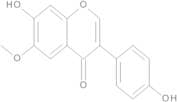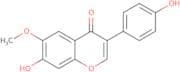
CAS 40957-83-3
:Gliciteina
Descrizione:
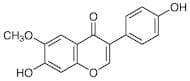
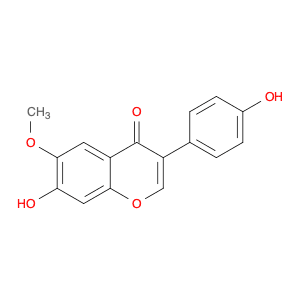
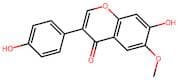
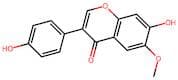
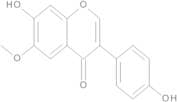
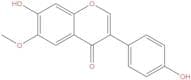
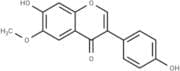
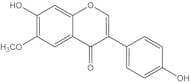
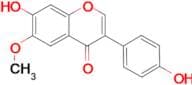
Gliciteina, con il numero CAS 40957-83-3, è un isoflavonoide che si trova naturalmente, principalmente nei prodotti a base di soia e in altre leguminose. È un derivato della classe dei flavonoidi, caratterizzato dalla sua struttura fenolica, che contribuisce alle sue proprietà antiossidanti. Gliciteina è noto per i suoi potenziali benefici per la salute, inclusa l'attività estrogenica, che può influenzare l'equilibrio ormonale e supportare la salute delle ossa. Presenta un profilo di tossicità relativamente basso ed è considerato sicuro per il consumo in quantità moderate. Il composto è solubile in solventi organici, ma ha una solubilità limitata in acqua, il che può influenzare la sua biodisponibilità. Gliciteina è spesso studiato per il suo ruolo in vari processi biologici, inclusi i suoi potenziali effetti anti-infiammatori e anti-cancro. Inoltre, può contribuire ai benefici generali per la salute associati a diete ricche di soia e altri alimenti contenenti isoflavonoidi. Con il proseguire della ricerca, i meccanismi d'azione e le applicazioni terapeutiche di Gliciteina vengono esplorati ulteriormente nel contesto della salute umana.
Formula:C16H12O5
InChI:InChI=1S/C16H12O5/c1-20-15-6-11-14(7-13(15)18)21-8-12(16(11)19)9-2-4-10(17)5-3-9/h2-8,17-18H,1H3
InChI key:InChIKey=DXYUAIFZCFRPTH-UHFFFAOYSA-N
SMILES:O=C1C=2C(=CC(O)=C(OC)C2)OC=C1C3=CC=C(O)C=C3
Sinonimi:- 4',7-Dihydroxy-6-methoxyisoflavone
- 4H-1-Benzopyran-4-one, 7-hydroxy-3-(4-hydroxyphenyl)-6-methoxy-
- 7,4′-Dihydroxy-6-methoxyisoflavone
- 7-Hydroxy-3-(4-hydroxyphenyl)-6-methoxy-4H-1-benzopyran-4-one
- 7-hydroxy-3-(4-hydroxyphenyl)-6-methoxy-4H-chromen-4-one
- Glycetein
- Glycitin aglycon
- Glycitein
Ordinare per
Purezza (%)
0
100
|
0
|
50
|
90
|
95
|
100
15 prodotti.
Glycitein
CAS:Formula:C16H12O5Purezza:>95.0%(T)(HPLC)Colore e forma:White to Light yellow powder to crystalPeso molecolare:284.27Glycitein
CAS:Glycitein analytical standard provided with w/w absolute assay, to be used for quantitative titration.Formula:C16H12O5Purezza:(HPLC) ≥98%Colore e forma:PowderPeso molecolare:284.27Glycitein
CAS:Aromatic pesticides with oxygen hetero-atom(s) only neFormula:C16H12O5Colore e forma:Off-White Beige Crystalline PowderPeso molecolare:284.068474H-1-Benzopyran-4-one, 7-hydroxy-3-(4-hydroxyphenyl)-6-methoxy-
CAS:Formula:C16H12O5Purezza:98%Colore e forma:SolidPeso molecolare:284.2635Glycitein
CAS:Glycitein accounts for 5-10% of the total isoflavones in soy food products, has weak estrogenic activity, comparable to that of the other soy isoflavones but much lower than that of DES and 17beta-estradiol.Formula:C16H12O5Purezza:95%~99%Colore e forma:Yellow PowderPeso molecolare:284.267Glycitein
CAS:1. Gycitein has weak estrogenic activity. 2. Glycitein (Glycetein) inhibits glioma cell invasion through down-regulation of MMP-3 and MMP-9 gene expression.Formula:C16H12O5Purezza:99.23% - 99.94%Colore e forma:White PowderPeso molecolare:284.26Ref: TM-T6S0325
2mg34,00€5mg52,00€1mL*10mM (DMSO)52,00€10mg65,00€25mg92,00€50mg137,00€100mg193,00€200mg286,00€Ref: 4Z-G-210001
5mgPrezzo su richiesta10mgPrezzo su richiesta25mgPrezzo su richiesta50mgPrezzo su richiesta100mgPrezzo su richiestaGlycitein
CAS:Oxygen-heterocyclic compoundFormula:C16H12O5Purezza:≥ 95.0 % (HPLC)Colore e forma:PowderPeso molecolare:284.27Glycitein
CAS:Purezza:98.0%Colore e forma:Solid, Off-white to beige powderPeso molecolare:284.2669982910156Glycitein
CAS:Applications The compund shows an anti-cancer activity, plasma cholesterol reduction, reduction in postmenopausal bone loss.
References Whalley, J.L., et al.: Bioorg. Med. Chem. Lett., 8, 1569 (1998), Song, T., et al.: J. Agric. Food Chem., 47, 1607 (1999),Formula:C16H12O5Colore e forma:Light BrownPeso molecolare:284.26Glycitein
CAS:Glycitein is an isoflavone compound, which is a type of phytoestrogen primarily derived from soy products. It is sourced from soybeans, where it functions as a secondary metabolite. In biochemical terms, glycitein exhibits modes of action characterized by its estrogenic and antioxidant activities. It interacts with estrogen receptors in the body, mimicking the hormone's effects to a certain extent, which can influence numerous physiological processes.Formula:C16H12O5Purezza:Min. 95%Colore e forma:PowderPeso molecolare:284.26 g/mol