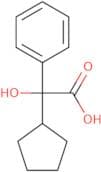
CAS 427-49-6
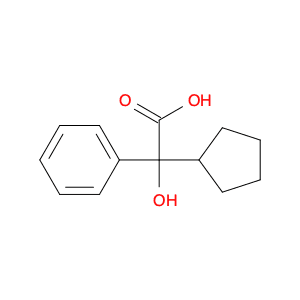
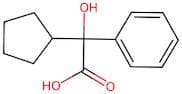
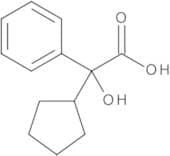
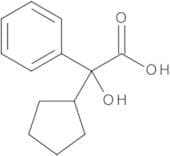
:Acido α-ciclopentilmandelico
Descrizione:
Acido α-ciclopentilmandelico, con il numero CAS 427-49-6, è un composto organico caratterizzato dal suo unico gruppo ciclopentilico attaccato alla struttura dell'acido mandelico. Questo composto presenta un centro chirale, che contribuisce alla sua potenziale attività ottica. Di solito appare come un solido cristallino bianco a bianco sporco ed è solubile in solventi polari, come acqua e alcoli, grazie alla presenza del gruppo funzionale acido carbossilico. Il gruppo ciclopentilico può influenzare l'idrofobicità e l'attività biologica del composto, rendendolo di interesse nella chimica medicinale e nel design di farmaci. Acido α-ciclopentilmandelico può mostrare varie proprietà biologiche, inclusi effetti antimicrobici o anti-infiammatori, sebbene le attività specifiche possano variare in base a modifiche strutturali e alla presenza di sostituenti. La sua sintesi spesso implica la reazione di derivati ciclopentilici con acido mandelico o i suoi precursori. Come molti acidi organici, può partecipare a reazioni acido-base e formare sali con basi, il che può essere rilevante per le sue applicazioni in farmacologia e sintesi organica.
Formula:C13H16O3
InChI:InChI=1S/C13H16O3/c14-12(15)13(16,11-8-4-5-9-11)10-6-2-1-3-7-10/h1-3,6-7,11,16H,4-5,8-9H2,(H,14,15)
InChI key:InChIKey=WFLUEQCOAQCQLP-UHFFFAOYSA-N
SMILES:C(C(O)=O)(O)(C1=CC=CC=C1)C2CCCC2
Sinonimi:- (2R)-cyclopentyl(hydroxy)phenylethanoate
- (2S)-cyclopentyl(hydroxy)phenylethanoate
- (±)-Cyclopentylmandelic acid
- 2-Cyclopentyl-2-hydroxy-2-(phenyl)acetic acid
- 2-Cyclopentyl-2-hydroxy-2-phenylacetic acid
- 2-Cyclopentylmandelic acid
- Benzeneacetic acid, α-cyclopentyl-α-hydroxy-
- Cyclopentyl(Hydroxy)Phenylacetic Acid
- Cyclopentylhydroxyphenylacetic acid
- Mandelic acid, α-cyclopentyl-
- NSC 96637
- alpha-Cyclopentylmandelic acid
- α-Cyclopentyl-α-hydroxybenzeneacetic acid
- α-Cyclopentylmandelic acid
- ALFA-CYCLOPENTYLMANDELIC ACID
- Vedi altri sinonimi
Ordinare per
Purezza (%)
0
100
|
0
|
50
|
90
|
95
|
100
11 prodotti.
α-Cyclopentyl-DL-mandelic Acid
CAS:Formula:C13H16O3Purezza:>98.0%(T)(HPLC)Colore e forma:White to Light yellow powder to crystalPeso molecolare:220.27Glycopyrrolate Related Compound C (2-Cyclopentyl-2-hydroxy-2-phenylacetic acid)
CAS:Carboxylic acids w/ alcohol function but w/o other oxygen function and their derivatives, nesoiFormula:C13H16O3Colore e forma:White Off-White PowderPeso molecolare:220.109942-Cyclopentyl-2-hydroxy-2-phenylacetic acid
CAS:Formula:C13H16O3Purezza:96%Colore e forma:SolidPeso molecolare:220.2643Glycopyrronium Bromide EP Impurity J (Glycopyrrolate USP Related Compound C)
CAS:Formula:C13H16O3Colore e forma:Off-White SolidPeso molecolare:220.272-Cyclopentyl-2-hydroxy-2-phenylacetic acid
CAS:2-Cyclopentyl-2-hydroxy-2-phenylacetic acidPurezza:98%Peso molecolare:220.27g/mol2-(RS)-Cyclopentyl-2-hydroxy-2-phenylacetic Acid (α-Cyclopentylmandelic Acid)
CAS:Colore e forma:NeatRef: ST-EA-CP-G29010
10mgPrezzo su richiesta25mgPrezzo su richiesta50mgPrezzo su richiesta100mgPrezzo su richiestaRef: ST-EA-CP-G2010
10mgPrezzo su richiesta25mgPrezzo su richiesta50mgPrezzo su richiesta100mgPrezzo su richiesta2-Cyclopentyl-2-hydroxy-2-phenylacetic Acid
CAS:Applications 2-Cyclopentyl-2-hydroxy-2-phenylacetic Acid is an impurity of Glycopyrrolate (G657000), a novel pharmaceutical compound based on PDE IV inhibitors; used in the treatment of respiratory complaints. It is used in the synthesis of muscarinic M3 receptor antagonists.
References Gomez, et al.: Br. J. Anaesth., 74, 549 (1995); Kumar, N. et al.: Bioorg. Med. Chem. Lett., 17, 5256 (2007);Formula:C13H16O3Colore e forma:Off White To Light BrownPeso molecolare:220.26Cyclopentylmandelic acid
CAS:Cyclopentylmandelic acid (CPM) is a bifunctional drug that binds to the receptors of the adrenergic system and acts as an agonist. It has been shown to have a matrix effect, which stabilizes and minimizes the effects of other drugs. CPM can also reduce carbonyl groups in the body, which are linked to stress and aging. CPM is a synthetic drug that was first isolated by chromatography. The structural formula for this drug is similar to that of cyclopentanol, with the exception of one methyl group on its side chain. CPM has been shown to have anticholinergic properties, meaning it blocks acetylcholine receptors in nerve cells and leads to dry mouth, blurred vision, constipation, and urinary retention.Formula:C13H16O3Colore e forma:White PowderPeso molecolare:220.27 g/mol